This section includes resources on the response to the COVID-19 pandemic as it relates to child protection and children's care.
News on COVID-19 and Children's Care
Webinars and Events on COVID-19 Response
Displaying 201 - 210 of 759
This webinar was part of Eurochild's breakfast webinars to mark World Children’s Day 2020. Focusing on the economic arguments for investing in children, this webinar also highlighted Finland’s efforts to prioritise children’s rights and why this makes economic sense.

More than 100 child participants across East Asia convened with government officials to discuss the increased instances of child violence experienced during COVID-19 at World Vision’s Asia Pacific Child Well-Being Learning Exchange forum on 18 November 2020.


The authors of this study conducted a large-scale cross-sectional population study of Hong Kong families with children aged 2–12 years. Parents completed an online survey on family demographics, child psychosocial wellbeing, functioning and lifestyle habits, parent–child interactions, and parental stress during school closures due to COVID-19.
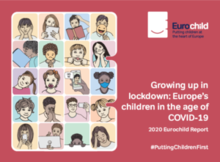
This report reflects on the effects of the coronavirus pandemic on children. It compiles information gathered from 25 countries across Europe, and provides recommendations for improving public policies in the short and long-term to support better outcomes for children and families, including children in alternative care or at risk of separation.
This research aimed to provide a systematic review of the evidence on the COVID-19 pandemic’s impact on youth mental health.

This global report is a consolidation of six regional reports based on consultations conducted between April and August 2020 that used a qualitative approach. The report is organised around the three themes emerging from the data: (1) the impacts of COVID-19 on children and young people; (2) their resilient responses to these impacts personally, in their families and communities; and (3) the support that children and young people need to be safe, healthy and help to fight the further spread of the virus.
In this study, the authors aimed to analyze the potential risk and protective factors for parents’ and children’s well-being during a potentially traumatic event such as the COVID-19 quarantine.
The purpose of this paper is to share anecdotally how the pandemic is affecting children, families and some of the frontline local services that support them across three continents.
The authors of this study aimed to comparatively examine the COVID-19 related stress and psychological burden of parents with different occupational, locational, and mental health status related backgrounds in Turkey.
This study aims to examine how families with children coped during the COVID-19 lockdown in Finland and what kind of coping strategies they developed.