Displaying 341 - 350 of 698
Este informe presenta información sobre el problema de institucionalización de niños en América Latina y el Caribe.
This report provides an evaluation of the Keeping and Finding Families Project, a pilot foster care project in Tajikistan.

This video by Child's i Foundation in Uganda document's the journey of a little girl, Praise, from being abandoned to being placed into to a permanent family. The video shows the tracing process and temporary placement with a foster car

This tool was designed to help those seeking to assist Christian faith-based actors involved in long-term residential care programs make the transition from institutional to non-institutional (family and community-based) child welfare programs.
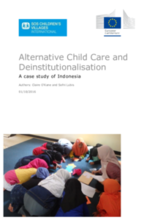
This report is a case study of alternative child care in Indonesia. Research was conducted that found that with an estimate of 8,000 institutional facilities servicing 500,000 children, Indonesia was overly reliant on institutional care.
This Country Fact Sheet discusses Poland’s recent reforms to its institutional care system.
This publication includes common questions and answers on the implications of institutional care and why it should be ended.
This Country Fact Sheet from Latvia reports that there are currently 1,429 children in Latvia living in institutional care facilities.
This fact sheet highlights Bosnia and Herzegovina’s latest developments in Deinstitutionalization.

Décadas de pesquisas comprovam que o crescimento em instituições de acolhida gera consequências psicológicas, emocionais e físicas, incluindo transtornos de apego, atrasos cognitivos e no desenvolvimento, e uma falta de habilidades sociais e de competências para a vida, trazendo diversas desvantagens na idade adulta.