Displaying 511 - 520 of 999
This open access paper documents the Deinstitutionalization of Orphans and Vulnerable Children in Uganda (DOVCU) project, articulating the logical steps that were undertaken to identify districts, Child Care Institutions (CCIs), Remand Homes (RH), sub-counties, and parishes to work with. It also seeks to categorically outline the inclusive process that was used to examine push and pull factors of family-child separation, identify households at risk of family-child separation “prevention households,” identify reunifying children and trace their households “reintegrating households,” and assess and classify in quantified terms the level of vulnerability in both at risk and separated households.
The purpose of this action research study was to investigate social workers’ perceptions of the problems that prevent successful family reunifications after foster care. The study explored social workers’ perceptions of barriers that prevent family reunifications in central Mississippi, USA.
This study focuses on life satisfaction among care leavers four years after leaving care in Israel.
This report turns the lens on young people who age out of foster care and explores four areas — education, early parenthood, homelessness and incarceration — where they fare worse than their general population peers in the US.

The Transitioning to Family Care for Children Online Training provides an overview of the key concepts and steps that are important to a successful transition process.
This article examines the aftercare experiences of young people who have recently left a residential care institution in Lagos State, Nigeria.
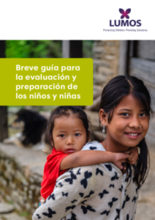
El presente folleto incluye información para preparar a los niños y niñas para que regresen a sus hogares o ingresen a servicios de atención basados en una familia sustituta.
The purpose of this scoping review is to assess the effectiveness of independent living programs on educational outcomes among youths aging out of the foster care system in United States.
This phenomenological study included 18 in-depth interviews with six mothers aged 19–22 years in or transitioning from foster care.
This article by staff attorney for family law and child welfare at the Virginia Poverty Law Center's Center for Family Advocacy, Valerie L’Herrou, outlines and analyses several new bills introduced by the Virginia General Assembly in 2018 and their impacts on young people aging out of the foster care system and family reintegration.