Displaying 211 - 220 of 571
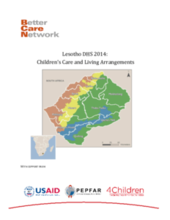
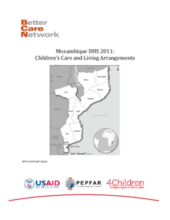
This country brief is part of a series that aims to provide an analysis of children’s living and care arrangements according to the latest available data from Demographic and Health Surveys (DHS) or Multiple Indicators Cluster Surveys (MICS) at the time of publication.
The paper presents a detailed analysis of the Russian official statistics for orphans and children placed out of parental care.
Undertaking a connected person / family and friends assessment is designed to help social workers to manage and complete a comprehensive and evidence-based assessment of connected people / family and friends who wish to foster or be special guardians to a known child or children.
This series of country briefs aims to provide an analysis of children’s living and care arrangements according to the latest available data from Demographic and Health Surveys (DHS) or Multiple Indicators Cluster Surveys (MICS) at the time of publication.
This book presents the results of this research on more than 52,000 children placed in public care in Romania (in special protection) who receive family or residential-type protection services as well as on the children at risk of separation from their families from the source communities.
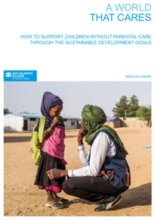
This briefing describes how the needs of children without parental care can be addressed through five of the SDGs: no poverty (1); quality education (4); decent work and economic growth (8); reduced inequalities (10); and peace, justice and strong institutions (16).
This briefing paper, which is the second in a series, provides a brief overview of the characteristics of the children growing up with relatives in Wales.
This Evidence to Action Note outlines key findings related to the childcare and early learning experiences of a group of children in out-of-home care (OOHC) in New South Wales aged 9 months to 5 years, drawing on the first interview with their carers for the Pathways of Care Longitudinal Study (POCLS).
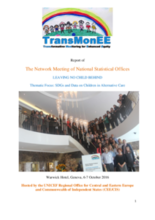
This document summarizes the content of the 6-7 October 2016 Network Meeting of National Statistical Offices. The event comprised of a number of presentations on topics related to the SDGs and data on children in alternative care.
This brief explores challenges and strategies for evaluating systems and organizational change in US child welfare settings.