Displaying 151 - 160 of 377
Infant Mental Health Journal has published an important Special Issue on Global Research, Practice, and Policy Issues in the Care of Infants and Young Children at Risk. This article documents an initiative to establish a replicable professional model that would direct the child welfare system in the Nizhny Novgorod Region away from institutional care and toward services for young children and their families that reduce the risk of institutionalization.
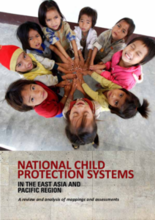
This report presents the findings of a mappings and assessments review of child protection systems in 14 countries including Cambodia.
This report is based on a synthesis of eight assessments of the implementation of the Guidelines for the Alternative Care of Children (“the Guidelines”) in Benin, Gambia, Kenya, Malawi, Tanzania, Togo, Zambia and Zimbabwe.
The Integrated Child Protection Scheme (ICPS) of India outlines, and contributes to the implementation of, the Government’s responsibility to establish an effective and efficient child protection system.
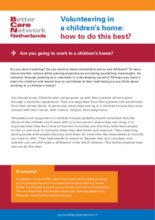
This leaflet was developed by the Working Group ‘Quality of Care’ of Better Care Network. It is published by Better Care Network Netherlands. The leaflet provides useful information on child development and children’s care for those planning to volunteer at orphanages in developing countries.
This study, conducted by Nigel Cantwell and UNICEF, seeks to answer the question: “what is it that enables a policy, process, decision or practice to be qualified as either respectful or in violation of the best interests of the child in intercountry adoption?”
The Technical Team under the Project “EDU-CARE: Social Operators Active in the Protection of the Children and in the Promotion of the Children’s Rights in Nepal” reports on the child care practices, policies, and programs currently in effect in the country.
This issue brief from the UNHCR highlights key messages from UNHCR in regards to alternative care, including the importance of making alternative care arrangements based on the best interests of the child and using residential or institutional care only as a very last resort.

This Handbook aims to provide guidance for Save the Children staff, NGO partners, Community Child Protection Groups and community volunteers in Myanmar in protecting the welfare of children living with extended family members.

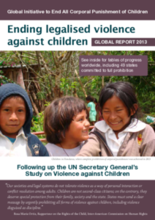
This comprehensive report by the Global Initiative to End All Corporal Punishment of Children analyses data regarding progress toward eliminating corporal punishment amongst all states party to the UN Convention on the Rights of the Child (UNCRC).