
Displaying 41 - 50 of 616
Family for Every Child launched its global inter-agency guidance on supporting kinship care aimed at policy makers and programme managers during this webinar on 1 February 2024.
This study examined African American families who are providing informal kinship care in the U.S. with the aim of developing a nuanced understanding of the financial characteristics, challenges, and coping strategies of these families.
Shared parenting, when adults collaborate in childrearing, is a practice of interest for children in out-of-home care. Yet, little is known about its feasibility and outcomes for kinship families who have preexisting relationships with birth parents. This article shares qualitative results from focus groups that explored participants’ experiences and attitudes toward shared parenting in the U.S.
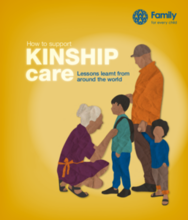
This guidance is the first ever global, practitioner-informed guidance on how to support kinship care. The guidance is aimed at policymakers and programme managers working to improve the care of children.
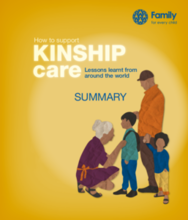
This guidance explains why supporting kinship care is so important and provides principles of good practice and lessons learnt from across the world. This is a summary of a more detailed version of the guidance, which also includes over 40 examples of promising practice from across the world.
This study explores the lived experiences of South African grandparents fostering their orphaned teenage grandchildren, revealing significant financial, emotional, psychological, and physical challenges. Despite these difficulties, grandparents demonstrate strong resilience supported by religious, family, and community networks, underscoring the need for standardized screening protocols for prospective foster caregivers.
This longitudinal study evaluates the effectiveness of BLINDED intervention, an intervention that utilizes family search and engagement practices to place children who enter foster care in kinship placements as quickly as possible in the U.S.
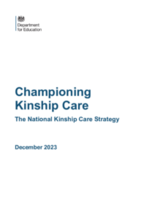
This is the first-ever National Kinship Care Strategy to be published in the UK. The strategy establishes “the foundations for a future, transformed kinship care system in England.”
This webinar introduced new global inter-agency guidance on kinship care. During the webinar, panelists shared key lessons learnt on how to support kinship care, drawing particularly on examples of promising practices from South Africa, Zimbabwe, Liberia, and Brazil.

This video explores why supporting kinship care is so important, and examines how to support kinship care using examples from government and NGOs in Zimbabwe.
