
File
Displaying 51 - 60 of 67
The current qualitative study examines the lived experiences of the women and children in the Mothers Unit from the subjective perspective of the women currently or previously involved in the programme and of the professionals working with them.
This paper addresses the challenges and benefits of involving biological parents in group homes in Israel and presents various means to encourage their involvement in care.
This study analyzed the experiences of victimization by peers and staff of adolescents living in Israeli residential care settings.
The study presented in this article analyzed the life stories of 16 care leavers in Israel.
This article from Haaretz discusses the increasing problem of child labor in Israel. According to the article, children are taken from their homes through an agreement with their parents and forced to beg at highway intersections for up to 12 hours a day.
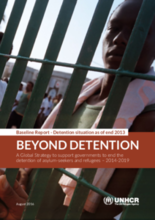
Global Strategy – Beyond Detention 2014-2019 is a document released by UNHCR, which aims to support governments to end the detention of asylum-seekers and refugees.
This qualitative study explores the unique views about the family system held by adolescents who have spent years in foster care in Israel.
This paper aims to address the role of future expectations among young people leaving care in the context of resilience theory and emerging adulthood theory.
This article, from Time, describes the efforts of the Israeli government to evacuate babies of Israeli parents - born to surrogate mothers in Nepal - in the aftermath of the recent earthquake.
This study, based on a sample of 1,324 Jewish and Arab adolescents aged 11–19 in 32 RCSs, examines the prevalence and multilevel correlates of verbal (such as cursing) and indirect (such as social exclusion) forms of victimization by peers in residential care facilities.