Vulnerable children: Protection and social reintegration of child soldiers and youth members of gangs
This article uses the framework of the CRC to review how the world has studied the involvement of child soldiers in armed conflict.
This article uses the framework of the CRC to review how the world has studied the involvement of child soldiers in armed conflict.
The Early Childhood Agreement for Children in Out-of-Home Care (OOHC) was first developed in 2014 as a shared commitment by the Victorian Department of Education and Training (DET), the Department of Health and Human Services (DHHS), the Municipal Association of Victoria (MAV) and Early Learning Association Australia (ELAA) to support young children in OOHC in Victoria, Australia to access key early childhood services.
Este informe de RELAF resume las presentaciones y discusiones del Seminario Internacional 2019 de RELAF.
This report from RELAF summarizes the presentations and discussions from RELAF's 2019 International Seminar, "For the right to family and community life. Putting an end to the confinement of children deprived of parental care."
This brief - a supplement to the Stop the War on Children 2020: Gender matters report - highlights the situation of children in conflict zones in West and Central Africa with a focus on gender.
This report delves into the differences between boys’ and girls’ experiences through a gendered analysis of the six grave violations of children in conflict, including recruitment of children by armed forces and child abduction. The report makes reference to the vulnerabilities faced by girl heads of household or unaccompanied and separated girls on the move and calls for interventions such as family tracing and reunification, the provision of alternative care for unaccompanied and separated children, and the release and reintegration of children associated with armed forces and armed groups.
A cross-sectional survey was undertaken to estimate the prevalence of child maltreatment and adverse childhood experiences in the Czech Republic, as data on these is scarce.
The UK Department for Education commissioned the research on which this report is based to gain a better overall understanding of the issues around the use of unregulated and unregistered provision for looked after children (LAC) and care leavers.
Este video explica estrés tóxico y cosas que podemos hacer para defendernos a nosotros y a nuestros hijos de los efectos de incluso el estrés más intenso.
From brain architecture to toxic stress to serve and return, The Brain Architects, a new podcast from the Center on the Developing Child at Harvard University, focuses on the specific, practical questions that often arise for parents and caregivers during the critically important period of early childhood.
The Center on the Developing Child created this Guide to Toxic Stress to clear up the confusion and help you learn the facts about toxic stress step by step.
This episode of The Brain Architects explores what “toxic stress” means, and what we can do about it.
This report from Family for Every Child examines the growing use of kinship care, including its value and support needs for safe and effective use. The report argues that there is an urgent need to increase support to children living with relatives or friends of their family, with key recommendations made for national governments, donors and UN agencies.
In this study, the authors extracted information about children's statements from court file data of 220 child protection cases in Germany.

SafeCare® is a home‐based intervention programme targeting parents of children up to 5 years old and is designed to reduce and even prevent child abuse and neglect. This article presents an evaluation of a pilot trial of SafeCare® in Israel, examining family's outcomes.
The Outcomes for children before and after care proceedings reform study linked administrative records with a research database of care proceedings to examine children's care and service journeys associated with care proceedings in England and Wales.
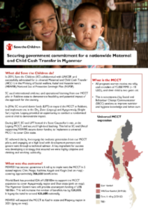
This document summarises Save the Children's involvement in supporting the Government of Myanmar and other partners to test and roll out a "First 1000 days" Maternal and Child Grant Programme that has proven to prevent chronic malnutrition.
In this webinar, Care to Practice's Lucy Hillier speaks to Jamie Lachman, founder and director of Clowns Without Borders South Africa, about the “Parenting for Life Long Health” programme being implemented in several countries in the Eastern and Southern Africa region.
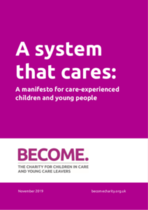
This manifesto from Become - a UK charity for children in care and young care leavers - outlines the charity's recommendations for how to build a "well-funded care system focused on children’s individual needs, supported by highly-trained and caring professionals and responsive to the expertise of those with lived experience is possible."
These films show what the Independent Scottish Care Review learned from talking with children, young people, their families and carers.
After its launch, several organizations issued statements in support of the Scottish Independent Care Review and its call to action, outlining their commitment to ensuring the rights and wellbeing of children and families in Scotland and listening to their voices.
This Thank You is intended for the thousands of people who contributed to the Scottish Independent Care Review. It describes the process of the Care Review and lists the names of many of the organizations and individuals who were involved.

One of several reports produced as part of the Scottish Independent Care Review, this report demonstrates the current legislative framework of the Scottish care system and how it must change to achieve The Promise.

One of several reports produced as part of the Scottish Independent Care Review, this report explains how Scotland can invest better in its children and families.

This paper was written by Dr Katherine Trebeck and is her reflections on what was found as a result of the work done to Follow the Money, the report of the Independent Care Review that produced the financial argument needed to challenge the way Scotland invests in its ‘care system’.