Displaying 1721 - 1730 of 1807
A brief fact sheet on the multilevel support needs of children without parental care. Includes a brief section on statistical data and examples of UNICEF action in several countries around the world.
This National Gender and Children Policy developed by the Ghana Ministry of Women and Children's Affairs aims to mainstream gender concerns in the national development process.
This report contains an overview of alternative care in Europe, the effects of institutions on children, statistical information and the different approaches of child protection systems within Europe. It includes reforming institutional care, foster care, post-care support, and the role of the social worker.
A report on orphans and vulnerable children in Malawi. It examines how orphanhood increases vulnerability though decreased access to formal schooling and increased exposure to child labor. Includes detailed statistical tables.
This document is the official policy governing National Orphans and OVC of the Ministry of Gender, Labour and Social Development (MGLSD) of the Republic of Uganda. The policy interprets a vision of a society where all orphans and other vulnerable children live to their full potential, where their rights and aspirations are fulfilled.
Provides a brief overview of child welfare reforms implemented in the ECA Region and the collective effort to move away from over-emphasis on institutional care through the Changing Minds, Policies and Lives Project.
The NSPPI provides overall guidance to implementers to mitigate the impact of orphan hood and other vulnerabilities among children in Uganda.
This document represents the agreements made at the Second International Conference on Children and Residential Care in Stockholm, Sweden, held from 12 to 15 May, 2003. The conference was sponsored by the Swedish Foreign Ministry and the Swedish International Development and Co-operation Agency (Sida). The document includes the principles and actions, regarding children and residential care, that were agreed upon by the participants at the conference.
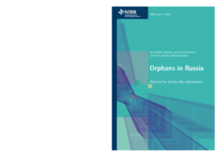
The objective of this research project is to contribute to the process of facilitating a more family-like childhood for Russian orphans.
These Standards are based on the relevant legislation, regulation and guidance and best practice derived from evidence based research and professional experience from Ireland and abroad.