Displaying 1791 - 1800 of 2235
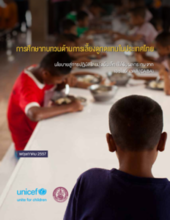
The purpose of this research was to capture more accurate and detailed information regarding children in various forms of alternative care in Thailand.
This chapter explores the idea of belonging through the lens of attachment theory.
The ideas and questions raised in this chapter derive from the referrals of children in care or adopted whom the author has seen for psychotherapy.
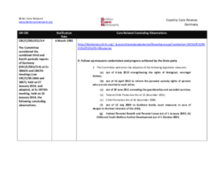
This country care review includes the care related Concluding Observations adopted by the Committee on the Rights of the Child and the Committee on the Rights of Persons with Disabilities.
This qualitative research explored perceptions, beliefs, and experiences of adoption and fostering among a national sample of childless adults, biological parents, kin and non-kin fostering parents and prospective and successful adopters.
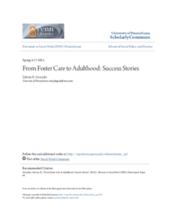
This qualitative study, conducted as part of a Doctoral dissertation, used intensive interviews to explore the trajectory of a small number of youth who have transitioned out of foster care in the US, outlining the social, economic and psychological barriers they faced while also charting the attitudes, behaviors and experiences that allowed them to successfully exit the foster care system and move toward productive adult lives.
This article reports on a preliminary exploration of fostering across 11 European countries, reflecting different care and education traditions.
This paper, presented at the XVI April International Academic Conference on Economic and Social Development in Moscow on 8 April 2015, outlines a research project analyzing ongoing foster care reform in Russia in the context of the country’s new family policies.
In this “Quick Lesson About Therapeutic Foster Care,” the author provides a description of, and background information on, therapeutic foster care in the United States, an overview of national statistics regarding therapeutic foster care, and an overview of the risk factors and symptoms associated with children in need of therapeutic foster care.
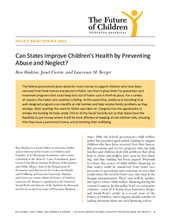
This brief from the Future of Children Journal, a collaboration of the Woodrow Wilson School of Public and International Affairs at Princeton University and the Brookings Institution, outlines the current state of the Child Welfare System in the United States, particularly federal funding to individual states’ child welfare systems.