Webinar: Learning Session on Alternative Care in the COVID 19 Pandemic (for the Indian Context)

This webinar featured presentations and discussions from practitioners who have experience of working on alternative care (short term and long term) and prioritising family-based care in emergency settings that could be helpful for practitioners in India as they plan a response for children who have lost parents to COVID-19.
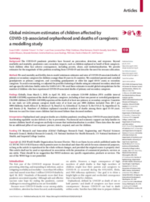
Global minimum estimates of children affected by COVID-19-associated orphanhood and deaths of caregivers: a modelling study

Susan D Hillis, H Juliette T Unwin, Yu Chen, Lucie Cluver, Lorraine Sherr, Philip S Goldman, et al - The Lancet

This study used mortality and fertility data to model minimum estimates and rates of COVID-19-associated deaths of primary or secondary caregivers for children younger than 18 years in 21 countries.

File

70 to 700 to 70,000: Lessons from the Jamaica Experiment

M. Caridad Araujo, Marta Rubio-Codina, Norbert Schady - Inter-American Development Bank, Social Protection and Health Division

This document compares three versions of the same home visiting model, aimed at improving parent-child interactions and child development: the well-known Jamaica model, which was gradually scaled up from an efficacy trial (‘proof of concept’) in Jamaica, to a pilot in Colombia, to an at-scale program in Peru.

File

Mapping U.S. Support for Orphanages Abroad: Key Findings & Strategic Recommendations

Better Care Network and ReThink Orphanages

This report lays out the results of a preliminary mapping exercise to document the ways in which the United States supports and perpetuates overseas orphanages. It is based on: an analysis of existing data; a literature review of U.S government publications and investments; a review of non-profit organizations and foundation activities; an analysis of key supply chains and stakeholders; and the identification of existing data gaps.

File