Deliberate investments to protect Ugandan children
This brief from the National Child Protection Working Group examines the key challenges facing financing for child wellbeing in Uganda and how to address funding gaps.
File

This brief from the National Child Protection Working Group examines the key challenges facing financing for child wellbeing in Uganda and how to address funding gaps.
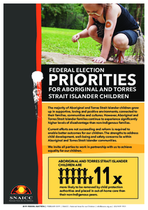
This brief from SNAICC – National Voice for our Children highlights the issue of the disproportional numbers of Aboriginal and Torres Strait Islander children in out-of-home care in Australia, which has reached "national crisis proportions," and outlines key steps that need to be taken to address this issue.
This study aimed to determine the relationship of intergenerational abuse with child emotional maltreatment (CEM) among 11–17 years old children residing in peri-urban and urban communities of Karachi, Pakistan.
This study investigates staff perspectives on a new form of intensive oversight developed in New York State to prevent maltreatment of youth in care facilities.
As technology enhancements effectively augment family-based interventions, the purpose of this study was to pilot a smartphone application (app) in the context of a trauma and behavior management-informed training for foster and kinship caregivers.
In the current study, the authors examined the factor structure of the Children’s Depression Inventory in an ethnically diverse sample of adolescents in foster care in the US and examined the configural invariance of the measure across ethnic groups.
This paper explores how Black South Africans perceive and experience the adoption assessment process regarding the adoption of abandoned children.

This paper examines the development and proliferation of baby-selling centers in southern Nigeria and its impacts on and implication for women in Nigeria. It demonstrates how an attempt to give protection to unwed pregnant girls has metamorphosed into “baby harvesting” and selling through the notorious “baby factories,” where young women are held captive and used like industrial machines for baby production.
The present article proposes a first-stage mental health screening procedure (calibrated for high sensitivity) for children and adolescents (ages 4–17) in alternative care, which children’s agencies can implement without clinical oversight using the Strengths and Difficulties Questionnaire (SDQ) and Brief Assessment Checklists (BAC).
This article describes some of the research outcomes and the ongoing work of the research collaboration between University College Cork (UCC) and Tusla – Child and Family Agency which sought to make a contribution to fostering stability through applying the approach of traumainformed care.