Stories of Change: Fathers Care Campaign
MenCare India shares personal anecdotes from its 2013 Fathers Care Campaign.
File
MenCare India shares personal anecdotes from its 2013 Fathers Care Campaign.
MenCare is a global fatherhood campaign active in more than 30 countries on five continents. MenCare's mission is to promote men’s involvement as equitable, nonviolent fathers and caregivers in order to achieve family well-being, gender equality, and better health for mothers, fathers, and children.
This document includes a portion of the individual worksheets accompanying the Manual for the Measurement of Indicators for Children in Formal Care.
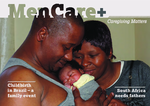
This report provides firsthand accounts of how MenCare+ is making a difference in the lives of individuals and families around the world.
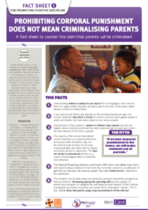
These eight MenCare “Positive Discipline Fact Sheets,” authored by MenCare co-coordinator Sonke Gender Justice, debunk common myths about corporal punishment and promote positive discipline and caregiving.
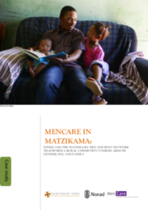
This case study documents how the Matzikama Men and Boys Network, in conjunction with MenCare’s co-coordinator Sonke Gender Justice, have transformed gender and family norms in a rural municipality in South Africa.
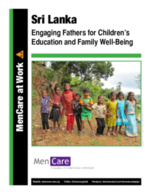
This four-page publication describes World Vision and Promundo’s work in Sri Lanka in 2012-2013 as part of the MenCare campaign.
The first-ever State of the World's Fathers report, produced by MenCare, a global fatherhood campaign, provides a periodic, data-driven snapshot of the state of men's contributions to parenting and caregiving globally.
In this editorial, the authors outline four specific gaps in evidence on the connections between intimate partner violence (IPV) and child maltreatment (CM) and present an integrated framework for moving the field forward with respect to the intersection of IPV and CM.
This article asks whether researchers should seek separate conceptualizations of fathers’ and mothers’ parenting behaviors. The researchers find that there is not sufficient evidence to conclude that the constructs of fathering and mothering are unique.