
School adjustment of internationally adopted children in primary school: A mother and teacher approach
The study examined school adjustment among 119 internationally adopted children in Norway.
The study examined school adjustment among 119 internationally adopted children in Norway.
This study examined whether caseworker demographic factors, attitudes towards evidence-based practices (EBPs) and organizational factors predict caseworker referrals. Relying upon tenets of the Theory of Planned Behavior, this study also examined whether intention to refer predicts caseworker referrals to an EBP.
For this study, a sample of 365 adolescents in residential care settings in Portugal completed a set of self-reported measures, specifically, the Rights perceptions scale, the Place attachment scale and Scales of psychological well-being.
The purpose of this study was to explore the experiences of young people with child protection meetings, in order to develop better ways to improve children’s participation in child protection in Ghana.
This study investigated the exactitude of claims on the existence of corrupt practices and systemic vulnerabilities within the child adoption domains in Nigeria.
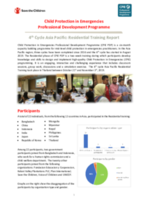
This report details the 4th cycle of the Asia Pacific Child Protection in Emergencies Professional Development Programme (CPiE PDP) Residential Training, which took place in Thailand between October 21st and November 3rd, 2019.
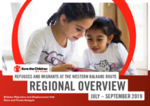
Data and Trend Analysis (DATA) Refugees and Migrants at the Western Balkans Route Regional Overview, covering period July - September 2019, describes key trends in migrations in the region, detailing information about the number of people on the move, demography (age, sex, country of origin, etc), behavioral patterns, and routes in use - with a focus on children, particularly unaccompanied children.
The goal of this study is to examine child welfare caseworkers’ experience of secondary traumatic stress (STS) and the extent to which coping strategies act as a buffer.
The objective of the study was to examine the level of Resilience and psychological wellbeing among orphan and non-orphan adolescents; and to examine the influence of resilience on psychological wellbeing of orphan and non-orphan adolescents.
This study examined early trajectories for academic and social skills among four groups of rural, preschool-attending, children in the Guangdong province of China: Village children who remained in a rural village and lived with both parents, Migrant children who migrated with their work-seeking parents to live in an urban area, Partially-left-behind children who lived with one parent in a rural village while the other parent migrated to the city for work, and Completely-left-behind children who stayed in a rural village with relatives while both parents migrated to the city for work.