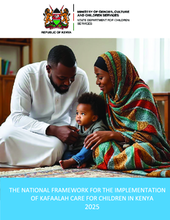
Kafaalah is a child protection practice rooted in Islamic law, offering an alternative to adoption for children without parental care, as adoption is not recognized in Islam. Recognized by the UNCRC, Kafaalah enables children to grow in family environments while respecting Islamic principles.
The Government of Kenya’s National Framework for the Implementation of Kafaalah Care provides structured guidance for practitioners, aiming to promote childcare to family-based settings. It outlines roles, coordination mechanisms, and monitoring strategies to ensure safe, standardized care for vulnerable children, and is intended for use by both state and non-state child protection practitioners. The framework emphasizes the principles of necessity and suitability in determining care placements and integrates with existing tools like the Case Management Guidebook and SOPs for Alternative Family Care. Developed through a collaborative process involving government bodies including the Kadhi Court, Muslim scholars and leaders, and child welfare organizations, the framework seeks to formalize and promote its practice within Kenya’s legal context, and support families in raising children as their own. It also addresses the limitations of residential care and aligns with Kenya’s broader vision of prioritizing family-based care for all children.
This framework is part of a package of materials on Kafaalah that was developed by the Government of Kenya in collaboration with Changing the Way We Care, UNICEF, and other key development partners and civil society actors. The package also includes a facilitators guide, flipbook, and PowerPoint presentation. Access the full package of materials, here.