File
Displaying 1 - 10 of 144
This chapter examines the effectiveness of Zimbabwe’s National Case Management System in protecting the rights and meeting the needs of children in street situations in Harare. It identifies key challenges—including limited resources, weak coordination, stigma, and gaps in social protection integration—and calls for reforms to strengthen child participation, staffing, funding, and trauma-informed, rights-based support.
This article describes how the Government of Zimbabwe has intensified measures to support the reintegration of returning Zimbabweans.
This qualitative study examines the perspectives of community duty bearers on protecting orphans and vulnerable children from sexual abuse in Bikita District, Zimbabwe. It explores perceived drivers of abuse, existing protection strategies, and the role of collective community responsibility in safeguarding children.
This article explores the lived experiences of street-connected youth in African cities, highlighting the multiple socio-economic challenges they face alongside their resilience in navigating daily survival. Drawing on focus groups across three cities, it reconceptualizes resilience as a dynamic, context-driven process shaped by social, institutional, and environmental factors, with implications for policy and practice.
This large-scale study across eight African countries finds that the Parenting for Lifelong Health programme is associated with significant reductions in physical and emotional abuse, improved parenting practices, and better mental health outcomes for both caregivers and adolescents. It demonstrates that evidence-based parenting interventions can be effectively delivered at scale—even in humanitarian contexts—while maintaining strong positive impacts.
This study explored adapting the Parenting for Lifelong Health (PLH) program in Zimbabwe to explicitly address both violence against children and violence against women by incorporating gender-transformative approaches and actively engaging fathers. Findings showed strong interest in the program, highlighting the need for relationship skill-building, economic support, and intentional father involvement to create safer, more resilient family environments.
This article examines the growing prevalence of child-headed households in Zimbabwe, exploring the challenges these children face and the effectiveness of community-based interventions in supporting their wellbeing. It highlights the role of families, community networks, and social services in mitigating risks and proposes a holistic, community-driven model to strengthen resilience and improve outcomes for vulnerable children.
This study examines the early stages of deinstitutionalization in Zimbabwe, finding that progress is hindered by inconsistent processes, limited workforce capacity, and resistance from institutional stakeholders. It highlights the need for clearer guidelines, stronger training, and better support systems to enable effective transitions from institutional to family-based care.
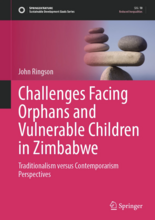
This book explores the challenges facing orphans and vulnerable children in Zimbabwe within the broader context of the Global South, highlighting how poverty, inequality, HIV/AIDS, and economic instability deepen children’s vulnerability. Drawing on Ubuntu philosophy, neoliberalism, and African Renaissance perspectives, it underscores the importance of community-led, culturally sensitive, and African-driven approaches to inform policy and practice supporting OVCs.
This study examines strategies for reintegrating street children in Harare, Zimbabwe, into their families, highlighting the root causes of homelessness and the need for psychosocial support, counselling, family conferences, and community engagement. It emphasizes innovative, evidence-based approaches to ensure effective family reintegration and informs policymakers, social development officers, and researchers addressing child homelessness.