
File
Displaying 81 - 90 of 144
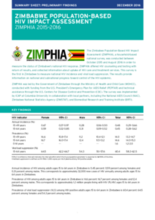
The attached Summary Sheet, provides a short summary of the preliminary findings of the 2015-2016 ZIMPHIA Report.
This qualitative study explored adolescent girls’ perspectives and programme needs as they transition from two institutions in Highfield, Harare, Zimbabwe.
Stephen Lewis says grandmother-to-grandmother network got rolling in August 2006 during the International AIDS conference in Toronto.
This book published jointly by FAO, UNICEF, and Oxford University Press presents the findings from evaluations of the Transfer Project, a cash transfer project undertaken in the following sub-Saharan African countries: Ethiopia, Ghana, Kenya, Lesotho, Malawi, South Africa, Zambia, and Zimbabwe. It concludes that cash transfers are becoming a key means for social protection in developing countries.
This study explores the relationship between orphanhood prevalence, living arrangements and orphanhood reporting.
This report captures what has been accomplished in social service workforce strengthening in eight countries in Sub-Saharan Africa and highlights areas for future intervention. Progress made to strengthen the social service workforce within these countries is useful when reflecting on global trends and ways forward.

This paper examines existing knowledge on raising adolescents in east and southern African countries, including Kenya, Malawi, Mozambique, South Africa, Tanzania and Zimbabwe. According to the report, and within the context of these regions, parenting is understood to be handled through extended community and family networks.
Using the DFID sustainable livelihood approach, this qualitative study evaluated the social capital being accessed by adolescent girls transitioning from two institutions in Harare, Zimbabwe.
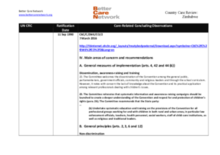
This country care review includes the care-related Concluding Observations adopted by the Committee on the Rights of the Child.
Large scale studies published in the 1990s and early 2000s generally showed that significant educational disparities existed based on orphan status and a child's relationship to the head of the household. Since the data relied on by these studies were collected, the global community has conducted major campaigns to close these gaps, through the Education for All (EFA) and Millennium Development Goals (MDGs). This study examined these factors using eight country-years from five sub-Saharan African countries (Malawi, Mozambique, Niger, Uganda, and Zimbabwe).