
The Intercountry Adoption Debate: Dialogues Across Disciplines
This edited volume introduces the complexity of intercountry adoption and gives voice to the many sides of the intercountry adoption debate – for, against, and the ranges in between.
This edited volume introduces the complexity of intercountry adoption and gives voice to the many sides of the intercountry adoption debate – for, against, and the ranges in between.
The aim of this study was to assess the prevalence and comorbidity of mental disorders applying diagnostic interviews in an entire population of adolescents living in residential youth care (RYC) in Norway.
This report from Family for Every Child begins to fill the gap in understanding on how to deliver effective, safe foster care programmes through an exploration of the literature and interviews with experts.
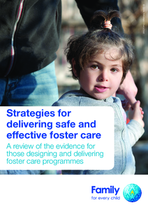
This report from Family for Every Child explores rising concerns about the expansion of foster care services in low and middle income countries, it begins to fill the gap in understanding, and aims to assist in both states’ and NGOs’ decisions on whether to invest in foster care, and in the kinds of supportive services needed to make foster care safe and effective.
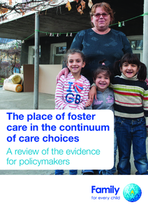
This easy to use resource from the Ministry of Gender Labour and Social Development in Uganda, in consultation with civil society, outlines a continuum of care framework for responding to vulnerable children.
The Government of Brazil and the Global Movement for Children in Latin America and Caribbean (MMI LAC), hosted a regional Expert Consultation on Violence against Children and Care prior to the 21st Pan American Child and Adolescent Congress.
In advance of the 21st Pan American Child and Adolescent Congress, an international consultation on the elimination of violence against children in alternative care was convened. This position statement from the consultation was presented at the 21st Pan American Child and Adolescent Congress.
This report from SOS Children’s Villages and the University of Bedfordshire provides reviews and assessments of the implementation of the Guidelines for the Alternative Care of Children in 21 countries around the world.
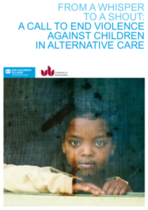
This Unified Resolution from the Twenty-First Pan-American Child and Adolescent Congress highlights resolutions and recommendations relevant to violence against children, recognizes achievements made by Member States in addressing violence against children, and presents 17 specific resolutions related to ending and preventing violence against children in the Americas.
Wendy McMahan, Director of Church Engagement for Food for the Hungry, shares a personal anecdote from her own family, illustrating the importance of family care.