
Country Care Profile: Uganda
01 Sep 2024
Displaying 11 - 20 of 425
This paper outlines the development of a community-led child protection approach (Seeds), created through a multi-stage process involving a systematic literature review, formative research in Uganda and Lebanon, a field test in Sri Lanka, a feasibility study in Colombia, and expert review, resulting in a six-phase model designed to strengthen children’s protection and their sense of safety.
Alarmingly high numbers of Ugandan children experience or are at risk of experiencing abuse and neglect. This article analyzes the state of priority for and quality of governance of Uganda’s formal system for the care of orphans and vulnerable children (OVC).
This special issue of the Children and Youth Services Review concerns the governance of children's care systems in low and middle-income countries, with a focus on Cambodia, Uganda and Zambia. The special issue focuses on the political and bureaucratic factors that shape priority for and the effectiveness of national children's care systems in low and middle-income countries.
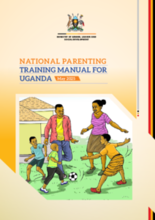
Uganda’s first mapping study on parenting interventions (2020–2021) highlighted the need for evidence-based approaches and clear delivery guidelines to strengthen parenting programming. In response, the Ministry of Gender, Labour and Social Development developed a parenting manual to harmonize stakeholders’ efforts, streamline programming, and strengthen families nationwide.
Supervised independent living involves a child or young person living without an adult but receiving regular supervision, guidance, mentoring and monitoring from an assigned adult mentor. This case study explores lessons learned from three non-governmental organisation (NGO) programmes in Uganda.
This video describes lessons learnt from the use of supervised independent living in Uganda for adolescents and young adult care leavers.

This article uses Nancy Fraser’s social justice framework to examine the experiences of youth leaving care in Ghana, South Africa, Uganda, and Zimbabwe, drawing on interviews with 45 care-leavers conducted by peer researchers. Findings reveal how intersecting injustices—such as stigma, exclusion, and lack of resources—undermine their transition to adulthood, underscoring the need for stronger aftercare services, recognition of diverse identities, and greater youth participation in shaping policy and support.
This report, based on a study across nine countries, examines how to strengthen the community-level social welfare workforce (CLSWW) as a vital but under-resourced part of national child protection systems. It calls for context-specific strategies that clearly define roles and competencies, build capacity, and align with local norms, mechanisms, and resources to enhance child protection outcomes.
In this webinar, the Independent Expert on the Enjoyment of Human Rights by Persons with Albinism, Muluka-Anne Miti-Drummond, shared findings from her recent report on children with albinism and the right to family life. Staff from UNICEF and NGOs in Madagascar, Tanzania, Malawi and Uganda also shared lessons learned.
