
File
Displaying 1131 - 1140 of 2252
This exploratory, qualitative, multi-case study sought to understand, from the perspective of successful foster alumni college students, the role and influence of family members.
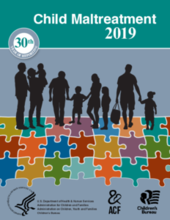
The U.S. National Child Abuse and Neglect Data System (NCANDS) is a federally sponsored effort that collects and analyzes annual data on child abuse and neglect. The data that are collected are submitted voluntarily by the 50 states, the District of Columbia, and the Commonwealth of Puerto Rico and published in an annual report. This document provides a summary of key information from the 2019 report.
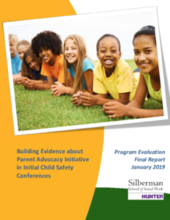
This evaluation study examined the perceptions and outcomes of the Parent Advocacy (PA) Initiative implemented in Initial Child Safety Conferences (ICSC) by New York City’s Administration for Children’s Services (ACS).
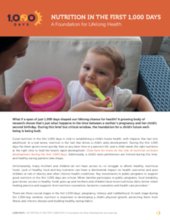
1,000 Days, with support from Zero to Three and their Think Babies Campaign, has created this resource, Nutrition in the First 1,00 Days, to focus on the importance of investing in nutrition during this foundational period.
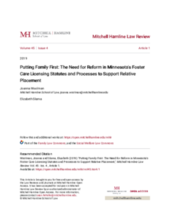
This article tracks the history of foster care licensing requirements in the U.S. state of Minnesota, discusses the real-life story of a grandmother with a grandchild placed in foster care, explains the federal mandates established through the Adam Walsh Act, discusses the existing flaws in the process, and highlights the ways in which Minnesota’s current statutory scheme and processes disproportionally impact communities of color.
This documentary from HBO explores the often-misunderstood world of foster care in the U.S. through compelling stories from the Los Angeles County Department of Children and Family Services, the largest county child welfare agency in the country.
This episode of the Child Welfare Information Gateway podcast is part of a series focusing on Community-Based Child Abuse Prevention (CBCAP) grantees.
This brief from the Foster & Adoptive Care Coalition in the United States provides an overview of the 30 Days to Family® program in the U.S. state of Missouri, an intense, short-term intervention developed by the Foster & Adoptive Care Coalition to: 1) increase the number of children placed with relatives/kin at the time they enter the foster care system; and 2) ensure natural and community supports are in place to promote stability for the child.
The purpose of this article is to use the authors' experiences litigating physical abuse cases in the Bronx, New York City, USA to provide practitioners and family defenders both in New York and in other states with ideas and strategies of how to move cases forward for parents and caretakers charged with serious physical abuse of a child. It is our hope that, by challenging these allegations, defense attorneys can expose the misperceptions and overreach of agencies that charge parents with physical abuse based on injuries alone.
This article gives specific information on a program in Missouri, USA that took the emerging therapeutic foster family approach and added a novel component: training deaf families to become therapeutic foster parents, including how it was established, what problems arose, and what solutions were tried.