
File
Displaying 1161 - 1170 of 2252
The 'One Child, Many Hands: A Multidisciplinary Conference on Child Welfare' is issuing a Call for Presentations.
This study identified children born to mothers in foster care and documented Child Protective Service (CPS) involvement among children.
While previous studies have focused on the effects of parental deportation on young children, this study uniquely contributes to the literature by exploring how adolescents experience and cope with a forced family separation.
While previous studies have focused on the effects of parental deportation on young children, this study uniquely contributes to the literature by exploring how adolescents experience and cope with a forced family separation.
This webinar will explore the US the nationally-adopted Standards of Quality for Family Strengthening & Support.
The purpose of this study is to explore child welfare workers' perspectives on ethnic matching in child welfare service delivery.
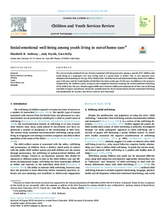
The current study examined the use of socio-emotional well-being measures among a sample of 57 children and youth living in a congregate care type setting such as a group home or shelter.
The purpose of this study is to explore child welfare workers' perspectives on ethnic matching in child welfare service delivery.
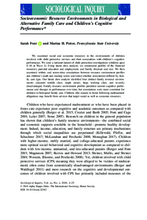
The authors of this article examined social and economic resources in the environments of children involved with child protective services and their associations with children's cognitive performance.
This chapter from the Handbook of Parenting and Child Development Across the Lifespan explores five domains of research connecting social support and parenting: (1) intergenerational transmission of parenting; (2) community and neighborhood; (3) marriage quality; (4) grandmothers; and (5) offline and online friends.