
File
Displaying 2201 - 2210 of 2256
The CWLA National Adoption and Foster Care Training Conference is scheduled for December 10-12, 2007, in New Orleans, Louisiana. The conference will feature workshops and information on all facets of adoption and foster care.
The U.S. Embassy in Vietnam points to poor regulation as the basis for denying intercountry adoptions.
A personal story about adopting a child from Guatemala.
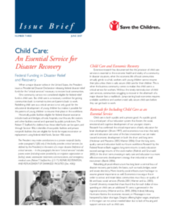
This issue brief discusses the importance of childcare for disaster recovery and provides policy recommendations on how to protect and restore community childcare infrastructure in disasters.

The United States expects to endorse the Hague Convention on Intercountry Adoption, a multilateral treaty intended to protect children by standardizing international adoption procedures, later this year. Guatemalan Congress recently failed to pass a bill recongizing Guatemala's endorsment of the Hague Convention in 2003. Once the United States enforces the Hague Convention (anticipated early 2008), it will refuse permission to adopt Guatemalan children until Guatemala implements the treaty as well.
A short paper on the importance of child care provision as a critical service in helping local communities recover post disaster. It gives 4 policy recommendations for protecting and restoring child care infrastructure.
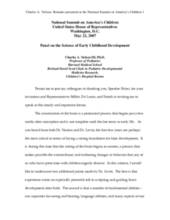
The transcript of a speech by Dr. Charles A. Nelson III for the United States House of Representatives. Focus on the basic science and fundamental importance of early childhood development. Advocates strongly for increased attention on the experiences and environments provided for young children.
Explores intercountry adoption from the perspective of the adoptees. Focuses on the experience of Korean adoptees in the United States.
This article highlights findings from various studies of developed countries focusing specifically on foster-care outcomes.
This document provides a review of outcome research on family foster care services in Australia, Italy, United Kingdom, and United States of America. Further research directions to improve family foster care are suggested.