
File
Displaying 1121 - 1130 of 1206
There is limited information in the child welfare literature on the circumstances and needs of unaccompanied asylum-seeking and refugee children living in the United Kingdom. This article provides insight into the experiences and feelings of these young people by reporting the findings from a narrative-based research project involving 29 unaccompanied asylum-seeking children age 12 to 21 from a variety of African and Asian countries, with the goal of exploring how these children perceived their rights while in private foster care in the UK.
This document is the first report from a study commissioned by Barnardo’s Scotland. The study explores experiences, needs and outcomes for children and young people in Scotland who are (or have been) looked after at home (ie subject to a home supervision requirement or order).
This report investigates the current experience of siblings in the care system in the UK and whether some placement types are more likely than others to enable siblings to be
raised together.
There has been a significant growth in the use of formal kinship care in the UK and Ireland in the last 20 years. The paper charts some of the reasons for the 'organic growth' of kinship care and the multiple dynamics that have shaped this.
This document is a statistical first release issued by the Department for Education in England that provides national and local authority level information on the outcomes for children who have been looked after continuously for at least 12 months at 31 March 2013. Outcomes reported include educational attainment, special educational needs (SEN), health and wellbeing, offending, substance misuse and exclusions from school.
This presentation to the 2012 Sofia Conference by Pauline Watts, Professional Officer for Health Visiting, Public Health Directorate, United Kingdom Department of Health, introduces key lessons learned in regards to preventing child abandonment by looking into intervention and support services available to children and families in the United Kingdom.
This presentation to the 2012 Sofia Conference by Paul Martin introduces family support mechanisms and services to better equip parents to care for their children.
This presentation to the 2012 Sofia Conference by Kevin Browne, Institute of Work, Health, and Organizations (I-WHO), School of Community Health Services at the University of Nottingham, introduces the collective findings of his research studies on the harmful effects of institutionalization of young children and major causes of child abandonment in Europe and prevention methods.
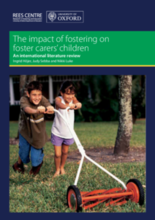
This literature review by the Rees Centre for Research in Fostering and Education at the University of Oxford was undertaken to identify the ways in which carers’ children might be more effectively prepared and supported when their families are fostering.
This report provides a summary of work undertaken by Lumos - together with governmental authorities, international partners, local medical professionals and families - to ensure that all children born with hydrocephalus receive the life-saving treatment they need, and which is their fundamental human right.
