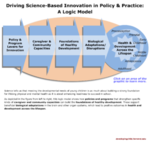
Preventing violence through the development of safe, stable and nurturing relationships between children and their parents and caregivers

WHO and Liverpool John Moores University

This briefing looks at the effectiveness of interventions that encourage safe, stable and nurturing relationships for preventing child maltreatment and aggressive behaviour in childhood. The focus is on primary prevention programmes, those that are implemented early enough to avoid the development of violent behaviour such as child maltreatment and childhood aggression.

File

Violence prevention: the evidence

WHO and Liverpool John Moores University

This report brings together an eight-part series of briefings on the evidence for interventions to prevent interpersonal and self-directed violence. By spotlighting evidence for the effectiveness of interventions, the series provides clear directions for how violence prevention funders, policy makers and programme implementers can boost the impact of their violence prevention efforts.

File

Preventing violence: evaluating outcomes of parenting programmes

University of Cape Town, WHO, UNICEF, and the WHO-led Violence Prevention Alliance

This report seeks to increase understanding of the need for, and the process of, conducting outcome evaluations of parenting programmes in low- and middle-income countries. The guidance is aimed at policy-makers; programme planners and developers; high-level practitioners in government ministries; representatives of nongovernmental and community-based organizations; and donors working in the area of violence prevention.

File

Inter-Agency Statement on strengthening child protection systems in sub-Saharan Africa: A call to action to African Union States

Inter-Agency Working Group (list of organizations below)

Thirteen agencies working in Africa have issued a Joint Statement calling on African governments to strengthen their child protection systems to secure the right of children to a life free from violence, abuse, exploitation and neglect in both emergency and non-emergency settings.

File

Reaching for Home: Global learning on family reintegration in low and lower-middle income countries

Joanna Wedge, Abby Krumholz and Lindsay Jones

This inter-agency, desk-based research aims to arrive at a clearer understanding of reintegration practices for separated children in low and lower-middle income countries. The research pulls together learning from practitioners and academics working with a range of separated children, such as those torn from their families by emergencies, children who have been trafficked or migrated for work, and children living in institutions or on the streets.

File

DRC: Research on factors surrounding the family reintegration of street girls in Kinshasa

Florentin Azia, Mathilde Guntzberger, Oasis Kodila

This research looked at the factors affecting the family reintegration of girls in the Tshangu district of Kinshasa (DRC), an operational zone of the local NGO OSEPER, a partner of War Child for a 3-year project, seeking to address the needs of street-connected girls, including family reintegration.

File

Le Renforcement des Systemes de Protection de l'Enfance en Afrique SubSaharienne: Un Appel a l'Action

Déclaration conjointe inter-agences* (liste en bas de page)

Cette déclaration conjointe inter-agences a pour but de (i) de présenter une vision commune des systèmes de protection de l’enfance en Afrique subsaharienne et d’expliquer pourquoi ils sont importants et méritent des investissements et (ii) lancer un appel à l’action auprès des gouvernements, à l’Union africaine, aux communautés économiques régionales, aux institutions multilatérales, aux bailleurs de fonds, au secteur privé, aux institutions académiques, aux organisations de la société civile, aux communautés et aux groupes d’enfants et de jeunes organisés.

File

Rapid FTR: An innovation to speed up and improve the efficiency of family tracing and reunification in emergencies

UNICEF

RapidFTR is a versatile open-source mobile phone application and data storage system that seeks to expedite the Family Tracing and Reunification (FTR) process by helping humanitarian workers collect, sort and share information about unaccompanied and separated children in emergency situations so they can be registered for care services and reunited with their families.

File

Discussing the Progress of Children’s Right to Live in a Supportive, Protective and Caring Environment: Summary of the Event

NY Working Group on Children without Parental Care

On Tuesday, October 22rd, the NGO Committee on UNICEF’s Working Group on Children without Parental Care in collaboration with the Office of the Special Representative to the Secretary-General on Violence against Children and the Permanent UN Missions of Austria and Brazil hosted an event at the UN, which drew representatives from Member States, the UN and civil society, to review progress on the implementation of the guidelines and share experiences from various regional perspectives.

File

The New Delhi Declaration on South-South Cooperation for Child Rights, 25 October 2013

Second High Level Meeting on South-South Cooperation for Child Rights in Asia and the Pacific

A New Delhi Declaration renewing governments' commitments to the rights of children and pledging to support each other in the achievement of those rights, was adopted unanimously on 25th October 2013 by 32 Asian and Pacific States attending the Second High Level Meeting on South-South Cooperation for Child Rights in Asia and the Pacific.

File

Ending the Placement of Children Under Three in Institutions: Report from the International Ministerial Conference, Sofia, November 2012

UNICEF

This Report from the international ministerial conference, held in Sofia, 21–22 November 2012, entitled 'Ending the placement of children under three in institutions: support nurturing families for all young children', brings together the presentations, political commitments and priority actions identified by the participants, including 20 governments from Eastern Europe and Central Asia.

File

Child Protection in the Philippines: A Situational Analysis

Save the Children

This situational analysis was commissioned by the Child Protection Initiative as a preliminary exercise to develop evidence-based recommendations to guide Save the Children in the Philippines to develop interventions. Priority areas are children in residential care, children in armed conflict and disasters, children in situations of migration (including for trafficking purposes), and children in exploitative and hazardous work conditions.

File

Advocacy Package: IASC Guidelines on Mental Health and Psychosocial Support in Emergency Settings

Inter-Agency Standing Committee Reference Group

This Advocacy Package explains what the IASC guidelines are and how they are to be used, highlights the key campaigning activities, key messages for communities, donors, UN Agencies and Non-Governmental organisations, clarifies terminology and provide ideas for country level implementation.

File

Multi-Cluster/Sector Initial Rapid Assessment (MIRA): Typhoon Haiyan (Yolanda), Philippines.

Inter-Agency Humanitarian Response in the Philippines

To better understand the impact of Typhoon Haiyan on affected population, more than 40 agencies conducted a multi-cluster initial rapid assessment (MIRA) in 9 provinces covering 92 municipalities and 283 barangays. The (MIRA) confirmed that the impacts of Typhoon Haiyan follow a relatively clear geographical pattern.

File

De-institutionalisation: Myth Buster

Eurochild and Hope and Homes for Children

This briefing paper seeks to address key misunderstandings about de-institutionalisation. It explains what it is and what it is not and addresses key questions often asked about the need for such institutions, the role they play and the impact of this transformation and what it entails.

File

De-institutionalisation and Quality Alternative Care for Children in Europe: Lessons Learned and the Way Forward

Eurochild and Hope and Homes for Children

This paper aims to raise awareness on the perverse effects of institutionalisation on children and it calls for comprehensive system reforms, starting with a transition towards family and community-based care. It highlights country level lessons learnt in the European context that demonstrate how deinstitutionalisation can be achieved in practice.

File

Evaluation of the Implementation of the National Strategy and Action Plan for the Reform of the Residential Childcare System in Moldova 2007-2012

Peter Evans

The Government of the Republic of Moldova launched its childcare reforms in 2006 aiming to establish a network of community social assistants, develop family support services and alternative family placement services, and reorganise residential childcare institutions. This evaluation reviews the implementation of the National Strategy and Action Plan for the Reform of the Residential Childcare System 2007–2012 approved by the Government of the Republic of Moldova in July 2007.

File

Caring for orphaned children in China

Xiaoyuan Shang and Karen R. Fisher

This book by Dr. Xiaoyuan Shang and Karen Fisher provides a comprehensive and clear picture of the situation of children who are orphaned or abandoned in China. It introduces the context and framework for the alternative care system and China’s welfare system as it applies to children, and provides a profile of orphans and of care arrangements, describing both the formal child welfare system and the informal care system, particularly kinship care.

Image

Left Behind: The Exclusion of Children and Adults with Disabilities from Reform and Rights Protection in the Republic of Georgia

Eric Mathews, Laurie Ahern, Eric Rosenthal, James Conroy, Lawrence C. Kaplan, Robert M. Levy, Karen Green McGowan

This hard-hitting report by Disability Rights International is the product of a 3-year investigation into the orphanages, adult social care homes and other institutions that house children and adults with disabilities in the Republic of Georgia. It finds that although the Government of Georgia has undertaken an ambitious child care reform process over the last decade, institutionalized children with disabilities were largely excluded from this reform process.

File

After Yolanda: What Children Think, Need and Recommend

Leah Finnegan

On 14th December, Save the Children, Plan, World Vision, working with UNICEF, organized consultations with 124 children and young people in Capiz, Cebu, Iloilo, Leyte and East and West Samar to listen to their views about the humanitarian situation six weeks after the Typhoon, find out what their priorities are and ask for suggestions to improve the response.

File

Strategic Response Plan for the Emergency Response: Typhoon Haiyan (Yolanda), the Philippines

The Philippines Humanitarian Country Team

A Strategic Response Plan developed and designed to support the Government of the Philippines’ response to the immediate humanitarian needs of the people affected by Typhoon Haiyan (Yolanda), and to complement the Government’s National Rehabilitation and Recovery Plan.

File

Development Perspectives of Foster Care in Armenia: Research Results Analysis

Center for Educational Research and Consulting and Save the Children

This report produced by the Center for Educational Research and Save the Children summarises a broader research study which examined the foster care pilot programme introduced in Armenia in 2005. The study aimed to find out if the pilot program succeeded, what problems arose, how the program could be improved and how foster care in Armenia could develop and expand effectively.

File

Assessment of Community-and Family-Based Alternative Child-Care Services in Ethiopia

Getnet Tadele, Desta Ayode, Woldekidan Kifle

This assessment conducted by FHI 360, with support from Ethiopia's Ministry of Women, Youth and Children Affairs (MoWYCA) and the OAK Foundation aimed to generate evidence about formal community and family- based alternative child care services and service providing agencies in Ethiopia, with a particular focus on magnitude, quality and quality-assurance mechanisms.

File

Foster Care Services for Children in Moldova

Kelley McCreery Bunkers

This important assessment of foster care services in the Republic of Moldova explores the differences between the two main types of foster care services provided in that country, including in terms requirements and profiles of caregivers and of the children, the legal and policy framework underpinning them, including the legal status of the foster parent, as well as the allowances and benefits for each type of care

File

The Dangers of Voluntourism: When Good Intentions Are Not Enough

Tania DoCarmo, Charlie Smith-Brake, and Julia Smith-Brake, Prism Magazine

In this article for Prism Magazine, a publication of Evangelicals for Social Action, the authors ask challenging questions about the role of 'orphanage tourism', where Westerners visit or volunteer to work at a residential care center (orphanage) in the developing world, whether the trip is arranged by a tour or travel company, a nonprofit, or by a church.

File

Country Care Review: China

Better Care Network

This country care review includes the Concluding Observations for the Committee on the Rights of the Child and the Committee on the Rights of Persons with Disabilites.

File

Country Care Review: Kuwait

Better Care Network

This country care review includes the Concluding Observations for the Committee on the Rights of the Child and the Committee on the Rights of Persons with Disabilities adopted as part of their examinations of Kuwait’s periodic reports.

File

Country Care Review: Monaco

Better Care Network

This country care review includes the Concluding Observations for the Committee on the Rights of the Child adopted as part of its examination of Monaco’s combined second and third periodic reports at the 64th Session of the Committee held between 16 September to 4 October 2013.

File

Country Care Review: Moldova

Better Care Network

This country care review includes the care related Concluding Observations adopted by the Committee on the Rights of Persons with Disabilities and the Committee on the Right of the Child at their recent examinations of the State's report.

File

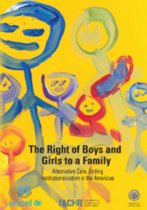
The Right of Boys and Girls to a Family. Alternative Care. Ending Institutionalization in the Americas

Inter-American Commission of Human Rights

This report  by the Inter-American Commission on Human Rights (IACHR) analyzes children’s right to live and be raised by their families, and establishes the resulting obligations for States when it comes to supporting and strengthening families’ ability to raise and care for their children.

File

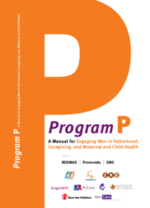
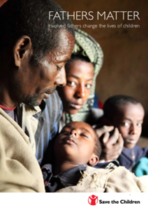
Program P: A Manual for Engaging Men in Fatherhood, Caregiving, and Maternal and Child Health

REDMAS, Promundo, EME

The Program P Manual is a resource developed as part of the global MenCare campaign that identifies best practices on engaging men in maternal and child health, caregiving, and preventing violence against women and children, through the lens of gender equality. Though the main focus of Program P is to engage men via the public health sector, the manual also provides tools and resources for individuals and organizations that want to work more generally with men as caregivers and fathers.

File

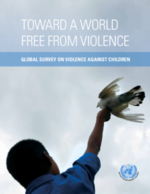
Toward a World Free from Violence: Global survey on violence against children

Special Representative of the UN Secretary-General on Violence against Children

The Global Survey on Violence against Children, conducted under the auspices of the Special Representative of the Secretary General on Violence against Children, examines the measures in place around the world to ensure follow-up to the recommendations set out in the 2006 UN Study on Violence against Children.

File

Country Care Review: Austria

Better Care Network

This country care review includes the care related Concluding Observations adopted by the Committee on the Rights of Persons with Disabilities and the Committee on the Rights of the Child.

File

Country Care Review: El Salvador

Better Care Network

This country care review includes the care related Concluding Observations adopted by the Committee on the Rights of the Child and the Committee on the Rights of Persons with Disabilities as part of its examination of El Salvador's initial reports, as well as other care-related concluding observations, ratification dates, and links to the Universal Periodic Review and Hague Intercountry Adoption Country Profile.

File

Country Care Review: Paraguay

Better Care Network

This country care review includes the care related Concluding Observations adopted by the Committee on the Rights of Persons with Disabilities as part of its examination of Paraguay's initial report adopted by the Committee at its ninth session, as well as other care-related concluding observations, ratification dates, and links to the Universal Periodic Review and Hague Intercountry Adoption Country Profile.

File

A study of children in institutions offers a perspective on the cognitive benefits of parenting

Mary K. Rothbart and Michael I. Posner, Times Higher Education

This article reviews a new book by Charles A. Nelson, Nathan A. Fox and Charles H. Zeanah who conducted seminal studies in Romania on children who were institutionalised, comparing their developmental and well-being outcomes to children who were placed in foster care or adoptive families.

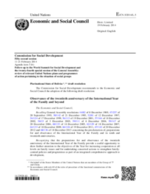
The UN Commission for Social Development Resolution on the 20th Anniversary of the International Year of the Family

UN Commission for Social Development

The UN Commission for Social Development (CSocD) held its 52nd session in New York on the 11-21 February 2014. As part of its mandate, it held discussions in observance of the 20th Anniversary of the International Year of the Family and drafted a resolution to be adopted by the UN Economic and Social Council.

File

Identifying Basic Characteristics of Formal Alternative Care Settings For Children: A Discussion Paper

Better Care Network, Family for Every Child, International Social Service, Save the Children, SOS Children’s Villages International

The discussion paper provides an overview of existing definitions of formal care within the UN Guidelines and a summary of the basic characteristics identified for each, together with explanations for the proposed characteristics.

File

Foster Care in India: Policy Brief

Jayna Kothari and Rajgopal Saikumar

This policy brief reviews the legal framework for foster care in India, including an analysis of the current provisions of foster care along with the rules and schemes on foster care framed by states in India, with a focus on Delhi and Goa.

File

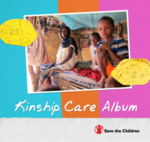
Kinship Care Album: Researching Kinship Care in West and Central Africa

Save the Children

This Kinship Care Album was produced as part of a regional participatory research initiative undertaken by Save the Children to build knowledge on endogenous care practices within families and communities, especially informal kinship care. The Album is a compilation of documentation by children who participated in the research, including resource maps, body maps, photos of focus group discussions and observations by child researchers, pictures and letters from children highlighting their experiences of living in kinship care, their views and recommendations about life in kinship care.

File
The Challenge of Reforming Child Protection in Eastern Europe: The Cases of Hungary and Romania

Roxana Anghel, Maria Herczog, Gabriela Dima

This paper discusses the challenges of reforming the child welfare and protection systems in Hungary and Romania -two countries in transition from socialism to capitalism- and the impact on children, young people, families, and professionals. The focus is on the efforts made to deinstitutionalise children from large institutions, develop local prevention services, and develop alternatives to institutional care.

Out of home care in Norway and Sweden - similar and different

Elisabeth Backe-Hansen, Ingrid Højer, Yvonne Sjöblom, Jan Storø

This article provides an overview of the current situation in the out-of-home care in Norway and Sweden. Development in later years is described and discussed, including the trends towards privatization of the welfare system in both countries and the role of private, commercial actors within the care sector including out-of-home care for children and young people.

The 'dance' of kinship care in England and Ireland: Navigating a course between regulation and relationships

Emily R. Munro, Robbie Gilligan

There has been a significant growth in the use of formal kinship care in the UK and Ireland in the last 20 years. The paper charts some of the reasons for the 'organic growth' of kinship care and the multiple dynamics that have shaped this.

File
Child protection and out of home care: Policy, practice, and research connections Australia and New Zealand

Elizabeth Fernandez, Nicola Atwool

This article provides an outline of the early development of care and protection in Australia and New Zealand as a backdrop to an overview of child protection systems and policies and the current child protection profile in both countries. An overview of trends in relation to out of home care, including routes into care, care arrangements and permanency policies is provided.

Current trends, figures and challenges in out of home child care: An international comparative analysis

Jorge F. del Valle and Amaia Bravo

This article closes a special edition focused on the state of child protection in 16 countries chosen to represent very different cultural contexts, historical backgrounds, and social welfare systems with special attention to out-of-home care placements, principally family foster care and residential care, though several aspects related to adoption were included as well.

Nepal: Kinship Care at Community is Better Model to Ensure Psychosocial and Economic Security of Orphans Living with HIV than from Care Homes

Acharya SL, Pokhrel BR, Ayer R, Belbase P, Ghimire M, Gurung O

The objective of this study was to investigate which model of care and support is more appropriate for improving psychosocial and economic security of AIDS orphans in Nepal.

Image

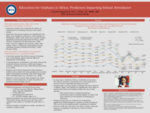
Education for Orphans in Africa: Predictors Impacting School Attendance

Chanel Nagaishi and Jini L. Roby

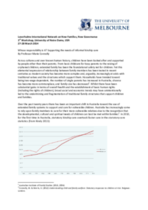
This powerful chart illustrates preliminary research findings using data from Demographic and Health Surveys (DHS) in 5 African countries (Malawi, Mozambique, Niger, Uganda and Zimbabwe) to better understand how orphan status affects the school attendance of children in Africa and the extent to which living in kinship care can act as a protective factor in this context.

File
Kinship Care for the Safety, Permanency, and Well-being of Children Removed from the Home for Maltreatment: A Systematic Review

Marc Winokur, Amy Holtan, Keri E. Batchelder

This systematic review published by the Campbell Collaboration reviewed controlled experimental and quasi experimental studies in which children removed from the home for maltreatment and subsequently placed in kinship care were compared with children placed in non-kinship foster care for child welfare outcomes in the domains of well-being, permanency, or safety.

File
Myanmar: Kinship Care Handbook

Jane Calder and Bep Van Sloten

This Handbook aims to provide guidance for Save the Children staff, NGO partners, Community Child Protection Groups and community volunteers in Myanmar in protecting the welfare of children living with extended family members.

File
USA: Stepping Up for Kids -what government and communities should do to support kinship families

Annie E. Casey Foundation

This comprehensive policy report by the Annie E. Casey Foundation summarizes what is known about kinship care in the United States, identifies the problems and issues these families face, and recommends how best to support caregivers as they step up to take responsibility for children in their extended families and communities.

File
Save the Children: Position Statement on Families
Save the Children

This position statement by Save the Children highlights the central place of families in numerous international legal instruments and how the concept has been understood. It also clarifies its own understanding of families and reviews key provisions under international law regarding their crucial role and responsibilities, and that of States towards them.

File

Family Group Conferencing and Kinship Care: Australasian perspectives

Professor Marie Connolly of the University of Melbourne

This webinar presentation by Professor Marie Connolly of the University of Melbourne introduces the history and background of Family Group Conference (FGC) in New Zealand and Australia and discusses the influence of FGC on the development of formal or statutory kinship care in the region.

File

Country Care Review: Yemen

Better Care Network

This country care review includes the care related Concluding Observations adopted by the Committee on the Rights of the Child as part of its examination of the fourth periodic report of Yemen under the Convention on the Rights of the Child at its sixty-fifth Session (13 Jan 2014 - 31 Jan 2014).

File

Country Care Review: Congo

Better Care Network

This country care review includes the care related Concluding Observations adopted by the Committee on the Rights of the Child as part of its examination of the combined second to fourth periodic report of the Congo under Convention on the Rights of the Child at its sixty-fifth Session (13 Jan 2014 - 31 Jan 2014).

File

Country Care Review: Germany

Better Care Network

This country care review includes the care related Concluding Observations adopted by the Committee on the Rights of the Child and the Committee on the Rights of Persons with Disabilities.

File

Country Care Review: Holy See

Better Care Network

This country care review includes the care related Concluding Observations adopted by the Committee on the Rights of the Child as part of its examination of the second periodic report of the Holy See under Convention on the Rights of the Child at its sixty-fifth Session (13 Jan 2014 - 31 Jan 2014).

File