Ethnic matching: A two-state comparison of child welfare workers' attitudes
The purpose of this study is to explore child welfare workers' perspectives on ethnic matching in child welfare service delivery.
In this study, the authors explored the needs of families of children with cerebral palsy in Bangladesh. Such understanding is important as it will help to improve services for children with disabilities and their families.
This study examined the levels of child neurodevelopmental disorders (NDDs) and mental health problems among displaced Rohingya populations into Bangladesh.
This study explores the impact of a participatory training programme for caregivers delivered through a local support group, with a focus on understanding caregiver wellbeing.
This paper explores the complex set of intertwined social and biological factors influences people’s motivation to participate actively and productively in schools, jobs, and communities— and to persevere in the face of setbacks.
In this interactive graphic, hover over or click the labels on the brain regions to learn more about how each region affects motivation, and hover over or click the highlighted text to the left of the brain image to see how those regions interact.
This study identified children born to mothers in foster care and documented Child Protective Service (CPS) involvement among children.
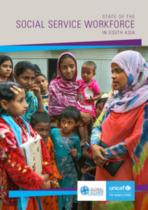
This report from UNICEF South Asia and Global Social Service Workforce Alliance provides information on the current status of the social service workforce in the eight countries in South Asia.
This article explores casework practices developed for use in child welfare placements that may be successfully applied to New South Wales to help build the practical skills needed to facilitate openness, empathy and respectful interactions between children in permanent care and their birth families.
This article discusses a key meeting for children in care – the Child in Care Review – and examines the extent to which children and young people are able to participate and exert a level of control over their lives. The research, conducted in England, formed part of a wider exploration of the views and experiences of all those involved in such reviews, namely Independent Reviewing Officers (IROs), social workers, senior managers and – the focus of this article – the young people concerned.
This review synthesises and evaluates the current empirical evidence on the causes and consequences of stress experienced by foster carers and the factors that lessen or increase it.
While previous studies have focused on the effects of parental deportation on young children, this study uniquely contributes to the literature by exploring how adolescents experience and cope with a forced family separation.
The purpose of this study was to understand the perspective of caregivers about the formation and disruption of bonds with institutionalized children in Brazil.
A cross-sectional comparative descriptive study was conducted among 300 children of age 6-12 years from a pediatric outpatient department of a selected hospital and 300 children from selected orphanages in Kolkata to compare the prevalence of behavioral disorders in children under parental care and out of parental care using Strengths and Difficulties Questionnaire (SDQ).
This article suggests that financial supports for adoption could be extended by introducing Child Development Accounts for children adopted from foster care in New South Wales, Australia.
This paper presents a qualitative analysis of front‐line practices regarding emergency removals in Finnish and Irish child protection.
The purpose of this systematic review was to assess current knowledge regarding immunization coverage levels for children in the child welfare system and to determine barriers and supports to them utilizing immunization services.
The aim of the study is to understand the perceptions of court‐involved adolescent girls in residential treatment (40% delinquency, 60% foster care/child abuse and neglect) on school climate and factors that affect their mood in school.
This study investigated the effect of parental migration on the health of left behind-children and adolescents in low-income and middle-income countries (LMICs).
The purpose of this Information Memorandum (IM) is to strongly encourage all US child welfare agencies and Children’s Bureau (CB) grantees to work together with the courts and other appropriate public and private agencies and partners to plan, implement and maintain integrated primary prevention networks and approaches to strengthen families and prevent maltreatment and the unnecessary removal of children from their families.
This publication from SOS Children's Villages and CELCIS describes the two-year project 'Prepare for Leaving Care,' which aimed to "embed a child rights based culture into child protection systems which improves outcomes for children and young people in particular in the preparation for leaving care," with youth participation at the heart of all activities.
This Practice Guidance, developed by SOS Children’s Villages International and CELCIS, seeks to promote improvements in practice that should have a positive impact for young people during and after the leaving care process. The contents of this Practice Guidance are in good part informed by a detailed Scoping exercise that was carried out in each of the five countries participating in this project: Croatia, Italy, Latvia, Lithuania and Spain.
The objective of this evaluation was to provide evidence that can help strengthen performance and accountability with UNICEF’s work with the Royal Government of Cambodia and the myriad other authorities and organizations involved in child protection.
This second volume of Promoting and Protecting the Rights of Children: A Formative Evaluation of UNICEF’s Child Protection Programme in Cambodia includes the annexes referred to in the first volume.
The objective of this evaluation was to provide evidence that can help strengthen performance and accountability with UNICEF’s work with the Royal Government of Cambodia and the myriad other authorities and organizations involved in child protection.
In this video, Dr. Kristen Cheney discusses how her work led her to study the growth of the Orphan Industrial Complex and its adverse effects on children, families, communities, and child protection systems.
This small pilot study to explores what is currently taught to future doctors about children in out-of-home care (OOHC) and found that there is no formal teaching about these children in the University of Melbourne Doctor of Medicine course.
This paper aims to: summarise what we know from Australian research about the issues relating to reunification; assess the quality of the evidence base; and identify future research needs.
This study examines the effects of youth empowerment programs (YEPs) on the psychological empowerment of young people aging out of foster care.
This study provides an analysis of the ‘investigative turn’ in England by comparing two large cohorts of children, one whose fifth birthday was in 2011–12 and the other in 2016–17.
This study sought to assess the combined effects of physical neglect, a major embodiment of the left-behind phenomenon, and the trauma of being left behind on subsequent behavioral problems of children in rural China.
This article examines how Cambodians view the causes and effects of child abuse and analyses its underlying cultural forces.
The present study describes how two youth care organizations in the Netherlands implemented group climate monitoring instruments for children as part of the broader ‘You Matter!’ project, and aims to answer the question how these monitoring instruments can help to improve group climate when routinely embedded in daily care.
This study explores how foster care experiences can impact support network functionality as young people exit the foster care system.
This report outlines approaches to achieving equal protection from assault for children in the home.
This guidance report looks at the different types of campaigns and actions that can be used to generate more aware and supportive societies, ultimately helping to bring about a shift away from corporal punishment towards non-violent parenting.
This guidance report reviews the experience of and lessons learned from service provision in social welfare, child protection and childcare, health care, education and law enforcement. It presents methods, tools and service models that have proven effective in preventing and responding to corporal punishment.
This report introduces key principles that guide initiatives to promote positive parenting.
This report discusses some definitions of importance for maltreatment research, and explores difficulties and possibilities in child maltreatment epidemiology (tracking).
To raise attention to the fact that it is possible to change policies, attitudes and behaviours, the Council of the Baltic Sea States organised a high-level conference on implementing the prohibition of corporal punishment.
This study consisted of a cross-sectional household survey of 13- to 24-year-old females and males to estimate the burden of violence against children in Cambodia.
This report presents findings from the 2013 Cambodia Violence Against Children Survey (CVACS) which provides national estimates that describe the magnitude and nature of sexual, physical and emotional violence experienced by girls and young women and boys and young men in Cambodia.
This brief from UNICEF Cambodia describes UNICEF's plans and programs regarding child protection.
The purpose of this study was to gain a better understanding of the challenges and needs of children with intellectual disabilities, their families, and service providers.
This report from the Cambodian Ministry of Health and Ministry of Social Affairs, Veterans and Youth Rehabilitation outlines the efforts of the Cambodian government to address the needs of vulnerable people.
This presentation given to the World Bank in May 2007 describes a study conducted in Cambodia on the situation and needs of children with disabilities and their families.
This paper from UNICEF presents a profile of children in Cambodia, paying particular attention to those who are left behind in different spheres - education, health and nutrition, and protection - against the backdrop of society’s prevalent inequality.
This paper describes the piloting of Care for Child Development through six health surveillance assistants (HSAs) in group and individual sessions with 60 caregivers and children <2 years and assessed recruitment, frequency, timings, and quality of intervention.
This paper presents an evaluation of an early childhood parenting training package implemented in Brazil and Zimbabwe, called Reach Up, with the aim of providing an evidence‐based, adaptable program that is feasible for low‐resource settings.
This note and the accompanying full technical paper examine the existing evidence and the potential for bringing together cash transfer programs and parenting interventions to improve child development outcomes, notably cognitive performance.
This report highlights key findings from a social norms study conducted in Zimbabwe to understand the drivers of violence affecting children.
This paper highlights findings from a a 15-year longitudinal cohort study of children growing up in poverty in Ethiopia, India, Peru and Vietnam.
This paper describes the underpinning principles and frameworks of the Multi-Country Study on the Drivers of Violence Affecting Children conducted by national research teams comprising government, practitioners and academic researchers in Italy, Peru, Viet Nam and Zimbabwe.
This article presents the findings of a study that set out to understand what drives violence in Viet Nam as part of the Multi-Country Study on the Drivers of Violence Affecting Children.
This article presents the Peru results as part of the Multi Country Study on the Drivers of Violence Affecting Children.
This article reflects on the process of the Multi-Country Study on the Drivers of Violence Affecting Children in Italy.
This article presents an overview of the Multi-Country Study on the Drivers of Violence Affecting Children (VAC) process – including some of the challenges faced and how these were addressed – and a snapshot of the specific findings which helped stakeholders further their understanding about the drivers of VAC in Zimbabwe and what can be done to address them.
This article investigates the colonialist definitions of the terms “orphan” and “adoption”, contrasting them with how the traditional practice of child circulation in Fiji cared for orphaned children.
This report from Kids Empowerment reviews the reception of children on the move in South Africa.
This article provides an overview of complex trauma and its effects, with a focus on attachment concerns.
This study aims to test Independent Living Services (ILS)'s effects on educational attainment and employment of foster care youth.
In this article, the author provides a synopsis of some current statistics about foster care and the experience of the foster care system in the US and offers an overview of a handful of relevant grief theories and expend a call to those within the field to develop more unique grief theories and interventions for children in the foster care system.
This country care review includes the care-related Concluding Observations adopted by the Committee on the Rights of Persons with Disabilities.
In this video, film-maker Kate Blewett finds out what a lifetime in the care of the state really means for Ukraine's forgotten children.
This analysis compares historic and current trends in Ukrainian orphanages with changes that led to the general demise of the American institutionalized child welfare system.
This 2019 Global Education Monitoring Report continues its assessment of progress towards Sustainable Development Goal 4 (SDG 4) on education and its ten targets, as well as other related education targets in the SDG agenda. Its main focus is on the theme of migration and displacement.
Family Matters reports set out what governments are doing to turn the tide on the over-representation of Aboriginal and Torres Strait Islander children in out of-home care, and the outcomes for children and their families.
In this documentary episode from Channel 4 in the UK, Lemn Sissay meets seven young people who are in the care of their council and sets out to help them express their experiences through words and perform them to a packed theatre of decision-makers.
By examining the roots of policies that separate families and their entanglement with racial prejudice and discrimination, this report makes the case that we must embrace an alternative path.
This report from the US Administration on Children, Youth and Families, Children's Bureau presents statistics and figures on foster care in the US for 2017, including the number of children in care disaggregated by age, sex, race/ethnicity, placement type, time in care, and more.
The present study examined the effectiveness of Family Group Conferencing (FGC) in child welfare in the Netherlands.
In this study, concept mapping was used to identify the needs of nonkinship foster parents from Caucasian ethnicity who care for unaccompanied refugee minors (URM) in Flanders (Dutch speaking part of Belgium).
The study reported here uses a random-assignment evaluation design to assess the impact of the YVLifeSet program on young adults transitioning to adulthood from the child welfare and juvenile justice systems in the state of Tennessee.
This paper examines the relationship between the migration of men from rural China and the educational attainment of their left‐behind children.
This study sought to investigate associations of caregiver-child closeness, monitoring, and dating communication with youth's sexual initiation, sexual partners, and unprotected intercourse over the subsequent 12 months.
This fact sheet was prepared by Prue Holzer from the Australian Institute of Family Studies to provide a brief overview of the Australian child protection context.
Undertaking a connected person / family and friends assessment is designed to help social workers to manage and complete a comprehensive and evidence-based assessment of connected people / family and friends who wish to foster or be special guardians to a known child or children.
The two-day course outlined in these pages is designed to familiarise groups of care professionals with the international standards and principles surrounding children’s rights – and above all, to relate this to the daily experience and challenges arising in the field of alternative care.
The European Recommendations on the implementation of a child rights-based approach for care professionals working with and for children highlights the steps to be undertaken to develop a child care service workforce capable of applying a child rights-based approach to their work.
This guide is for people who work with children and young people in places of alternative care. It is intended to assist you in understanding and supporting the rights of children you work with.
This booklet is designed for children and young people in care to explain how alternative care works, what their rights are as young people in care and whether these rights are being respected.
The two-day course outlined in these pages is designed to familiarise groups of care professionals with the international standards and principles surrounding children’s rights – and above all, to relate this to the daily experience and challenges arising in the field of alternative care.
The present study explories the preparation for adulthood experiences of young Ghanaian care-leavers with a particular focus on sources, needs and barriers to preparation for leaving care.
‘Prepare for Leaving Care – A Child Protection System that Works for Professionals and Young People’, a two-year project co-funded by the Rights, Equality and Citizenship (REC) Programme of the European Union (2017-2018), aims to ensure that the rights of young people in alternative care are respected and that they are prepared for an independent life.
The general objective of this study was to conduct a research on the possible issue of institutionalisation in six South and Central American, Asian and African countries in order to strengthen the knowledge of the European Commission on the nature, the extent and scope of institutionalisation and feasibility of de-institutionalisation (alternative care for children).
The present study examined the effectiveness of Family Group Conferencing (FGC) in child welfare.
This study replicated and extended previous research by conducting a follow-up study of 107 families (90% response rate) 17 years after pre-service training. Consistent with previous research we found a small proportion (10%) of families who provide a disproportionate amount of care in terms of length of service and number of children fostered, approved to foster, adopted, and removed at families' request.
Although the extant literature provides rough estimates of the number and characteristics of children living in most care arrangements, research on kinship probate guardianship is especially scarce. This article focuses on kinship probate guardianship in an effort to build the literature on this understudied population.
This descriptive study involved caregivers and their adopted children, under the age of 7 years old, referred by pediatricians to an outpatient clinic, which specializes in early mental health. The prevalence of toxic stress, measured as symptoms of Reactive Attachment Disorder (RAD) and Disinhibited Social Engagement Disorder (DSED), was explored using clinical data collected during initial assessment.
The purpose of this literature review from the Alliance for Child Protection in Humanitarian Action is to synthesise evidence on the prevalence, patterns and impacts of child neglect in humanitarian contexts.
This paper investigates how ‘care leaver’ is discursively constructed as a group identity, by analyzing 18 written personal experience stories from several charity websites by people identified or who self-identify as care leavers.
This paper aims to: summarise what we know from Australian research about foster families; assess the quality of the evidence base; and identify future research needs.
This paper reports on an exploratory cross-sectional online survey of child protection service providers from five child protection agencies that investigates the struggles faced by child protection workers when responding to complaints made by acrimonious ex-partners within the context of child custody disputes.
The aim of this report from SOS Children's Villages is to increase the knowledge and understanding of the needs and rights of young people ageing out of alternative care around the world, in order to inform strategies, policies and services to improve their life chances and outcomes through appropriate preparation for leaving care as well as after-care support.
This podcast episode from the Faith to Action Initiative features an interview with Peter Kamau, Founding Partner of Child in Family Focus – Kenya, about his experience growing up in an orphanage.
This chapter from the South African Child Gauge 2018 reviews national policies supporting families as well as other services in South Africa that seek to strengthen families and address the needs of vulnerable families in the country.
This chapter from the South African Child Gauge 2018 provides an overview of children living in poverty in South Africa, highlighting those living in households without an employed adult.
This chapter from the South African Child Gauge 2018 reviews the latest developments in law and policy affecting children in South Africa.
The current article provides a framework for developing an early childhood system of care that pairs a top‐down goal for the alignment of services with a bottom‐up goal of identifying and addressing needs of all families throughout early childhood.
This chapter from the South African Child Gauge 2018 focuses on childcare and children’s caregivers in South Africa and aims to address the following questions: Who provides care for children? How does the state support or undermine care choices? Why and how should the state support caregivers?