The Children Act (Uganda)
File
The Children Act, Chapter 141 is a Kenyan law that addresses provision for parental responsibility, fostering, adoption, custody, maintenance, guardianship, care and protection of children; provision for the administration of children’s institutions; and giving effect to the principles
This training manual has been developed with the aim of enhancing the capacity of Charitable Children Institutions (CCIs) in providing services to children under their care.
This animated video describes Indonesia's Families First Signature Program which began in 2005. The goal of Families First is to ensure that every child in Indonesia has a safe, family environment, recognizing that family-based care is best for child development. The video describes how the Signature Program has helped shift care away from institutions towards family-based care.
Child Trends recently released three sets of child welfare fact sheets detailing child maltreatment, foster care, and adoption statistics from the United States for federal fiscal year (FFY) 2013. Each set of 52 fact sheets uses state and national data to tell a story about the U.S.'s most vulnerable children and youth, a story that varies dramatically by state.
The objective of the project is to reduce the numbers of unaccompanied children who go missing. This project addresses how the issue of the disappearance of an unaccompanied child is tackled in different Member States and promotes promising strategies and behaviours related to the prevention and response to disappearances.
This brief is part of the Opening Doors for Europe’s Children campaign and is based on the proposal made to the Bulgarian Government by the Coalition ‘Childhood 2025’ to update the structure and content of the updated Action Plan.
This report and research conducted by SOS Children’s Villages reviews alternative care arrangements in Tanzania.
The Practical Guide of the Professional Supervision Mechanism in Social Assistance was developed in cooperation with the Ministry of Social Protection, Family and Child (Moldova), with the technical support of the "Support in the Delivery of Efficient and Sustainable Social Assista
Decision No. 1361 on the approval of the Framework Regulations on the Foster Care Service was enacted by the Government of the Republic of Moldova on December 21, 2007 in order to implement the Law on social assistance (No 547-XV as of December 25, 2003) as well as to achieve the National Strategy and Action Plan on the Reform of the Residential Childcare System for 2007-2012, approved by Government Decision No 784, as of July 9, 2007.
Republic of Moldova, Parliament, Law No. 123 on Social Services entered into force 3 March 2011.
On 31 October 2007, the Government of the Republic of Moldova issued Decision No. 1177 on the setting up of the Commission for the Protection of the Child in Difficulty and Approval of the Framework Regulations on the activity of the Commission.
This document, entitled "The Mechanism of Professional Supervision in Social Assistance", was approved by Order of the Minister of Social Protection, Family and Child (Moldova) on 31 December 2008.
This "Practical Guide: System for Prevention of Child Separation from the Family" was developed in cooperation with the Ministry of Social Protection, Family and Child with technical support from the "Support to the Delivery of Efficient and Sustainable Social Assistance Services” project implemented by OPM/EveryChild Moldova, funded by DFID/SIDA.
This annex contains the Moldova government's "Minimum Standards of Quality for the Functioning of Foster Care." This document addresses compulsory norms, existing at national level, that guarantees a minimum level of quality in the process of foster care service delivery.
Law No. 140 on the special protection of children at risk and of children separated from their parents entered into force on 1 January 2014.
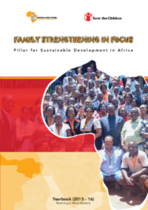
This report shares highlights and lessons learned from PAN's work on family strengthening during the year 2015.
Work is important for promoting social inclusion, especially for marginalised or economically vulnerable populations. There is also evidence that work is associated with stability and social integration for young people who have left care.
Despite the development of alternative forms of care, international and domestic pressures for change, and over 20 years of efforts at deinstitutionalization, the Czech Republic has one of the highest rates of institutionalization of children in Europe.
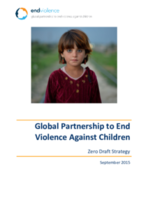
This strategy explains how The Global Partnership to End Violence Against Children plans to prevent and respond to violence against children over the next five years. It will provide a platform to accelerate efforts to make girls and boys safe in the future, with the aim of delivering targets to end all forms of violence against children by 2030.
Without careful consideration and awareness of the broader issues, good intentions could contribute to the exploitation and vulnerability of the children we seek to help.
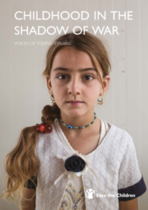
Through the voices of children, parents and staff working in the region, this report by Save the Children presents a glimpse into the struggles faced by refugee and displaced children and families from Syria. The report is primarily based on children’s stories as told to Save the Children in urban areas in Lebanon and in camps and urban areas in the Kurdistan Region of Iraq. Drawings and other playful sessions were used with the children to help them tell stories of their everyday lives without the negative impact a deep interview might have.
Mental health issues in war-affected children include depression, posttraumatic stress disorder (PTSD), and neurological problems, among others.
This country care review includes the care-related Concluding Observations adopted by the Committee on the Rights of Persons with Disabilities during the sixteenth session (15 Aug 2016 – 2 Sept 2016) of the Convention on the Rights of Persons with Disabilities.
This country care review includes the care related Concluding Observations adopted by the Committee on the Rights of the Child and the Committee on the Rights of Persons with Disabilities.