
Friends International “Think Before Visiting” Campaign
Friends International, with support from UNICEF, has launched its “Think Before Visiting” campaign. The campaign is aimed at partnering with tourists to end “orphanage tourism” in Cambodia.
Friends International, with support from UNICEF, has launched its “Think Before Visiting” campaign. The campaign is aimed at partnering with tourists to end “orphanage tourism” in Cambodia.
In this TED Talk, Daniela Papi - founder of PEPY, a Cambodian youth leadership organization, and PEPY Tours, a development education travel company - speaks of the ways that international volunteering can be harmful to children and communities and urges volunteers and organizations to rethink “voluntourism.”
This study examines the effect of the presence of a grandmother in the household on the child in 33 Sub-Saharan African countries. The study focuses on the effect the grandmother’s presence has on the child’s educational participation, considering a range of circumstances.
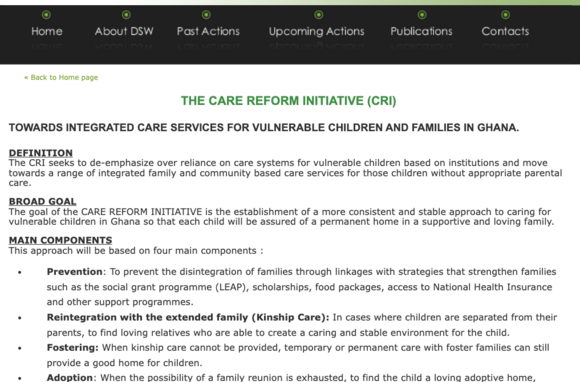
This document offers a brief overview of the Care Reform Initiative in Ghana: “Every child deserves a family” July/Aug 2006- August 2007.
This study was intended to identify existing arrangements surrounding children’s presence in institutional settings, identify legislation that contributes to the institutionalization of children, and make policy recommendations in respect of the opportunities to improve existing arrangements.
This document provides background information to a study conducted on the situation of children in institutional homes in Ghana.
This document provides supplemental information to a study conducted on the situation of children in institutional homes in Ghana.
The chapters featured in this report offer a prognosis on the future of street children and offers recommendations to government and non-governmental bodies on how to help these children.
The sections featured in this report provide case studies of 25 street girls and discussion and conclusions based on these case studies.

This chapter provides an overview of a child care institution, the Osu Children’s Home, in Ghana.
The main aim of this research is to enhance the understanding of why children in care in the UK are disproportionately likely to end up in the youth justice system or in custody.
This factsheet from the US National Child Traumatic Stress Network provides useful information to parents and caregivers of children who have experienced complex trauma.
This research brief provides an overview of an impact evaluation of the “Happy Families Program,” conducted by the International Rescue Committee (IRC). The Happy Families Program is a parenting and family skills intervention designed for Burmese families living on the Thai-Burmese border.
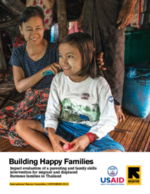
This report presents findings from the impact evaluation of a parenting and family skills intervention for the displaced Burmese population in Thailand called the Happy Families Program which was implemented by the IRC from 2011 to 2013.
This article discusses the importance of safety and stability to healthy child development and reviews the research on the risks associated with maltreatment and the foster care experience in the United States.
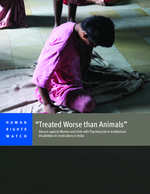
This report documents the involuntary admission and arbitrary detention of women and girls with mental health disabilities in mental hospitals and residential care institutions across India.
This study tested whether the extent of delays in support seeking is associated with working alliance for parents with mild intellectual disabilities (MID) and whether the importance of working alliance may depend on parenting stress and availability of informal support.
This study examined whether spanking by the child's mother, father, or mother's current partner when the child was 1-year-old was associated with household CPS involvement between age 1 and age 5.
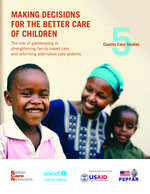
Published jointly with UNICEF, this new BCN Working Paper focuses on the role of gatekeeping in strengthening family-based care and reforming alternative care systems. This Working Paper reviews different approaches to gatekeeping in five countries--Brazil, Bulgaria, Indonesia, Moldova, and Rwanda--to consider what has and has not worked, to analyze lessons learned from practice, and to reflect on the implications for improving policy and programs in this area.
This video from Learningservice.info discusses issues around orphanage volunteering and tourism. The video is accompanied by a number of prompts for further discussion.