
Using Kinship Navigators to Assess the Needs of Kinship Caregivers
This article describes a kinship navigator program for children and kin caregivers involved in Child Protective Services in-home treatment cases.
This article describes a kinship navigator program for children and kin caregivers involved in Child Protective Services in-home treatment cases.
The purpose of this qualitative study was to understand the experiences of grandparents in the US and the challenges they face raising their grandchildren.
This report was developed by Save the Children to accompany the State of the World’s Fathers 2015 report (SOWF), produced by MenCare. This Child Rights Perspective report is an excerpt of the main SOWF report, highlighting the content from the main report that is related to children’s rights and gender equality.
This report from Sonke Gender Justice is an adaptation of the global State of the World’s Fathers report, produced by Mencare. The report highlights the research and findings from the State of the World’s Fathers report that are specific to Africa.
This publication introduces the official text of the Guidelines for the Alternative Care of Children (General Assembly A/HRC/11/L.13) and provides questions for reflection on some of the key content areas outlined in the Guidelines.
The Committee on the Rights of the Child held a day of general discussion on 16 September on “Children without parental care”.
This resource includes data on children's living arrangements in Sierra Leone.
The Child Protection Index (the Index) is a comparative policy tool, organised and implemented by local and national level civil society organisations, that examines a country’s current child protection system using a common set of 626 indicators that measure a country’s policy and actions toward greater child protection. This Index measures Moldova’s efforts toward child protection in comparison with other countries in the region.
The Child Protection Index (the Index) is a comparative policy tool, organised and implemented by local and national level civil society organisations, that examines a country’s current child protection system using a common set of 626 indicators that measure a country’s policy and actions toward greater child protection. This Index measures Georgia’s efforts toward child protection in comparison with other countries in the region.
This document, developed through a mapping exercise conducted by the National Council for Children’s Services (NCCS) and the Department of Children Services (DCS) of Kenya, provides a comprehensive list of the agencies and programs in Kenya that provide services for children.
To gain insight into how practitioners can best meet the needs of grandfamilies, 40 custodial grandmothers and their adolescent grandchildren were interviewed in this study.
This issue of GrandFamilies: The Contemporary Journal of Research, Practice and Policy includes several articles related to kinship care in the United States.
Escape the Box is an initiative designed to help raise awareness and try to put a stop to the rapidly growing, money making businesses that many orphanages have become.
This qualitative research explored perceptions, beliefs, and experiences of adoption and fostering among a national sample of childless adults, biological parents, kin and non-kin fostering parents and prospective and successful adopters.
This article reports on a preliminary exploration of fostering across 11 European countries, reflecting different care and education traditions.
This research investigates the forms that ‘orphanage tourism’ takes in Cambodia and the impacts of this popular phenomenon on those who are purported to benefit: orphanages and orphans.
This report was commissioned by the Swedish network Schyst Resande and conducted by the Fair Trade Center, with the overall objective of raising awareness of children’s rights in relation to tourism and travel destinations which many Swedish tourists visit.
To help answer commonly asked questions—and to provide an overview of an understandably confusing topic— Next Generation Nepal (NGN) has prepared this briefing paper in which NGN answers the most frequently asked questions we receive about orphanage trafficking and orphanage voluntourism.
This is a short paper produced by Next Generation Nepal (NGN) to advise members of the public and tourists who may encounter child trafficking or child abuse in children's homes or orphanages in Nepal.
This resource is designed to be used as a guide for those in the Faith community working with orphaned children.
This article reviews the current discourse on what is being called a crisis of care for children, as well as literature on out-of-home/family care and its adverse impacts on child development. The article also describes an emerging “AIDS orphan tourism” and highlights its negative impacts.
This publication serves as a guide for responsible voluntourism, both for volunteers and volunteer tour operators.
Through these guidelines BCN Netherlands hopes to prevent unintentional harm to children and to promote that exclusively those who can transfer their knowledge and experience to local professionals are deployed as volunteers working with vulnerable children.

This report presents research conducted by Save the Children in East Africa. The aim of this research was to build knowledge on endogenous care practices within families and communities, especially informal kinship care, in order to increase the care and protection of children. The research on kinship care was implemented in Ethiopia, Kenya, and Zanzibar.
This article from the Migration Policy Institute examines the impact of labor migration on children who are left behind, from an economic and social lens, and with particular attention to gendered implications.
This poster provides a brief overview of research conducted in Ghana to examine how institutionalized children’s hope for the future may be impacted by perceived social attachments.
This one-page presentation outlines the research questions, data, methods, results, literature review, discussion and implications of a study that looked at the effects of a child’s relationship to head of household, age, and orphan status on the severity of discipline they receive in Ghana, Iraq, Costa Rica, Vietnam,and Ukraine.
This article draws on Promundo and RWAMREC’s programmatic experiences in Rwanda of implementing MenCare+, a gender transformative approach to engaging young and adult men (ages 15–35) in caregiving, maternal, newborn, and child health, and sexual and reproductive health and rights.
MenCare India shares personal anecdotes from its 2013 Fathers Care Campaign.
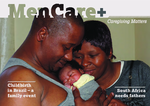
MenCare is a global fatherhood campaign active in more than 30 countries on five continents. MenCare's mission is to promote men’s involvement as equitable, nonviolent fathers and caregivers in order to achieve family well-being, gender equality, and better health for mothers, fathers, and children.
This document includes a portion of the individual worksheets accompanying the Manual for the Measurement of Indicators for Children in Formal Care.
This report provides firsthand accounts of how MenCare+ is making a difference in the lives of individuals and families around the world.
These eight MenCare “Positive Discipline Fact Sheets,” authored by MenCare co-coordinator Sonke Gender Justice, debunk common myths about corporal punishment and promote positive discipline and caregiving.
This case study documents how the Matzikama Men and Boys Network, in conjunction with MenCare’s co-coordinator Sonke Gender Justice, have transformed gender and family norms in a rural municipality in South Africa.
This four-page publication describes World Vision and Promundo’s work in Sri Lanka in 2012-2013 as part of the MenCare campaign.
The first-ever State of the World's Fathers report, produced by MenCare, a global fatherhood campaign, provides a periodic, data-driven snapshot of the state of men's contributions to parenting and caregiving globally.
In this editorial, the authors outline four specific gaps in evidence on the connections between intimate partner violence (IPV) and child maltreatment (CM) and present an integrated framework for moving the field forward with respect to the intersection of IPV and CM.
This article asks whether researchers should seek separate conceptualizations of fathers’ and mothers’ parenting behaviors. The researchers find that there is not sufficient evidence to conclude that the constructs of fathering and mothering are unique.
In this study, the researchers conducted a systematic database and a thematic hand search of the global literature on parenting interventions in order to gather and assess the evidence on father participation and impact in parenting interventions. This article presents the results of the study and identifies three key priorities for successfully engaging fathers.
This paper highlights the importance of promoting active fatherhood in achieving Save the Children’s goals. The paper suggests that engaging fathers in caregiving and building stronger relationships with their children can help to better protect and meet the needs of children.
Barn is a magazine about children’s rights published by Save the Children Sweden with four issues per year. This issue is focused on the role of fathers in children’s wellbeing and development.

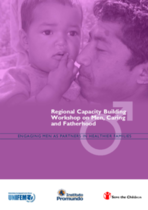
This report captures the discussions and activities from a workshop held in Kathmandu, Nepal on 17-19 October 2005 on engaging men as caregivers. The report presents a background and rationale, the expectations and objectives of the workshop, and an overview of work being done to engage fathers both in the region as well as globally.
This video was launched alongside the first ever “State of the World’s Fathers” report, produced by the MenCare Campaign. The video features interviews with fathers, mothers, and children.
CP MERG hosted a webinar on 27 May 2015 entitled “Evaluating Protection and Psychosocial Support in the Context of Humanitarian Settings” and now the webinar recording and powerpoint presentations are available on the CP MERG website.
In an effort to support practitioners to address some challenges of trying to undertake quality research, a group of child protection networks and organizations - the Community Child Protection Exchange, the CP MERG, the CPC Learning Network, and REPSSI - came together to produce this joint newsletter reflecting upon some groups’ successes and challenges working on child protection research and M&E, including working with a limited budget in low-resource settings.
The United States Agency for International Development (USAID) through its Displaced Children and Orphans Fund (DCOF) supported a sub-regional workshop held in Kigali March 23-26, 2015 to provide structured opportunities for technical exchange on care reform, approaches, methods, and tools. This report summarizes the activities and discussions from the workshop.
In this executive summary, the Truth and Reconciliation Commission of Canada provides an introduction to the use of residential schools for aboriginal children in Canada, presents an overview of the Commission’s activities, describes the history and legacy of these residential schools, and outlines the challenges of reconciliation, including 94 recommendations, or “calls to action” for reconciliation in the field of Child Welfare among many others.
El Servicio Social Internacional lanza su Manifiesto por una ética de la adopción internacional.
Le Service Social International lance son Manifeste pour une éthique de l’adoption internationale.
The International Social Service (ISS) has launched its Manifesto For Ethical Intercountry Adoption. The Manifesto seeks to promote ethical practices by all adoption stakeholders to better protect children, whether in the receiving country or country of origin, including inter alia, biological parents, adoptive parents, professionals and government representatives.