
This section includes resources on the response to the COVID-19 pandemic as it relates to child protection and children's care.
News on COVID-19 and Children's Care
Webinars and Events on COVID-19 Response
Displaying 141 - 150 of 759
This paper draws on two case studies – South Africa and Kerala, India – to discuss the gender implications of social protection responses to Covid-19 in 2020.
This paper asks the questions: What can we learn from the pandemic—and federal, state, and local governmental responses— about the cracks in the child welfare system? What lessons can be carried forward post-pandemic?
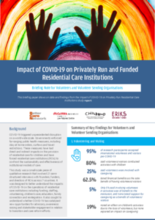
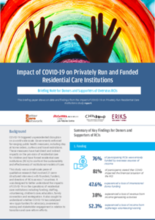
This briefing paper draws on data and findings from the report: Impact of COVID-19 on Privately Run Residential Care Institutions: Insights and Implications for Advocacy and Awareness Raising.
This brief, developed by the Early Childhood Workforce Initiative (ECWI), highlights common approaches parenting programs are using to continue engaging with families during the COVID-19 pandemic, including transitioning to deliver services virtually and adapting to provide enhanced psychosocial support.
This study was a small-scale piece of qualitative research that involved 21 semistructured interviews with founders, funders, and directors of RCIs across 7 countries. It was designed to better understand the impacts of COVID-19 on the operations of residential care institutions including funding, staffing, volunteering, children’s care, education, family connection and reintegration.
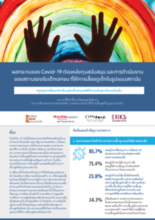
โควิด-19 ก่อให้เกิดการหยุดชะงักอย่างไม่เคยปรากฏมาก่อนในระดับโลก รัฐบาลบังคับใช้มาตรการด้านสาธารณสุขในวงกว้าง ซึ่งรวมถึงคำสั่งให้อยู่บ้าน เคอร์ฟิว และข้อจำกัดการเดินทาง มาตรการเหล่านี้มีผลกระทบทั้งทางตรงและทางอ้อมต่อการจัดหาบริการดูแลเด็กในที่พักอา
In this Call to Action, Transform Alliance Africa urges Africa’s regional bodies, governments, donors and civil society organizations to reinforce their individual and collective efforts to respond to the needs of children in, or at risk of entering, alternative care in light of the COVID-19 crisis.
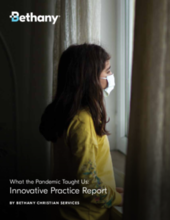
This report summarizes findings from a mixed-methods case study of innovations and challenges within four Bethany foster care locations in the U.S.: Atlanta, Georgia; Philadelphia, Pennsylvania; Detroit, Michigan; and Grand Rapids, Michigan.
The State of the World’s Fathers 2021 report – the fourth in the series – presents research on care work during the COVID-19 pandemic, focusing on structural barriers that prevent equitable distribution of caregiving between women and men.
INSPIRING Ways to End Violence Against Children's new series of podcast episodes explore organisations’ efforts to protect children – and adapt to challenges – during COVID-19.