
Displaying 131 - 140 of 794
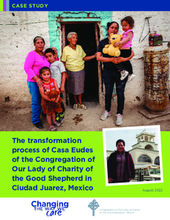
This case study highlights the transition of the Sisters of Our Lady of Charity of the Good Shepherd in Ciudad Juarez. It is an honest look at the emotional, logistical, and practical elements involved in transitioning from a residential care model which existed for more than 100 years to a provider of community-based and family-centered services.
Based in Uganda, Child’s i Foundation successfully transitioned their residential programs before deciding to expand their vision and seek to bring about care reform to the entire district of Tororo. Partnering with the district level government and several CCIs, Child’s i Foundation carried out an extensive analysis and assessment of the Tororo region which provided information to guide the ensuing transitions of CCIs throughout the region.
During 2021-2022, Changing the Way We Care in partnership with three civil society institutions: Keystone Moldova, Child, Community and Family (CCF Moldova) and Partnerships for Every Child (P4EC), conducted a series of assessments on the national level, including a complex evaluation of six residential institutions (RI).

În 2021-2022, CTWWC în parteneriat cu trei organizații ale societății civile: Keystone Moldova, Copil, Comunitate, Familie (CCF Moldova) și Asociația Parteneriate pentru Fiecare Copil (P4EC), a realizat o serie de cercetări la nivel național, inclusiv evaluarea complexă a șase instituții rezidențiale (IR).
Este documento está diseñado para orientar a las personas u organizaciones que están apoyando un proceso de transición para pasar de proporcionar atención residencial a un modelo que promueva la atención familiar y comunitaria. El documento está diseñado en torno a las Fases de la Transición de Better Care Network. Se basa en el trabajo que Changing the Way We Care ha realizado en los últimos años para apoyar a diferentes proveedores de atención residencial, tanto religiosos como laicos, en su propio proceso de transición. Hay ejemplos y enlaces a herramientas relevantes, mensajes y actividades sugeridas que pueden utilizarse para apoyar las diferentes fases del proceso.
The aim of this study was to investigate the circumstances that contribute to the future anxiety affecting looked after children in Poland as they move to independence.
In this theoretical paper, the authors argue that, due to the detrimental impact of parental loss on academic achievement in France, orphaned students should be considered as students with special educational needs. This is important to provide appropriate educational responses consistent with inclusive education.
This report reviewed evidence for the effects of psychosocial neglect on development derived from studies of young children raised in U.S. institutions. In these caregiving environments, children are physically safe and receive instrumental care, but the social, emotional, and cognitive components of caregiving are impoverished. The damaging and often lasting effects of these caregiving environments on young children's development underscore that psychosocial neglect should be considered as dangerous to child well-being as physical maltreatment.

The purpose of this study was to establish the prevalence of adverse childhood experiences (ACEs) in child residential care and to explore predictors of accumulation and clustering patterns.
This U.K.-based study explored the life experiences of care experienced adults in higher education to understand the factors that impeded or enhanced their journeys.
