Displaying 1001 - 1010 of 1055
This report reviews the faltering progress made in childcare reform across Central and Eastern Europe and the former Soviet Union over the 15 years since the ‘orphanages’ of Romania were revealed to the world.

A paper introducing the concept of a ‘Protective Environment’ which outlines the elements required in a society for the effective protection of children from violence, exploitation and abuse.
Assessment of the care system, domestic adoption, and international adoption in Ukraine with a summary of key findings and recommendations.
Reports on the financial costs of residential care for children in the Republic of Moldova. Highlights significant financial inefficiencies and advocates for closure of residential institutions.
Brief summary of the importance of social work in preventing family separation, including increasing empowerment, social support and self-assessment processes.
Provides a framework for analysis of community-based social welfare services and linkages with government structures. Includes analysis of alternative care provision, de-institutionalization, programming for children with disabilities, standards of care, and overall social welfare sector reform.
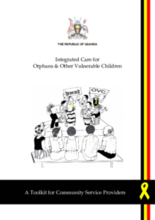
This Toolkit is a companion volume to the Ugandan Ministry of Gender Labour and Social Development’s OVC Training Manual. It contains practical information and tools to help Community Service Providers in Uganda translate the national OVC guidelines into action.
This paper provides an overview of the policy framework and financing of social welfare services in South Africa. Current budgeting and service delivery practices are discussed, as well as obstacles and recommendations for advanced action.
This report assesses the expenditure which is required to transform foster care services across the UK, in order to give children in public care the same opportunities to have a successful future as other children. Contains relevant statistics and social welfare system reform recommendations.
This paper presents a set of global policy guidelines for the protection of children without parental care. It recommends the need for a global understanding of best practices within the legal framework of the UN Committee on the Rights of the Child.