Displaying 1011 - 1020 of 1055
Outlines problems and issues in providing appropriate out-of-home care solutions. Advocates for development of more comprehensive international standards for out-of-home care.
A paper outlining the use of formal and informal kinship care, child headed households and cross border kinship care. It discusses the advantages and limitations of each, including welfare costs, and argues for international standard setting.
Examines the long-term impacts of the Child Social Care Project in Rakai District, Uganda. Outlines good practices for OVC support, as well as recommendations for governments and donors.

Analyzes the state of institutional care in Zimbabwe against the national child protection policy. Focuses on the role of donors in the proliferation of institutional care and strategies to better regulate the development and provision of child protection services.
This paper presents a set of global policy guidelines for the protection of children without parental care. It recommends the need for a global understanding of best practices within the legal framework of the UN Committee on the Rights of the Child.
This paper outlines a program (SIMBA) established to work with local AIDS Service Organizations (ASOs) in Zimbabwe to promote economic development in HIV/AIDS affected communities. Efforts to promote capacitiy building of organizations, self-managed and savings-based microfinance services, and basic business management training are described.
Outlines a set of global standards for schools of social work.
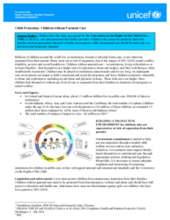
A brief fact sheet on the multilevel support needs of children without parental care. Includes a brief section on statistical data and examples of UNICEF action in several countries around the world.
Provides a brief overview of child welfare reforms implemented in the ECA Region and the collective effort to move away from over-emphasis on institutional care through the Changing Minds, Policies and Lives Project.
The NSPPI provides overall guidance to implementers to mitigate the impact of orphan hood and other vulnerabilities among children in Uganda.