Displaying 1 - 10 of 81
Advisy is Child Rights Connect’s AI-powered chatbot designed to help child human rights defenders access reliable information on their rights and digital protection.
Exploring the biblical and theological basis for child protection and safeguarding, this book raises awareness of the often-ignored reality of child abuse in churches and Christian organisations. ddressing issues such as gender-based violence, child trafficking, online sexual exploitation, child marriage, domestic and family violence, fostering and adoption, inclusion care for disabilities and special needs, amongst others, the authors offer practical tools developed from lived experiences.
This report explores the attitudes, motivations, and practices of Irish Christians in supporting children in overseas care, particularly in residential institutions. The report finds that while many are driven by compassion, faith-based values, and a desire to help vulnerable children, there is often limited awareness of the potential harms of institutional care and the benefits of family-based alternatives.
This study examines child safeguarding practices in Catholic dioceses in Kenya, finding that although safeguarding policies and support systems exist, only a small proportion of church personnel have received formal training. The research highlights ongoing risks—including sexual abuse, child labour, neglect, and early marriage—and identifies resource constraints, cultural resistance, and institutional barriers as key challenges to effective safeguarding.
The Tiny Cave and the Magnificent Creatures uses the Tiny Cave as a metaphor for the often-unintentional constraints that philanthropy and international development place on young people’s expansive imaginations. Through a puppet animation adapted from the storybook and brought together on the Tiny Cave website, Children's Rights Innovation Fund reflects how funding systems can narrow both young changemakers and those seeking to support them.
This historical overview documents milestones in the evolution of the U.S. government’s work to support the development, care, and protection of children globally, as well as coordination efforts across the U.S. government to promote a holistic response to the needs of vulnerable children. It draws on a review of publicly available documentation and conversations with numerous United States Agency for International Development (USAID) staff and partners involved in work on behalf of highly vulnerable children over more than three decades.
This paper introduces an Advocacy Reach Calculator developed by ChildFund International to estimate how many children and families benefit from child protection policy changes. It outlines the tool’s development and pilot testing in four countries, showing how it can support better monitoring, planning, and advocacy efforts.
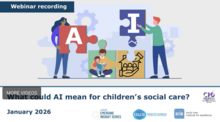
To launch a new Emerging Insight Series of webinars from CELCIS, this session set the scene by considering what AI might mean for children’s social care. It explored fundamental questions, potential opportunities, and challenges related to how AI is being used in practice; its role in responding to the care and protection needs of children and young people and supporting their families; and emerging understanding of the influences and impacts of AI on children’s and young people’s lives.
This Chapter in the Book, Participatory Approaches in Child and Family Social Work explores the significance of advocacy in promoting the rights and well-being of children in care.
This report presents findings from the SEEDs community-led child protection pilot implemented in Manica Province, Mozambique (2023–2024). The approach aimed to strengthen community ownership, enhance local capacity, and generate evidence for scalable child protection programming.