
Displaying 341 - 350 of 536
The article presents the results of an empirical pilot study carried out on a sample of 24 child protection social workers employed in four public agencies in Italy.
Este llamado pide a los gobiernos nacionales y locales, en coordinación con socios nacionales y globales, fortalecer la fuerza laboral del servicio social para mejorar los resultados de protección, salud y bienestar para niños, niñas, jóvenes, familias y comunidades como se describe en los Objetivos de Desarrollo Sostenible.

This report aims to address some common and key themes emerging from a questionnaire and in-person meeting to discuss the role of the social service workforce in the inclusion of migrant children and young people.

Because foster parents play a critical role in supporting children in foster care, who often have experienced trauma, the Casey Foundation developed ARC Reflections, a nine-session program that child welfare agencies can use to train foster parents to better care for children who have had traumatic experiences.
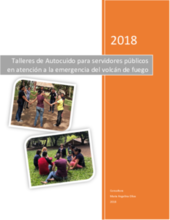
Este informe se detalla la propuesta metodológica para otorgar espacios seguros para que los servidores públicos que han atendido a los damnificados por una tragedia en Guatemala puedan descargarse emocionalmente y poner en práctica técnicas de autocuido.
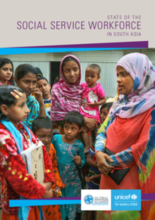
This report from UNICEF South Asia and Global Social Service Workforce Alliance provides information on the current status of the social service workforce in the eight countries in South Asia.
This book makes a distinctive contribution to reflections on what child-centred practice means in the complex area of child welfare.
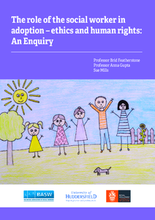
This report presents the findings of a UK national Enquiry into the role of the social worker in adoption with a focus on ethics and human rights.
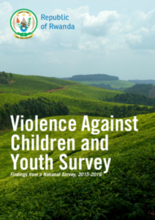
This report presents findings from the national Violence Against Children Survey (VACS), administered in Rwanda from 2015-2016, and lays out recommendations for addressing and preventing violence against children based on those findings.
This online course on implicit bias was developed by the Center for the Study of Social Policy (CSSP) and the Kirwan Institute for the Study of Race & Ethnicity to aid practitioners in understanding and addressing racial bias in the US child protection system.