File
Displaying 21 - 30 of 2256
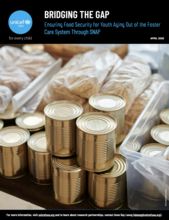
The Supplemental Nutrition Assistance Program (SNAP) is the largest federal nutrition program in the United States, serving about 42 million people and helping reduce food insecurity, with roughly 40% of recipients being youth. This policy brief focuses on how recent federal changes put youth aging out of foster care at risk of losing SNAP benefits and recommends reinstating eligibility waivers, strengthening state transition services, and protecting data on food insecurity for this vulnerable population.
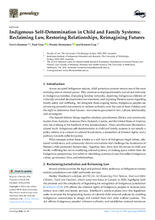
This article examines how child protection systems continue to reflect colonial power by disproportionately intervening in Indigenous families and undermining cultural practices and kinship systems. It highlights growing Indigenous-led movements to reclaim authority over child welfare, emphasizing self-determination and the rebuilding of care systems grounded in Indigenous laws, values, and relationships.
Since taking office in 2025, the second Donald Trump administration significantly expanded immigration enforcement while weakening safeguards for due process, family unity, and parental rights, resulting in record detention levels and widespread impacts on immigrant families. This research by Women’s Refugee Commission and Physicians for Human Rights found that many deported parents were denied the opportunity to make arrangements for their children, leading to increased family separations that may become long-term or permanent.

This Guardian article reports on a new investigation finding that, under recent U.S. immigration policies, some parents are being deported without their children—often without being given the opportunity to make arrangements for their care. Based on interviews with deported families and advocacy organizations, it highlights how these separations can happen abruptly during detention, leaving children—including very young or vulnerable ones—behind in precarious situations.
This comprehensive child welfare resource provides U.S. state and national data on child maltreatment, foster care, kinship caregiving, permanency, and older youth in care. The data are essential to help policymakers understand how many children and youth come in contact with the child welfare system, and why.
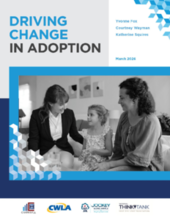
For nearly 30 years, U.S. federal legislation shaping adoption has remained largely unchanged, even as expectations around privacy, youth voice, and family support have significantly evolved. This toolkit offers practical strategies and resources to modernize policy and practice, centering young people’s agency across consent, privacy, family recruitment, and post-adoption support.
The U.S. government’s foreign assistance reductions and rescissions in 2025 are reshaping the global policy and financing landscape for children in adversity. This report, drawing on consultations with over 200 stakeholders, outlines strategies across four pillars to mitigate harm from the cuts and strengthen local capacity to support vulnerable children, families, and communities.
This historical overview documents milestones in the evolution of the U.S. government’s work to support the development, care, and protection of children globally, as well as coordination efforts across the U.S. government to promote a holistic response to the needs of vulnerable children. It draws on a review of publicly available documentation and conversations with numerous United States Agency for International Development (USAID) staff and partners involved in work on behalf of highly vulnerable children over more than three decades.
This report contains the findings from a nationally representative study conducted in 2025 by Barna Group of U.S. Christians to better understand U.S. Christian beliefs around and support for orphanages, children’s homes and other forms of residential care for children.
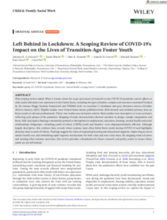
This review examines research on how the COVID-19 pandemic affected older youth with foster care experience in the United States, finding that most studies were descriptive and highlighted major disruptions in areas like housing, education, employment, mental health, and relationships. It shows that certain groups—such as youth of color, LGBTQ youth, and females—were especially impacted, and calls for stronger support systems and policies to better protect foster youth in future crises.