Investing in Disability Inclusive and Gender-Responsive Care and Support Systems Across the Life Cycle in Kenya

Ministry of Labour and Social Protection

This resource presents a costed policy study on investing in disability-inclusive and gender-responsive community care and support systems across the life cycle in Kenya, developed by the Ministry of Labour and Social Protection.

File

Rights-Based Social Work with Unaccompanied Children and Young People

Rachel Larkin

This chapter in the The Routledge Handbook of Social Work and Migration focuses on social work with children and young people who have experienced forced migration and become separated from family members, known as unaccompanied minors. It explores the possibilities of rights-based practice with unaccompanied children and considers what might be needed to develop and sustain this.

The role of the health sector in supporting parents and caregivers to meet their parenting potential

WHO

Supporting parents and caregivers requires a whole-of-society approach, with coordinated responses from the health, education, social services, private and other sectors. This brief focuses on the role of the health sector specifically. It explains why the health sector should support parents and caregivers, describes the type of support they need, and outlines the key building blocks of the health sector response.

File

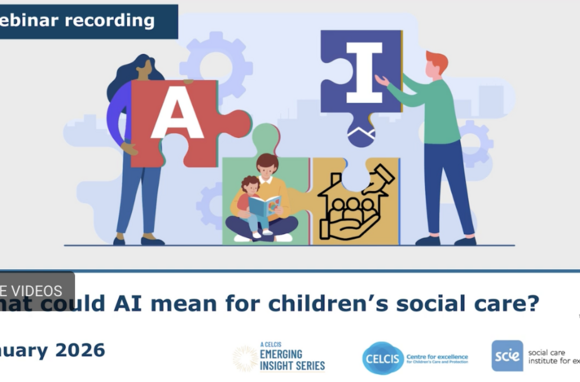
A CELCIS Emerging Insight Series Webinar: What could AI mean for children's social care?

CELCIS

To launch a new Emerging Insight Series of webinars from CELCIS, this session set the scene by considering what AI might mean for children’s social care. It explored fundamental questions, potential opportunities, and challenges related to how AI is being used in practice; its role in responding to the care and protection needs of children and young people and supporting their families; and emerging understanding of the influences and impacts of AI on children’s and young people’s lives.

Image
Image of webinar recording

Frontline practitioners’ perspective of the implementation of child protection laws and prevention of violence against children in Maputo, Mozambique

Sérgio Nhassengo, Stela Ocuane Matsinhe, Eunice Jethá, et al.

This article examines how frontline child protection practitioners in Maputo City, Mozambique experience the implementation and enforcement of child protection laws, focusing on perceived barriers and facilitators. It finds that resource constraints, legal gaps, and sociocultural norms hinder effective enforcement, while NGO support and multisectoral coordination act as key enablers, highlighting the need for increased funding, legal harmonization, and evidence-based interventions to prevent violence against children.

File

The Words to Say It: Co-Constructing Knowledge on Child Maltreatment with Care-Leavers

Teresa F. Bertotti, Diletta Mauri, et al.

This article explores a pilot study in Italy in which care-experienced young people acted as co-researchers to examine perceptions of child maltreatment and state intervention, focusing on the co-construction of knowledge between survivors and academic researchers. It finds that peer-led research strengthens epistemic justice and professional practice by integrating lived experience with academic analysis and fostering relational, supportive spaces for young people’s voices in care proceedings.

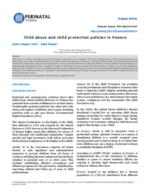
Child abuse and child protection policies in Kosovo

Arjeta Shaqiri Latifi, Adile Shaqiri

This article examines child abuse in Kosovo by analyzing policy gaps, risk factors, legal frameworks, and challenges in implementing child protection laws, drawing on interviews with senior Ministry of Justice officials and national data. It highlights a significant rise in child victimization between 2020 and 2022 and recommends legislative updates, institutional reforms, and the development of a national strategic document to strengthen child protection systems.

File

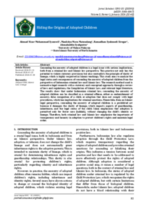
Hiding the Origins of Adopted Children

Ahmad Nizar Mohammad Syamwil, Maulidya Mora Matondang, Ramadhan Syahmedi Siregar, Akmaluddin Syahputra

This article examines the legal status and consequences of concealing the ancestry of adopted children under Indonesian criminal law and Islamic law. It analyzes how such practices are addressed in statutory law and Islamic legal principles, highlighting the importance of lineage clarity, transparency, and the protection of children’s rights in adoption.

File

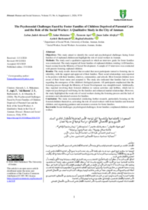
The Psychosocial Challenges Faced by Foster Families of Children Deprived of Parental Care and the Role of the Social Worker: A Qualitative Study in the City of Amman

Lubna Judah Akroush, Sahar Mukaime, Tasneem Aqel, et al.

This study aimed to identify the social and psychological challenges facing foster families of orphaned children and highlight the role of social workers in Amman.

File