Rwanda DHS 2010 Report (Draft)
This report from Better Care Network is a collection of care-relevant data and demographic information on Rwanda from the Demographic and Health Surveys (DHS) Program.
File
This report from Better Care Network is a collection of care-relevant data and demographic information on Rwanda from the Demographic and Health Surveys (DHS) Program.
The Technical Team under the Project “EDU-CARE: Social Operators Active in the Protection of the Children and in the Promotion of the Children’s Rights in Nepal” reports on the child care practices, policies, and programs currently in effect in the country.
This piece, written by Aselefech Evans, a woman adopted from Ethiopia when she was five years old, addresses the issue of family preservation and international adoption.
In this chapter of the Handbook of Child Well-Being, the authors review the findings from research on the cognitive and social-emotional development of children growing up in institutions, foster care and adoption.
This article reviews some of the language and conceptual issues that need to be addressed to be able to meaningfully compare differential usage of residential childcare services across national boundaries.
This article discusses the challenges in protecting Guatemalan children and their families from involuntary separation and presents the process, results and implications of a pilot training in which Guatemalan participants from government and civil society explored the efficacy and feasibility of the FGC model in their country.
This Summary of Research provides a concise overview of a range of studies and findings that can inform approaches to caring for children who, through orphanhood, abandonment, or other causes, have been separated from parental care.
The second annual edition of the World Family Map investigates how family characteristics affect children’s healthy development around the globe and includes a new essay focusing on union stability and early childhood health in developing countries.
This report by Human Rights Watch examines Japan’s alternative care system for children. It describes its organization and processes, presents current data on the use of different forms of alternative care and highlights the problems found in the institutionalization of most children (including infants), as well as abuses that take place in the system.
A coalition of over 40 international, regional and national NGOs and networks have issued a joint call to member States of the United Nations General Assembly (UN GA) to focus the 2014 Resolution on the Rights of the Child on strengthening family care and providing appropriate alternative care for children.
A presentation on the "Orphan Industrial Complex" at the Young Lives and Globalization in Africa workshop at the University of Liège, Belgium on 21st February 2014.
The Infant Mental Health Journal has published an important Special Issue on Global Research, Practice, and Policy Issues in the Care of Infants and Young Children at Risk. This article documents how between 2005 and 2013, the Government in the Republic of Georgia closed 32 large, state-run institutions housing children without adequate family care.
Infant Mental Health Journal has published an important Special Issue on Global Research, Practice, and Policy Issues in the Care of Infants and Young Children at Risk. This article documents an initiative to establish a replicable professional model that would direct the child welfare system in the Nizhny Novgorod Region away from institutional care and toward services for young children and their families that reduce the risk of institutionalization.
This article uses data collected from adoptive parents’ postadoption and governmental data in Romania, Ukraine, India, Guatemala, and Ethiopia to focus on domestic adoption in each of these countries. The article highlights both promising practices in domestic adoption as well as policies and practices that require additional research.
Infant Mental Health Journal has published an important Special Issue on Global Research, Practice, and Policy Issues in the Care of Infants and Young Children at Risk. This article reports on a quasi-experimental study commissioned by the Chilean government that had two general aims: (a) to assess infants’ psychoaffective developmental levels and (b) to evaluate whether an intervention based on the promotion of socioemotional development modifies the infant's psychoaffective development.
Infant Mental Health Journal has published an important Special Issue on Global Research, Practice, and Policy Issues in the Care of Infants and Young Children at Risk. This article describes a model of care for abandoned and neglected infants in need of urgent physical, social, and medical support as implemented by the Child's i Foundation, an international, nongovernmental organization operating in Uganda.
Infant Mental Health Journal has published an important Special Issue on Global Research, Practice, and Policy Issues in the Care of Infants and Young Children at Risk. This article provides a case study of a project to improve the health, safety, and development of children birth to 6 years old in a large orphanage in Nepal.
Infant Mental Health Journal has published an important Special Issue on Global Research, Practice, and Policy Issues in the Care of Infants and Young Children at Risk. In this study the authors assessed internalizing disorders, externalizing disorders, and attention deficit hyperactivity disorder (ADHD) in 54-month-old children living with foster families in Bucharest, Romania.
Infant Mental Health Journal has published an important Special Issue on Global Research, Practice, and Policy Issues in the Care of Infants and Young Children at Risk. In this article, behavior problems were studied in fifty 5- to 8-year-old children transferred from a socioemotionally depriving Russian institution to domestic families.
Infant Mental Health Journal has published an important Special Issue on Global Research, Practice, and Policy Issues in the Care of Infants and Young Children at Risk. This article describes the adverse mental health effects of violence and abuse in an institution in Tanzania.
This article provide one of the most comprehensive assessments of physical growth, biological markers of growth and nutrition, and general behavioral development, in this case conducted on 286 children under 3 years of age living in 10 institutions in Kazakhstan that were globally deficient.
This introductory article of a Special Issue of Infant Mental Health Journal on Global Research, Practice, and Policy Issues in the Care of Infants and Young Children at Risk provides a useful overview, placing the articles in the broader contexts of research on institutionalized children and different initiatives to prevent inappropriate care, either through addressing the quality of the care provided or ensuring the appropriateness of the type of care environment provided.
This report is based on a synthesis of eight assessments of the implementation of the Guidelines for the Alternative Care of Children (“the Guidelines”) in Benin, Gambia, Kenya, Malawi, Tanzania, Togo, Zambia and Zimbabwe.
Special Representative of the Secretary General on Violence Against Children, (SRSG on VAC), Marta Santos Pais, promoted a Cross-Regional Round Table on the prevention of violence in early childhood with representatives from several regional organisations.
Explores the negative impacts of loss of parental care on children. Advocates for reform for children based on assertion that failure to keep children in families, out of residential institutions and off the streets, will be another barrier to the achievement of the Millennium Development Goals
The Heads of State of the Caribbean region endorsed the Call to Action to end the placement of children under three years of age in residential care institutions at the 35th CARICOM conference.
Summary of the Third Committee debate on children's rights at the 68th Session of the UN General Assembly in New York
This presentation, produced by Better Care Network (BCN), International Social Service (ISS), Save the Children, and SOS Children's Villages, was given at a 2014 briefing of the African Committee of Experts on the Rights and Welfare of the Child (ACERWC). The objectives of the Alternative Care Briefing were to increase the understanding of and recommendations on the implementation of the Guidelines for the Alternative Care of Children when reviewing State Party Reports and drafting general recommendations and to create opportunities to promote the Guidelines for the Alternative Care of Children in its 5th anniversary.
Save the Children has released a policy brief outlining its position on the institutional care of children.
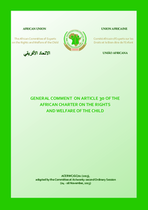
The African Committee of Experts on the Rights and Welfare of the Child (ACERWC) held its twenty-second Ordinary Session from 4-8 November 2013 and issued its first General Comment on the African Charter regarding the rights and welfare of children of incarcerated and imprisoned parents and primary caregivers.
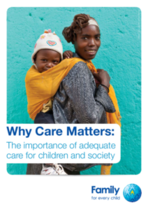
This report highlights the needs of children without adequate family care, the impact inadequate care on children and society, and why family care is important. In this report, Family for Every Child also issues several recommendations for those in all sectors of society and an example of care reform from Brazil.
This report features the results of, and recommendations based on, a study conducted in Rwanda which investigates the links between the cash transfer program “Vision 2020 Umurenge Programme (VUP),” child well-being, and children’s care and family reunification.

This publication, produced by the Parenting in Africa Network (PAN), highlights the skillful parenting practices of several pastoral communities in Africa.

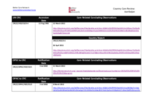
This country care review includes the care related Concluding Observations adopted by the Committee on the Rights of Persons with Disabilities as part of its examination of the first periodic report of Azerbaijan under Convention on the Rights of Persons with Disabilities at its 125th and 126th meetings, held on 1 and 2 April 2014, respectively.
A short 2-page fact sheet on how to evaluate the suitability of a family that wishes to adopt a child.
Assessment of individual African government's performance in regards to child welfare.
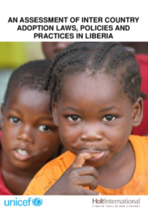
This report presents the findings of an assessment conducted between 8 July and 22 August 2006 that gathered and analyzed information on inter-country adoption to support strengthening Liberia’s adoption laws and develop operating guidelines for adoption agencies.
Evaluates the need for reform within Nepal's intercountry adoption programming and the broader needs within the child protection and alternative care arenas nationally.
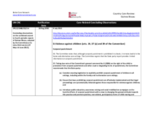
This country care review includes the care related Concluding Observations adopted by the Committee on the Rights of the Child as part of its examination during the sixty-third session (27 May-14 June 2013) of Israel’s second to fourth periodic reports to the Convention on the Rights of the Child, as well as other care-related concluding observations, ratification dates, and links to the Universal Periodic Review and Hague Intercountry Adoption Country Profile.
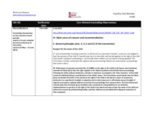
This country care review includes the care-related Concluding Observations adopted by the Committee on the Rights of Persons with Disabilities during the seventeenth session (20 March 2017 - 12 April 2017) of the Convention on the Rights of Persons with Disabilities.
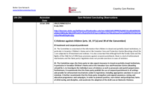
This country care review includes the care related Concluding Observations adopted by the Committee on the Rights of the Child as part of its examination during the sixty-third session (27 May-14 June 2013) of Guinea Bissau’s second through fourth periodic reports to the Convention on the Rights of the Child, as well as other care-related concluding observations, ratification dates, and links to the Universal Periodic Review and Hague Intercountry Adoption Country Profile.
This article describes the historical background and current situation of the child welfare system for children without parental care in Poland.
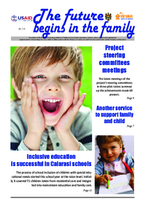
This issue No. 3-4 is one in a newsletter series concerning care reform in Moldova. The magazine was produced by Partnerships for Every Child (P4EC), an NGO in Moldova, with funding from the project, “Protecting children in Moldova from family separation, violence, abuse, neglect and exploitation.”
This paper presents an examination of the linkages between education and the deinstitutionalization of children in Azerbaijan. The paper explores the role of education in social policy and its interplay with economic policy; underlines the links needed between deinstitutionalization, inclusive education and alternative services; and examines how child protection can be understood in the context of inter-Ministerial responsibilities and coordination.
This study, published by the UNICEF Office of Research and Brooks World Poverty Institute, examines the direct, indirect, and implementation impacts of social transfers on child protection outcomes in low- and middle-income countries. The paper discusses the ways in which social transfers can promote the welfare of children by preventing violence, abuse, and exploitation of children and offers recommendations for future research, programming, and practice.