Psychosocial support for children and families during COVID-19
This How We Care series explores how Family for Every Child's Members are providing essential psychosocial support to vulnerable children and families within the context of the pandemic.
In this comment piece, the The WHO–UNICEF–Lancet Commissioners argue that "recovery and adaptation to COVID-19 can be used to build a better world for children and future generations."
This study aimed to explore the experiences and perceptions of health among young people (YP) who have previously lived in care.
In this article, the authors outline some of the issues in the implementation and understanding of the Convention and highlight three major international developments over the last decade: the adoption of General Comment No 13, the work of the Special Representative of the Secretary General on Violence Against Children, and the adoption of the 2030 Agenda for Sustainable Development by the UN General Assembly in 2005.
This article examines rates of disparity using secondary longitudinal clinical-administrative data provided by a child protection agency in Quebec for a subsample of Black, White, and other visible minority children over a ten-year span.
In this study the authors examined the relative contributions of maternal versus paternal criminal offending or mental health problems in relation to the time to the offspring’s first report to child protection services, or first placement in out of home care (OOHC), using administrative records for a population sample of 71,661 children.
Using a phenomenological research design, this study delves into the motivations and challenging experience of foster carers in South-Kivu.
By synthesising the research evidence, this study seeks to address the questions of whether early childhood parenting programmes are effective in improving parenting and enhancing children's development; and which factors of the programme design and implementation contribute to the successful outcomes of parenting programmes.
In this article, the authors propose a definition of child well-being that draws on the economic literature pertaining to skill formation and human capital.
This article reports the findings of MIRRA, a participatory research project on the memory and identity dimensions of social care recordkeeping.
The goal of this paper was to conduct a review of studies from 2008 to 2019 that evaluated community‐based caregiver or family interventions to support the mental health of orphans and vulnerable children (OVC) in sub‐Saharan Africa, across four domains: (a) study methodology, (b) cultural adaptation and community participation, (c) intervention strategies, and (d) effects on child mental health.
In this case, we meet Maya, an adolescent girl in foster care who is trafficked for sex.
This study examines how childhood experiences of being left behind by migrant parents affect the behaviors of adults.
This document summarizes the 2019 UNGA Resolution on the Rights of the Child focusing on children without parental care (A/RES/74/133) in an easy-to-follow way.
This editorial piece from the Lancet posits whether today's children "will be defined and confined by the losses from COVID-19."
The Nourished and Thriving Children toolkit was designed by SPOON to build capacity among the foster care community in feeding and nutrition topics so that they are equipped to address challenges commonly experienced by foster children.
World Vision has conducted rapid assessments in 24 countries across Latin America, Sub-Saharan Africa, and Asia confirming alarming predictions of increased child hunger, violence, and poverty due to the economic impact of COVID-19.
Drawing on a large‐scale online survey of looked after children's subjective well‐being, this paper demonstrates that a significant number of children and young people (age 4–18 years) did not fully understand the reasons for their entry to care.
To analyse how professionals and parents position themselves, the authors of this study chose to focus on the content of social workers' interviews with parents and on the associated interactions. To this end, the authors recorded 13 parent–professional interviews after receiving the consent of the concerned parties.
The authors of this study interviewed 20 parents about their experiences with the Dutch child protection system (CPS).
In this paper, the authors report the results of a study examining parenting challenges among a sample of African immigrant parents in Alberta, Canada.
This study investigated whether parental stress was associated with parenting and whether this relationship was mediated by social support in a sample of 255 Chinese immigrant parents from the Survey of Asian American Families in New York City.
The present study aims to identify the adoptee, parents and family related predictors of the adoptive parents' parenting stress, exploring direct and indirect effects. Fifty Portuguese adolescents' adoptive parents participated in this study.
The purposes of this study are to document and analyse the point of view of children in foster families on their subjective well‐being and also to identify contextual factors that influence it.
Building on 10 qualitative interviews with parents of children in Norwegian Child Welfare Services, this paper discusses parents' views on collaboration between children and child welfare professionals.
This massive online open course (MOOC) aims to enhance understanding of the heightened protection risks and vulnerabilities that children are facing around the world during the COVID-19 pandemic.
Based on World Vision's extensive experience working with children and families in crisis, this policy brief outlines recommendations to stakeholders, such governments, UN agencies, NGOs, and donors, and calls for the use of child-sensitive social protection in these stakeholder’s responses to the COVID-19 pandemic.
This brief provides an overview, including key questions and considerations, of version 2 of the Alliance for Child Protection in Humanitarian Action's Technical Note on Protection of Children during the COVID-19 Pandemic.
This webinar aspires to share examples of successful approaches for supporting the most vulnerable families and young children during the COVID-19 pandemic in Italy, Belgium, Germany, and Ukraine.
El programa de Educación del Diálogo Interamericano, Early Childhood Development Action Network (ECDAN) y la Oficina Regional para América Latina y el Caribe de UNICEF convocan un seminario virtual para reflexionar sobre cómo la emergencia ha afectado a la primera infancia y qué respuestas están organizando los gobiernos para responder a la cambiante situación y asegurar que los objetivos de desarrollo infantil continúan recibiendo la atención necesaria.
This systematic review critically evaluated the evidence for a causal association between child maltreatment and impaired cognition in children under 12 years.
This study explored (1) the role of ethnic identity in predicting internationally adopted adolescents' expectancies for success and task values and (2) the extent to which school belonging mediated these relations.
This paper investigates whether the Government of Zimbabwe’s Harmonized Social Cash Transfer (HSCT) Program, which combines cash transfers with complementary services, affects youth exposure to physical violence.
In the present paper, the Ecological Systems Theory is used to depict different vulnerabilities associated with orphanhood in the Ghanaian context.
The present study examined the protective effect of the error-related-negativity (ERN) in a sample of children who experienced at least 3-years of stable, relatively enriched caregiving after being internationally-adopted as infants/toddlers from institutional-care.
Using in-depth interviews and participant observation over a two-year period, this study explores workers’ experiences of and strategies for ending relationships with youth in an independent living program.
This article examines the legal and practical implications of fostering and adoption law and policy in Britain. It includes an examination of the barriers preventing Muslim carers from coming into fostering and adoption, as well as the sensitive issue of caring for maḥram and non-maḥram children.
This technical assessment report uses a transformative social protection framework adapted for studying the provisions and practice in alternative care and adoption in Kenya.
In response to the continuing need for agencies providing residential care and treatment to children and youth to develop and/or to enhance their ability to examine the effectiveness and efficiency of their services, this article explores successful strategies for building and sustaining research capacity in these settings.
Este informe describe las lecciones aprendidas de aquellos que estuvieron directamente involucrados en la implementación del Programa de Protección Infantil durante la respuesta epidémica a la Enfermedad por el Virus del Ébola (EVE) en África Occidental.
Pandemia COVID-19 solicită adaptarea și / sau dezvoltarea de servicii și programe pentru a continua să servim cel mai bine copiii și familiile lor în timpul acestei perioade rapid schimbătoare.
Această mapă, de asemenea, ajută programelor la adaptare, reorganizare și determinarea priorității activităților de prevenire și răspuns.
This report presents the findings from a survey commissioned by the Asia-Pacific Regional Network for Early Childhood (ARNEC) to get insights and share experiences on the situation of children and the status of early childhood development (ECD) as a result of COVID-19 and the resulting containment and risk mitigation measures being implemented in countries in Asia-Pacific region.
The authors of this article review the evidence base on short- and long-term risks for children during early childhood development (ECD, defining this from prenatal to 8 years of age) and present evidence-based mitigating program and policy actions that may reduce these risks.
This Call to Action outlines some of the impacts of both displacement and COVID-19 that are threatening the positive development of many young children around the world. It calls for governments and donors honor existing commitments, ensure inclusion of young children and families in public systems and take FIVE immediate actions.
This joint position statement calls for prioritising investment in early childhood services in light of the COVID-19 crisis.
In line with principles outlined by the Early Childhood Development Action Network and the International Task Force for Teachers for Education 2030, the following are five key actions that governments, civil society organizations, and funding agencies must take to support the early childhood workforce to ensure continuity and quality in efforts to promote nurturing care.
This brief report explores the impact that Covid-19 has had on fostering households in the United Kingdom.
This package of materials from Changing the Way We Care features guidance and tools for case management and virtual monitoring during the COVID-19 pandemic.
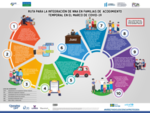
Esta guía se desarrolló para ayudar al equipo psicosocial a realizar un seguimiento virtual de los NNA y las familias durante la pandemia de COVID-19.