Parenting Practices and Socioeconomic Gaps in Childhood Outcomes
In this article, developmental psychologists Ariel Kalil and Rebecca Ryan examine the relation between parenting practices and socioeconomic gaps in child outcomes.
File
In this article, developmental psychologists Ariel Kalil and Rebecca Ryan examine the relation between parenting practices and socioeconomic gaps in child outcomes.
This webinar includes presentations from panelists in Latin America discussing early childhood programming in the region, particularly in light of the COVID-19 pandemic.
To explore the complex dynamics of parental migration on nonsuicidal self‐injury (NSSI), this study examined the roles of parent–child cohesion and socioeconomic status (SES) in the relationship between stressful life events and NSSI.
This review provides an overview and educational material on nonaccidental injury (NAI) and its clinical presentation.
The purpose of this article is to discuss whether adoption, in the form in which it is systematized in Brazil, by the National Adoption Register, may be the solution to the serious problem of child and adolescent in risky situations of care, especially those living in the state of Rio de Janeiro.

The purpose of this study was to identify changes in knowledge, skills and efficacy of foster caregivers who received trauma coach services.
This report is an analysis of the overall findings from the research project on Haitian child domestic workers.
This report presents a needs assessment which provides a summary of the situation of children with disabilities who are living in residential care institutions and in communities in Cambodia and proposes seven key recommendations and relevant concrete actions for the short, medium and long term to improve the quality of care of children with disabilities living in institutions and to ensure that they have better access to basic services and are living in a protective environment.
In this webinar, hosted by Early Childhood Development Network, UNICEF, and the Khan Foundation, panelists discuss programs to support parents and caregivers during the COVID-19 crisis.
In this policy brief, Joining Forces, as a coalition of six child rights organisations, calls for child protection to be prioritised in the response to COVID-19.
This brief from the Zimbabwe Education Cluster presents details on the humanitarian needs and response in Zimbabwe due to the COVID-19 crisis, including the acute needs of orphans and vulnerable children, children with disabilities, and others.
This documentary tells the stories of four Aboriginal grandmothers in Australia whose grandchildren have been removed and placed in state care, and who are fighting to have their grandchildren placed in their care.
This accompanying annex document to the Inter-agency Technical Note on the Protection of Children during the COVID-19 Pandemic: Children and Alternative Care provides helpful tips to promote the engagement and participation of all stakeholders, which is central to maintaining continuity of services for children.
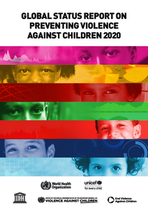
The Global status report on preventing violence against children 2020 charts countries’ progress towards the SDGs aimed at ending violence against children.
This video from Rise Magazine features tips from parents who have had their children placed in foster care in the U.S. to other parents in the same situation on how to handle visits with their children in the care system.
This video from Rise Magazine is designed to include in training for caseworkers, visit coaches, parent advocates and other frontline staff who will supervise or support parents during visits with children in foster care.
In this video, State Representative Rena Moran and State Senator Jeff Hayden of the U.S. state of Minnesota introduce legislation that would establish guidelines to prevent the removal of African American children from their families.
This editorial piece from The Lancet Child & Adolescent Health urges that the "far-reaching consequences [of the COVID-19 crisis] call for children and their right to health, education, and protection to be prioritised in the pandemic response and recovery planning."
In this Submission to the Inquiry into Support for Children of Imprisoned Parents, Karleen Gribble, Adjunct Associate Professor in the School of Nursing and Midwifery at Western Sydney University, comments on "the situation of infants and young children whose mothers are incarcerated and the support or undermining of their health and wellbeing in the justice system."
In this comment piece that accompanies Child-to-adult neurodevelopmental and mental health trajectories after early life deprivation: the young adult follow-up of the longitudinal English and Romanian Adoptees study, Frank C Verhulst discusses how that study "fills an important knowledge gap on the long-term mental health consequences of early severe childhood deprivation."
The aim of this study has been to assess the reasons for the increased enrolment of children into orphanages and child care centres. An action research was conducted in Islamabad and Rawalpindi between November and December 2017 to assess the situation and identify the causes and circumstance that bring in and compel orphans and vulnerable children to move out after a certain age or grade.
This collection of guidance from the UK Department for Education lays out what local authority children’s services need to do during the coronavirus (COVID-19) outbreak.
This integrative literature review studies well‐being of unaccompanied asylum‐seeking children through the three modes of recognition—love, rights and solidarity—as conceptualized by Axel Honneth.
Because social networks have been shown to impact behavioral health outcomes, this study sought to better understand the network characteristics of homeless young adults with a history of foster care.
The goal of this study is to identify predicative indicators that will assist in the development of a home study that will increase consistency within home studies and decrease timeliness of completion.
In this webinar, a panel including persons with disabilities and experts in disaster management, human rights and service provision discuss the need for “emergency deinstitutionalisation” of persons with disabilities and how this could be achieved.
This dashboard from Girls Not Brides provides data on child marriage around the globe, including child marriage prevalence, country and regional data, legal age of marriage per country, and more.
The aim of this report was to collate information about policies and plans, changes over time, strengths and areas of concerns relevant to advancement in deinstitutionalisation in 27 EU countries and for six target groups: adults with disabilities, adults with mental health problems, children (including children with disabilities), unaccompanied or separated migrant children, homeless persons and older adults.
In the present study, six unaccompanied asylum‐seeking minors (UASMs) were interviewed and interpretative phenomenological analysis (IPA) was used as a methodology to analyse the data.
A mixed method correlational exploratory pilot was conducted in Washington State to determine items within the home study assessment that could be used as indicators to identify baseline requirements of the assessment and suggest anticipated depth (expansion or reduction) within the required topic(s).
Based on 39 semi-directed individual interviews with social workers from child welfare services, the current study aims at highlighting how social workers come to the decision to remove a child from parental care, and how they choose a foster family.
In this episode of the Protected! Podcast, Hani Mansourian from the Alliance for Child Protection in Humanitarian Action talks to Selim Benaissa, Chief Technical Officer from the ILO on the Myanmar program for the elimination of child labour about how the coronavirus pandemic has affected the program.
In this episode of the Protected! Podcast, Elsa Laurin, the Senior Child Protection Officer for the East and Horn of Africa from UNHCR, tells Hani Mansourian how they and their partner organisations re-prioritised child protection cases in response to the changing situation of shut borders in eastern Africa as the threat of an outbreak of COVID-19 loomed.
This thesis aimed to explore health, abuse, support, and preconditions for school among children in out-of-home care (OHC) in Sweden and to assess changes after an intervention targeting foster children’s school performance.
In this second part of the Lancet Group Commission on institutionalisation and deinstitutionalisation of children, international experts in reforming care for children identify evidence-based policy recommendations to promote family-based alternatives to institutionalisation.
This paper reviews the literature on child institutionalisation and deinstitutionalisation from a global perspective. This review included a survey of historical and cultural trends and estimates of current numbers of children in institutional care, a systematic review and meta-analysis of developmental sequelae, and a largely qualitative review of factors found to predict individual variations in such outcomes.
In this commentary piece, Aisha K Yousafzai - of the Department of Global Health and Population at the Harvard TH Chan School of Public Health and the and Department of Paediatrics and Child Health at Aga Khan University - notes that "the evidence presented [in the Lancet Group Commission on the institutionalisation and deinstitutionalisation of children] and their call to action to ensure abandoned children can thrive in family-based care environments rather than in institutions matters now more than ever as the global community addresses unprecedented challenges to ensure a generation of children are not left behind with respect to their survival, health, development, learning, and safety."
In this commentary piece, Anne Longfield, Children’s Commissioner for England, explores the use of children's care homes in England and the need for improved supports to prevent placement in children's home and to provide for the needs of children and young people who are placed in these homes.
In this commentary piece for The Lancet Psychiatry, Joan Kaufman highlights some key findings and recommendations from the Lancet Group Commission on the institutionalisation and deinstitutionalisation of children.
This Executive Summary provides an overview of the Lancet Group Commission, which advocates global reform of the care of separated children through the progressive replacement of institutional provision with safe and nurturing family-based care.
This Lancet Group Commission, published between The Lancet Child & Adolescent Health and The Lancet Psychiatry, advocates global reform of the care of separated children through the progressive replacement of institutional provision with safe and nurturing family-based care.
This guidance is designed to inform child protection actors in Kenya in light of the COVID-19 crisis. It guides actions targeting, and services provided for, vulnerable children and families, including children living in institutions, children living on the streets, children with disabilities, and others.
The aim of this Technical Note is to support child protection practitioners and government officials in their immediate response to the child protection concerns faced by children who are at risk of separation or in alternative care during the COVID-19 pandemic.
This dashboard draws on periodic country office reporting against an evolving questionnaire, first initiated on 12 March 2020, representing important early indications of the impacts of COVID-19 on the disruption of essential services for children and families.
This webpage from UNICEF links to the Policy Brief on the Impact of COVID-19 on children, the Dashboard on Data to inform the COVID-19 response, and other key data resources on COVID-19 and its impacts on children.
This dashboard contains the latest data from UNICEF’s global databases that are relevant to the COVID-19 response for children. Explore country-level data by gender, residence and wealth quintile.
This Joint Statement the ASEAN Ministers responsible for social welfare and development outlines their concerns and commitments to action regarding meeting the needs of vulnerable people impacted by the COVID-19 crisis, including children with disabilities, children deprived of liberty, and children in institutional care, among other groups.
This webinar focused on Early Childhood Development in Humanitarian Settings in the context of the COVID-19 pandemic.
This article from UNICEF describes the increased risks and vulnerabilities faced by children left behind by migration in Kyrgyzstan due to the COVID-19 crisis, and how UNICEF and its partners are responding to meet their needs.
This synthesis is the first in a series of digests of COVID-19 related resources (guidance, news, & academic articles) from the Alliance for Child Protection in Humanitarian Action. It focuses on sexual and gender-based violence and COVID-19.