Partnering With Relatives to Promote Reunification
This factsheet shares the experiences and advice of families who have had relatives in
kinship care arrangements to highlight the dynamics and steps that can support reunification.
File
This factsheet shares the experiences and advice of families who have had relatives in
kinship care arrangements to highlight the dynamics and steps that can support reunification.
This bulletin outlines the importance of disaster planning in child welfare and discusses how caseworkers, with the help of their supervisors, can prepare themselves and the children, youth, and families on their caseloads for emergencies. It also provides direction for child welfare staff on response and recovery strategies they can use should disasters occur in their communities.
This rapid training was designed to provide information to Moldovan foster families in preparation for fostering unaccompanied and separated children from the Ukraine. The training package includes a PPT and facilitator’s guide. Content provided during the six-hour training program includes basic information on childhood trauma, Adverse Childhood Experiences, key elements of PFA including Look, Listen and Link, and understanding how to both identify and support children who have lived through trauma and how it might manifest at different ages and stages of development.
11 березня 2022 року Кластер захисту оприлюднив першу оцінку внутрішньо переміщених осіб (ВПО) в Україні від початку військового наступу 24 лютого. Оцінки були засновані на попередній методології, розробленій у консультації з OCHA, МОМ, УВКБ ООН та REACH. У зв’язку з відсутністю достовірних джерел даних про ВПО на той момент, і в той час як урядова централізована система реєстрації не застосовувалася, Кластер втрутився, щоб забезпечити доведення до відома міжнародної спільноти попередньо оцінених масштабів внутрішнього переміщення в Україні.
On 11 March 2022, the Protection Cluster released the first estimation of internally displaced persons (IDPs) in Ukraine since the military offensive started on 24th February. Estimates were based on a provisional methodology developed in consultation with OCHA, IOM, UNHCR and REACH.
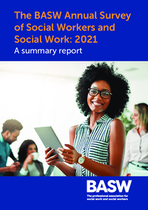
In this summary report, the British Association of Social Workers (BASW) presents the findings of its 2021 annual survey providing an insight into the state
of the profession, the views of social workers and student social workers on key topics and the ongoing impact of working during the COVID-19 pandemic and beyond. The survey was launched in December 2021 as a place for social workers to reflect on their profession and their experiences in the preceding twelve months.
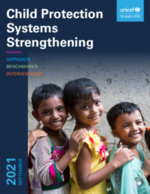
Guided by UNICEF’s Child Protection Strategy (2021 – 2030) which provides the overarching strategic framework for UNICEF’s child protection programming globally, the paper discusses key considerations that have shaped this approach.
This legislative update by the UN Refugee Agency outlines amendments made by the Ukrainian government to Resolution 509 on Internally Displaced Persons (IDP) registration in light of the Russian offensive that began 24 February 2022. These amendments are aimed at ensuring that IDP registration is available to anyone who was forced to flee their homes due to the large-scale hostilities.
Кластер захисту координує заходи захисту та виступає за вдосконалення політики та законодавства, що стосуються людей, які постраждали від конфлікту. Він також займається розбудовою потенціалу та надає рекомендації щодо включення захисту у всі заходи гуманітарного реагування. Це знімок захисту для України за період з 6 по 9 березня 2022 року, складений Protection Cluster Ukraine.
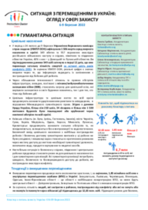
The Protection Cluster coordinates the protection response and advocates for the improvement of policies and legislation affecting conflict-affected people. It also engages in capacity building and provides guidance on mainstreaming protection into all humanitarian response activities. This is the Protection snapshot for Ukraine for the period 6 - 9 March 2022, compiled by Protection Cluster Ukraine.