
Understanding adoptive families: The role of the health visitor
This article looks at the support adoptive families need in the crucial first stages of placement and the health visitor's role in the process.
This article looks at the support adoptive families need in the crucial first stages of placement and the health visitor's role in the process.
Framed around compelling case studies explaining why children are on the move in Africa, the Americas, Asia, Europe, the Middle East and Oceania, this book explores the jurisprudence and processes used by nations to adjudicate children’s protection claims.
Le présent document constitue le rapport de référence pour le Projet pour la Protection des Enfants Migrants le long du Corridor Abidjan-Lagos (CORAL), conçu principalement en tant qu'analyse de situation susceptible d'orienter la programmation future du projet.
The present document constitutes the baseline report for the Project for the Protection of Migrant children along the Abidjan-Lagos Corridor (CORAL), undertaken primarily as a situation analysis able to guide future programming.
This research brief is based on a baseline study carried out in the first phase of the Child Migrants Along the Abidjan-Lagos Corridor (CORAL) project to help identify situated approaches to implementation, drawing evidence from all five countries but aiming for locally specific actions and solutions.
This book presents the stories of youth in care, though not in splendid isolation, but as interactively produced, turn by turn in interviews, and in conversations with other youth.
This article focuses on the concept of “family” and family membership from the perspective of care leavers in Zimbabwe.
The present study sought to clarify the relation between maltreatment and mental health among youth in foster care by studying both the isolated dimensions of maltreatment and cumulative maltreatment, and to determine whether the effects of maltreatment on mental health operated indirectly through placement instability.
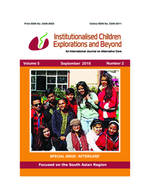
This 10th issue of the Institutionalised Children Explorations and Beyond (ICEB) journal, released in September 2018, is a Special Focus issue on ‘Aftercare.’
This policy paper from Hope and Homes for Children calls on all the stakeholders that play a role in developing, running, supporting or influencing national care systems to join forces in a collaborative action to eradicate institutional care once and for all.
