Displaying 21 - 30 of 155
This pilot study investigated a sample of caseworkers’ perceptions as related to social services for improving family unity post-reunification, as well as barriers that exist for families accessing social services in rural southeast Georgia in the US.

This training has been designed for social workers in Moldova who are working with foster families caring for unaccompanied and separated children and adolescents who have fled the crisis in Ukraine.
This policy brief aims to foster an understanding that the provision of quality alternative care, requires that the child’s right to identity is safeguarded.
This is the concept note for the 49th session of the Human Rights Council which is an annual full-day meeting on the rights of the child. The focus of this year's meeting was to identify the implications of a child rights approach to family reunification, paying particular attention to preventing the separation of children from their families, and to children affected in cross-border situations.
The present report is submitted pursuant to Human Rights Council resolution 45/30, in which the Council requested the United Nations High Commissioner for Human Rights to prepare a report on the rights of the child and family reunification. All children have the right to family life, yet millions worldwide are suffering preventable separation from their families and associated violations of their rights. In the present report, the High Commissioner recommends that States move to develop global, child rights-based guiding principles and a global strategy for family reunification.
This paper explores perspectives on family reunification and emergent forms of separation among young migrants. These young people lived apart from and later reunited with their migrant parents who moved from the Philippines to Canada for work.
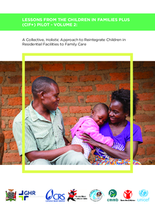
Building on the CIF+ Learning Brief Vol 1.pdf, Volume 2 draws from CIF+ partner programming experience, achievements and lessons learned. This document outlines lessons for stakeholders that are interested in child reintegration efforts and highlights examples of the pilot as it works to support children and families in Zambia.
Dans sa résolution 45/30, le Conseil des droits de l'homme a décidé de consacrer son prochain débat annuel d’une journée complète sur les droits de l'enfant (2022) au thème « les droits de l'enfant et le regroupement familial ». Il a en outre prié au Haut-Commissariat des Nations Unies aux droits de l’homme d’établir un rapport sur ce thème, en étroite coopération avec toutes les parties concernées, afin d’éclairer le débat annuel d’une journée.
En la resolución 45/30, el Consejo de Derechos Humanos decidió centrar su próxima reunión anual de un día completo de los derechos del niño (2022) sobre el tema “los derechos del niño y la reunificación familial”. Además, solicitó a la Oficina del Alto Comisionado de las Naciones Unidas para los Derechos Humanos que prepare un informe sobre ese tema, en estrecha cooperación con todas las partes interesadas, con el fin de proporcionar información para la reunión anual de día completo.
El mecanismo de prevención de la separación familiar innecesaria entre Cambiando la forma en que CuidamosSM y la Procuraduría General de la Nación, es un informe que resume la experiencia de Cambiando la forma en que CuidamosSM Guatemala en la implementación de una ruta de prevención de la separación familiar innecesaria con una entidad de gobierno responsable de velar por el cumplimiento de derechos de los NNA, este procedimiento fue realizado con el objetivo de evitar la separación familiar innecesaria a través del seguimiento del caso y la derivación a servicios sociales y especializados, el informe también narra la experiencia en la implementación de juntas técnicas de análisis de caso para determinar el mejor interés para los NNA y familias, este informe está dirigido a profesionales que trabajan con niñes y adolescencia y que están interesados en implementar procedimientos para cerrar la puerta de entrada al cuidado residencial.