
Displaying 411 - 420 of 476
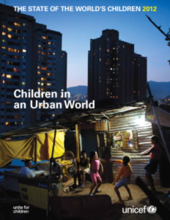
This report provides data on children living in urban settings, including statistics, conditions, and personal testimonies. The report also includes UNICEF’s recommendations for policy regarding children in urban settings, working with this population, and for future action. Sections that are relevant to children’s care include: children living and working on the streets, migrant children, urban emergencies, and many more.
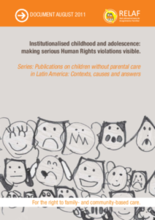
This paper, produced by RELAF, is part of a series of publications on children without parental care in Latin America: Contexts, causes and answers. This document, and others in the series, pertains to the broad topic of children without parental care and examines the particular situation of institutionalised children.
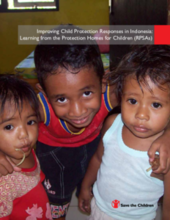
This report reviews the role and practice of State-established child protection residential institutions in Indonesia focused on providing services for children defined as being in need of special protection under the Child Protection law, in particular child victims of abuse, neglect or exploitation including victims of trafficking.
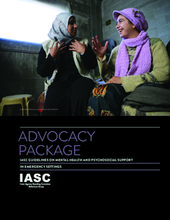
This Advocacy Package explains what the IASC guidelines are and how they are to be used, highlights the key campaigning activities, key messages for communities, donors, UN Agencies and Non-Governmental organisations, clarifies terminology and provide ideas for country level implementation.
This situational analysis was commissioned by the Child Protection Initiative as a preliminary exercise to develop evidence-based recommendations to guide Save the Children in the Philippines to develop interventions. Priority areas are children in residential care, children in armed conflict and disasters, children in situations of migration (including for trafficking purposes), and children in exploitative and hazardous work conditions.
This article reviews the current discourse on what is being called a crisis of care for children, as well as literature on out-of-home/family care and its adverse impacts on child development. The article also describes an emerging “AIDS orphan tourism” and highlights its negative impacts.
With particular attention to lower income countries, Families, Not Orphanages examines the mismatch between children’s needs and the realities and long-term effects of residential institutions.
This paper aims to show different organisations, institutions, governments and civil society the reality facing thousands of children in Latin America. This information can be used as a tool for debating and prioritising the issue as well as promoting constructing good practices and public policies that will improve the wellbeing and chances to develop of children without parental care and/or who are at risk of losing

The focus of this thesis is the position of orphans, vulnerable children and orphanages in Ghana in relation to the ‘help’ they receive from western volunteers and NGOs.

This paper is based on The Latin American Report: The situation of children in Latin America without parental care or at risk of losing it. Contexts, causes and responses, which was prepared using reports from 13 countries in the region. The paper gives an overview of the state of one of the most fundamental rights - the right to parental care, a keystone for the right to live in a family and a community.
