Displaying 421 - 430 of 476
This report is based on 11 weeks of field research in Senegal and Guinea-Bissau between November 2009 and February 2010.
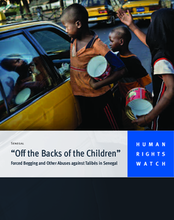
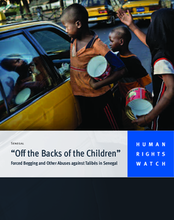
Human Rights Watch report on the illicit practices of forced child begging and other abuses perpetrated against children in residential Quranic schools. Includes recommendations to government entities on action needed to reverse abuse and neglect of children in these situations.
The Guidelines from the IAWG provide some of the strongest direction for ensuring emergency efforts protect family unity and avoid child-family separation. Where family unity can not be preserved, these guidelines instruct on tracing and family reunification, care arrangements, durable arrangements, special issues related to refugee children, and promotion of children’s rights.
Guidance on setting up prevention programs to reduce child protection risks to children and young people, and in particular to prevent commercial sexual exploitation.
Provides global estimates of the number of highly vulnerable children; a summary of United States Government (USG) assistance programs for highly vulnerable children; a summary of progress coordinating the response among USG agencies; key strategic issues and opportunities; priorities for 2009–2010 and beyond; and a summary of the results and achievements of USG assistance
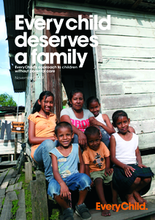
This document outlines EveryChild’s approach to the growing problem of children without parental care by defining key concepts, analysing the nature and extent of the problem, exploring factors which place children at risk of losing parental care, and examining the impact of a loss of parental care on children’s rights.
The first comprehensive resource on child protection statistics. Includes data on children without parental care, child trafficking, child marriage, children with disabilities, etc.
Study investigating the psychosocial impact of different high risk situations in West and Central Africa such as trafficking, ethnic cleansing, armed conflict or parental loss.
Focuses on children’s vulnerabilities and risks related to an absence of protection from violence, abuse and neglect, and the ways in which measures to address such vulnerabilities and risks can be more effectively integrated into social protection policy frameworks in the West and Central Africa region.
This paper outlines a vision for the network of services, policies, and programmes necessary to protect children at risk and enable them to reach their full potential, free from violence, exploitation, and abuse.