
Displaying 491 - 500 of 536
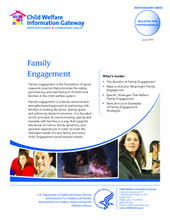
Family engagement is the foundation of good casework practice that promotes the safety, permanency, and well-being of children and families in the US child welfare system. This brief offers information to help State child welfare managers improve family engagement across program areas.
The Practical Guide of the Professional Supervision Mechanism in Social Assistance was developed in cooperation with the Ministry of Social Protection, Family and Child (Moldova), with the technical support of the "Support in the Deliver
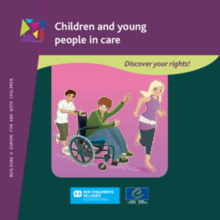
This booklet is designed for children and young people in care to explain how alternative care works, what their rights are as young people in care and whether these rights are being respected.
This paper outlines a vision for the network of services, policies, and programmes necessary to protect children at risk and enable them to reach their full potential, free from violence, exploitation, and abuse.
This research project aimed to contribute to knowledge development in understanding how the social development approach is actually being used by individual schools of social work in Southern and East Africa, and how this approach is impacting social work training, through primary empirical research.
This document informs stakeholders about the opportunities for and constraints on building the social work workforce within the child welfare sector in Africa.
This guide aims to facilitate provision of supervision, technical support and quality assurance for OVC services and interventions by different stakeholders in Uganda.
This document, entitled "The Mechanism of Professional Supervision in Social Assistance", was approved by Order of the Minister of Social Protection, Family and Child (Moldova) on 31 December 2008.
The purpose of this study is to inform stakeholders about the current status of social work in the region, describe the practice environment, identify gaps between what is expected of social workers and the reality, provide examples of best practices, and make recommendations for furthering the development of social work in the region.
Using Ghana as an illustrative case study, this article examines the ideology and intentions which underpin the Poverty Reduction Strategy Paper required for approval by the IMF and World Bank to qualify for debt relief under the Highly Indebted Poor Countries initiative. This article critically examines the functions assigned to governmental and non-governmental agencies within the social sector generally and the Department of Social Welfare specifically.