File
Displaying 31 - 40 of 60
This case study is one in a series of case studies highlighting different aspects of a case management system and referral mechanisms utilized by OVC programs. The case study presents a program in Mozambique that could be identified as a hub and spoke model of referral mechanism.
This report presents the preliminary findings from an ongoing project undertaken by 4Children that seeks to identify key opportunities to incorporate violence prevention and response interventions within priority PEPFAR Program Areas at clinical and community levels.
CRS is recruiting for a 4Children Mozambique Program Manager (PM), who will provide overall project management and technical leadership to 4Children's project in Mozambique.
This series of country briefs aims to provide an analysis of children’s living and care arrangements according to the latest available data from Demographic and Health Surveys (DHS) or Multiple Indicators Cluster Surveys (MICS) at the time of publication.
This report captures what has been accomplished in social service workforce strengthening in eight countries in Sub-Saharan Africa and highlights areas for future intervention. Progress made to strengthen the social service workforce within these countries is useful when reflecting on global trends and ways forward.

This paper examines existing knowledge on raising adolescents in east and southern African countries, including Kenya, Malawi, Mozambique, South Africa, Tanzania and Zimbabwe. According to the report, and within the context of these regions, parenting is understood to be handled through extended community and family networks.
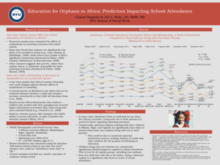
Large scale studies published in the 1990s and early 2000s generally showed that significant educational disparities existed based on orphan status and a child's relationship to the head of the household. Since the data relied on by these studies were collected, the global community has conducted major campaigns to close these gaps, through the Education for All (EFA) and Millennium Development Goals (MDGs). This study examined these factors using eight country-years from five sub-Saharan African countries (Malawi, Mozambique, Niger, Uganda, and Zimbabwe).
Este trabalho teve por objectivo analisar e compreender a magnitude, tendências, determinantes e impactos do casamento prematuro e da gravidez precoce, com o propósito de obter informações para a concepção de uma política nacional.
This powerful chart illustrates preliminary research findings using data from Demographic and Health Surveys (DHS) in 5 African countries (Malawi, Mozambique, Niger, Uganda and Zimbabwe) to better understand how orphan status affects the school attendance of children in Africa and the extent to which living in kinship care can act as a protective factor in this context.