
File
Displaying 31 - 40 of 224
Romania’s minister of family Gabriela Firea announced the Government’s intention to close all orphanages and move children to family-style homes, a project that is almost two decades in the making.
Time: 8 a.m. Bucharest time
Eurochild has carried out an urgent mapping, with support from its members, UNICEF country teams and government representatives across 13 countries. The mapping examines the laws and policies at national level for children in alternative care and unaccompanied and separated children from Ukraine who arrive in the following countries: Czechia, Estonia, Germany, Greece, Hungary, Italy, Latvia, Lithuania, Poland, Romania, Slovakia, Spain and the United Kingdom.
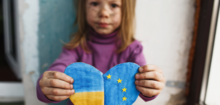
The escalation of conflict in Ukraine has forced more than 5 million people - mostly women and children - to flee to neighbouring countries. With the escalating crisis, the needs are growing by the hour.
Siret, a small Romanian town that borders Ukraine, is no stranger to attention. Just after the 1989 revolution, foreign journalists flocked there to reveal its grim story to the world. Under the Communist leader Nicolae Ceausescu’s brutal regime, which forbade birth control and exacted appalling privations on its people, thousands of children were abandoned in inhumane state orphanages.
The European Commission has proposed a “10-Point Plan for stronger European coordination on welcoming people fleeing the war from Ukraine” (endorsed by the European Parliament and the Council) that includes: creation of an EU platform for registration; an EU level coordinated approach for transport and information hubs; and a call to enhance reception systems and ensure continuity of care and suitable accommodation, among others.
The International Data Alliance for Children on the Move (IDAC) held this webinar on April 11, 2022, to discuss the need for concrete data and information crucially needed to support affected children inside and outside Ukraine. Representatives of countries directly affected by the Ukrainian crisis as well as key partners on the ground shared their insights.

Sharing a border with southern Ukraine Moldova, with an estimated population of 2.6 million, saw 383,448 arrivals by March 27.
Children make up half of all refugees from the war in Ukraine, according to UNICEF and UNHCR. More than 1.1 million children have arrived in Poland, with hundreds of thousands also arriving in Romania, Moldova, Hungary Slovakia and the Czech Republic.
The total number of children in Romania that had both parents abroad for work was, at the end of the third quarter of 2021, 12,339, by 325 lower than in the previous quarter, according to data centralized by the National Authority for the Rights of Persons with Disabilities, Children and Adoptions (ANDPDCA).