Maltreatment in residential child protection care: A review of the literature
The current literature review provides a conceptual and empirical framework for understanding child institutional maltreatment.
File
The current literature review provides a conceptual and empirical framework for understanding child institutional maltreatment.
This study used empirical data from health and social care professionals and cluster analysis to identify “barriers to” and “recommendations for” providing care and support to children living as AIDS orphans in township communities in Nelson Mandela Bay South Africa.
This paper examines the use of Family Group Conferences (FGCs) in engaging with looked after children.
The objective of this study was to assess factors impacting child-welfare involvement and child abuse and neglect outcomes among prenatally substance-exposed infants.
Reunification of families after a large disaster can be a major concern if strategies to mitigate the issues have not been incorporated into local, regional, state, tribal, and federal planning for such an event.
This technical note offers guidance and information to practitioners and policy-makers on child labour issues during and after COVID-19 and what actions can be taken.
This webpage from the International Labour Organization (ILO) features data on global social protection measures and responses to the COVID-19 crisis.
This document features key messages including critical information about keeping children safe and healthy during the COVID-19 pandemic. The messages are designed for use by country child protection actors, such as public child protection officers, directors of residential care facilities and government and civil society actors that work with vulnerable children and families.
The current study used a longitudinal design to explore how perceived discrimination is associated with psychosocial functioning (i.e., depressive symptoms and social initiative) over time in Chinese rural left-behind adolescents.
This article presents a multi-site evaluation of a group delivery of the eight-week Circle of Security-Parent DVD program (COS-P) program to foster carers of 6-12 year-old children in an urban community as facilitated by community-based providers from a specialist child and youth mental health services.
This paper examines the frequency with which transition-age foster youth receive asset building services and whether the youth who receive services experience improved outcomes compared to those who do not.
This study is a systematic review of the scholarly literature to better understand caregiver-related factors (e.g., characteristics, proficiencies) that contribute to permanency and placement stability, in order to provide a stronger foundation for developing and improving caregiver recruitment and training procedures.
This guidance aims at supporting child protection actors working with communities to keep children safe to adapt their programming to the contagious environment of COVID-19.
This report presents insightful findings on the effects of the COVID-19 outbreak in Lebanon, highlighting data collected on COVID-19 knowledge, health, WASH, protection, education, food security and livelihoods, shelter, movement and digital access.
In this episode of the Protected! Podcast, Elissa Alhassrouny, a child protection specialist with Plan International Lebanon, discusses how their team moved to remote child protection programming and the steps involved in that process.
“Protected!” is the official podcast of the Alliance for Child Protection in Humanitarian Action. Hani Mansourian, the Alliance's Co-coordinator, hosts this frank dialogue on all aspects of child protection and COVID-19 with practitioners, innovators and policy makers in the sector.
This webinar brought together partners from over 130 countries around the world. At the event, participants were given a chance to hear about and discuss local, national and global perspectives of and responses to the COVID-19 crisis.
In this podcast episode, Dr Zeinab Hijazi, the mental health and psychosocial support expert from UNICEF talks to Hani Mansourian, the Alliance's Co-coordinator about the coronavirus pandemic and its effects on mental health and psychosocial wellbeing.
This webinar examines the technical note on protecting children from violence, abuse, and neglect in the home as countries implement lockdowns and stay-at-home orders to curb the spread of COVID-19.
This article illuminates the important role the Committee on the Rights of the Child played in monitoring child abuse and neglect in the implementation of the now thirty years old Convention on the Rights of the Child (CRC).
The authors of this study analyzed data from a randomized clinical trial of the middle school version of the Keep Safe intervention - an intervention that targets delinquent peer affiliation - in a sample of girls in foster care. The researchers found that the middle school Keep Safe intervention shows promise as a preventative intervention for reducing affiliation with delinquent peers, which importantly is associated with adolescent delinquent behavior.
This document provides a brief overview of Plan International's activities in Asia-Pacific in light of the COVID-19 pandemic.
This Guideline aims to further provide technical guidance to child protection workers in Ghana to better respond to child protection risks during the COVID-19 pandemic through case management, including psychosocial support.
This webinar focused on the newly released technical note on Social Service Workforce Safety and Wellbeing during the COVID-19 Response.
This joint statement from the EU, GRULAC and the Group of Friends of Children and the SDGs expresses support for the appeal by the United Nations Secretary-General António Guterres for countries to prioritize children’s education, food, health and safety amid the COVID-19 pandemic.
This assessment sheds light on the new realities created by the COVID-19 virus and highlights how the situation of pandemic and quarantine is affecting vulnerable children, young people, and parents, including the feelings, experiences, or problems created.
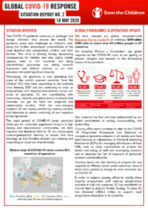
This situation report describes progress on key areas of Save the Children's response to the COVID-19 pandemic as of May 18th, 2020.
This document provides technical guidance for a variety of PEPFAR issues, including the care of orphans and vulnerable children (OVC), and will be updated routinely as the situation evolves.
This blog post from Strengthening Families For Abandoned Children (SFAC) features a decision map and accompanying guide to making decisions about where and how to place a child during a large-scale emergency, like the COVID-19 pandemic.
This study used content analysis to explore: “What are the post-care housing experiences of youth who have transitioned from care through an independent support program?”
This article from the World Economic Forum describes the impact of the COVID-19 crisis on children in immigration detention in the United States and calls on the US government to take immediate actions to stop the violence against migrant children and families and to protect them from the impacts of the COVID-19 pandemic.
On this page, you will find stories from people with various disabilities across the globe sharing their experiences with the COVID-19 outbreak and pandemic risk reduction strategies implemented by their governments.
このテクニカルノートの目的は、COVID-19パンデミックの中 で、分離のリスクにさらされている子どもや社会的養育を受けている 子どもが直面する、児童保護の課題に対し 、児童保護の実践者と政府職員の緊急対応を支援することです。
This accompanying annex document to the Inter-agency Technical Note on the Protection of Children during the COVID-19 Pandemic: Children and Alternative Care provides helpful tips to promote the engagement and participation of all stakeholders, which is central to maintaining continuity of services for children.
This study aims to describe the lived experiences of skip-generation families to better identify their needs.
This platform reports how countries are responding to the Covid-19 pandemic in their migration control policies as well as calls by independent monitoring bodies, NGOs, and human rights institutions demanding measures to safeguard migrants and asylum seekers, including unaccompanied migrant children.
This resource from Save the Children answers the questions: (1) Why should we consider integrating Cash and Voucher Assistance (CVA) and Child Protection (CP) during COVID-19?; (2) What type of CVA & CP programming can be done during COVID-19?; and (3) How can we integrate CVA & CP?
This study examines the mental health symptoms of children in institutional care in Ankara, Turkey and possible factors that may cause these symptoms.
This brief addresses issues in young people’s participation in decision-making in residential care in Australia.
There has recently been increased interest in the potential for formal and informal networks to aid interventions with biological families in helping them achieve reunification in the context of the child protection system. This article analyzes the conceptualization of social support in order to create social support networks.
Dokumen Lampiran Catatan Teknis Antar-Lembaga tentang Perlindungan Anak selama Pandemi COVID-19: Anak dan Pengasuhan Alternatif ini memberikan tips yang berguna untuk mendorong keterlibatan dan partisipasi seluruh pemangku kepentingan, yang penting untuk mempertahankan berlanjutnya layanan bagi anak-anak.
Данный сопроводительный документ к технической записке «Защита Детей во Время Пандемии COVID-19: Дети и Альтернативный Уход» содержит полезные рекомендации, которые помогут привлечь к участию все заинтересованные стороны.
This report presents findings from an independent analysis of the responses to a public consultation issued by the Scottish Government in September 2019, which invited views on its specific proposals for the establishment of a statutory financial redress scheme for victims / survivors of abuse in care.
This presentation from REPSSI describes how to provide psychosocial care to children during the COVID-19 pandemic.
This presentation from REPSSI provides some guidance on how to care for babies and young children during the COVID-19 pandemic, including how to tend to their health and development.
This video from REPSSI describes the difficulties of providing care services during the COVID-19 pandemic and how care workers can be supported during this time.
UNAIDS has consulted with the HIV and Human Rights Reference Group, experts from civil society, academia and public health and other United Nations agencies to identify key learnings from the HIV response that are critical in ensuring an evidence-informed and effective response to an epidemic.
Using 20-year follow-up data from a unique natural experiment – the large scale adoption of children exposed to extreme deprivation in Romanian institutions in the 1980s – the authors of this paper examined, for the first time, whether such deficits are still present in adulthood and whether they are associated with deprivation-related symptoms of attention-deficit/hyperactivity disorder (ADHD) and autism spectrum disorder (ASD).
A cost analysis was conducted as part of a 5-year, federally funded statewide demonstration project to install universal trauma screening in one U.S. state’s child welfare system.
This study sought to determine the needs of the general population of children in Botswana.
This article explores the important increase in awareness surrounding the care-crime connection (the over-representation of care-experienced individuals in criminal justice settings) in recent years.
This article argues that the current system of care in most jurisdictions forces foster youth to be financially and socially independent at an earlier age, despite insufficient preparation, and notes that healthcare providers can be important advocates for youth in care by championing their medical and psychological needs and serving as a bridge that lasts beyond foster care.
The author argues that early childhood education interventions for OVC should be a priority of government since quality education and care programs in the early years can enhance the possibility of breaking the cycle of inequity in the lives of OVC and positively contribute to the economy of the country.
This paper reviews clinical and empirical studies related to the rates of abuse and neglect of children during health and other crises in other countries. It also analyses trends of recent data of the Ministry of Interior [of Croatia] with practical guidelines for improved child protection in this period.
This position statement presents the key asks that are necessary to ensure that the rights and needs of children without or at risk of losing parental care are prioritised by national, regional and international governments as they adopt measures to mitigate the short and long-term impacts of the COVID-19 pandemic around the world.
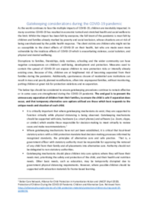
The tips in this guidance should be considered to ensure gatekeeping procedures continue to remain effective or in some cases are strengthened during the COVID-19 pandemic.
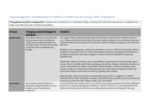
This guidance should be considered for children who currently live in a residential setting, including those that have been placed in residential care before and after the onset of COVID-19 pandemic.
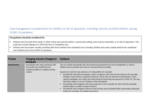
This guidance should be considered for children who live with their family or other family environment within a community setting, who may be vulnerable, or at-risk of separation, as well as children who have been recently reunified with their families from residential care.
This paper from the Children and Youth Services Review reflects on the collective participation of young people in care in a rights-based initiative intended to facilitate input into service and policy development in Ireland.
This post from the UNICEF Europe and Central Asia website describes how UNICEF is mobilizing to protect marginalized and vulnerable children – including those with disabilities – against the impact of COVID 19 in the region.
Ce document qui accompagne la Fiche Technique interorganisations sur la Protection des enfants durant la pandémie de COVID-19 : les enfants et la protection de remplacement fournit des conseils utiles pour promouvoir l’implication et la participation de toutes les parties prenantes, qui sont indispensables pour maintenir la continuité des services pour les enfants.
To aid understanding of the impact of COVID-19 on girls and young women, as well as talking to girls in lockdown, Plan International has re-examined four previous studies of crises to try and get a clearer picture of the insecurity and vulnerability facing girls now.
This document presents an initial summary of potential GBV risk mitigation actions, based on established good practice, that are starting points to address GBV risks in this unprecedented situation.
This research was conducted in March and April 2020 to explore children and young people’s reflections and perceptions on the COVID-19 outbreak.
This webpage features a selection of materials which the Coalition for Children Affected by AIDS have found to be useful.
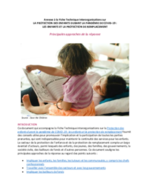
Esta infografía explica los conceptos básicos de lo que es COVID-19 y lo que puede significar para los niveles de estrés en niños como en adultos que los cuidan.
The purpose of this study was to conduct a systematic review and meta-analysis on the effectiveness of parenting interventions in preventing violence against children.
This qualitative study explores the experiences of unaccompanied children with regard to violence in reception facilities in the Netherlands from the perspective of the children.
The third Netherlands’ Prevalence study of Maltreatment of children and youth (NPM-2017) provides an update of the current prevalence rates of child maltreatment and of changes in its prevalence over the last 12 years. In addition, risk factors for child maltreatment and its co-occurrence with domestic violence were investigated.
The purpose of this study was to examine the lived experiences of posttraumatic growth (PTG) in adult survivors of institutional childhood abuse in Ireland.
The purpose of this study is to describe the emotional and behavioural status and the associated factors among inmates aged 11-16 years of children’s homes in the Gampaha Probationary Division of Sri Lanka.
This study summarizes findings from caregiver usability tests, and provides a wide variety of caregiver-generated suggestions for improving foster and adoptive caregiver training curricula that are applicable to all caregiver training efforts.
This situation report describes progress on key areas of Save the Children's response to the COVID-19 crisis.
UNICEF Europe and Central Asia Regional Office (ECARO) designed a brief online survey to take stock of what national authorities are doing to adjust national child protection systems and services in the wake of COVID 19. This report aims to synthesizes the responses across the region; support national and international child protection agencies, organizations and authorities to identify promising practices, challenges, risks and opportunities; and promote exchange of experience and practices across the region and globally.
This research debrief includes the qualitative and quantitative findings from a study of parenting attitudes and practices in coastal Kenya that set out to cast new light on the First 1,000 Days, understanding this life-stage from the vantage point of families and communities. This study has been carried out with the sole purpose of bringing new insights on early childhood and childcare to the EC community, to help improve support for and services to 0–3 year olds.
Ce Guide de réflexion pour le terrain vise à favoriser un engagement communautaire plus authentique dans le déroulement des actions humanitaires de protection de l’enfance.
This Reflective Field Guide aims to contribute to fostering more authentic community engagement in humanitarian child protection action.
This article reviews theories of Indigenous identity development and their implications for Indigenous children, particularly those caught in the nexus of two cultures, as is the case with those in state care in Canada.
In this article, a team of practitioners explores the basis, implementation, research base, and future application of Youth Advocate Programs, Inc. (YAP)’s dual-prong service model in building resilience in youth and families in the U.S., providing comprehensive, community-based services as an alternative to institutionalization for youth and young adults with complex needs and challenges.
This research aimed to construct an explanatory theory of how residential staff make sense of, and use, attachment theory in practice.
This document - written in English and Burmese - presents guidance on how to ensure continuity of child protection case management service provision during the COVID-19 crisis in Myanmar.

This guidance - written in English and Burmese - has been designed to ensure the care of children affected by COVID-19 in Myanmar due to either the child or caregiver requiring medical care in the home, community or health facility.
This study was carried out to determine the pattern of dermatological conditions and contributing factors among children living in orphanages in Dar es Salaam, Tanzania.
Based on an analysis of 342 complaints concerning foster care reported to the Flemish Office of the Children's Rights Commissioner, the authors of this paper analysed which “alarming situations” are reported and highlight a number of pressing concerns from the perspective of parents.
This Note proposes a model New York state statute that will recognize the importance of children's visitation with incarcerated parents, implement “child friendly” visitation programs, facilitate training for prison staff, and provide transportation for children in major cities to the prison facilities.
In this article journalist Mykeala Campanini explores why a majority of children in out-of-home care (OOHC) in Australia are struggling to reach national literacy and numeracy benchmarks, which puts them at risk of becoming disengaged with schooling, resulting in lifelong disadvantage.
Parental opioid use disorder (OUD) is a risk factor for the maltreatment of children and placement into foster care. This brief explores the availability of opioid agonist therapy (OAT) in U.S. counties experiencing different increases in foster care entry rates.
This study uses a representative sample of foster youth to investigate youth-level and county-level predictors of youths’ roles in their transitional independent living plan (TILP) development and satisfaction with the care decision meetings.
Using routine data from a kinship care helpline service, this study employed a mixed‐method analysis of the association between socioeconomic deprivation and risk factors reported by kinship carers in the UK and explored social capital in kinship families.
This project aimed to identify factors that might explain the ‘attainment gap’ for Children in Need (CIN) and Children in Care (CIC) in England.
This study explored the parenting experiences of orphaned youth heading households in resource-constrainted environments.
The present study aims to explore the specific influence of migrant mothers on early child development, especially on social-emotional problems.
This paper, by drawing on the different meanings held by documentation in ECEC contexts, in terms of viewing it as ‘equipped with agentic power’ (Alasuutari and Kelle 2015) reflects on the meanings of (pedagogical) documentation in alternative care settings, as a transitional space between ‘being spoken for’ and ‘speaking for oneself’, in light of a rights-based and pedagogical framework.
This report describes the experiences of Truth Project participants who were sexually abused in custodial institutions in the UK between the 1950s and 2010s.
This guidance for street work during the Covid-19 crisis includes both practical guidance and advocacy messages and resources to support Street Work during this worrying time.
These tip sheets from Save the Children provide recommendations for disability inclusion during COVID-19 across a range of thematic areas and topics, including education, cash transfers, health, and nutrition.
This study investigated depressive and anxiety symptoms among students in Hubei province, China, which can help optimize interventions on the mental health of children for stakeholders in all countries affected by COVID-19.
There is little empirical evidence on how to improve the well‐being and safety of children in informal kinship care in Ghana. Thus, this study reports findings from in‐depth interviews with 15 young people, 18 to 23 years, from Banda—an ethnic group where informal kinship care is an accepted cultural practice.
This technical note, which is informed by reports from the field, examines issues that children may face as countries implement lockdowns and stay-at-home orders to curb the spread of COVID-19.
Acest document de însoțire a Notei tehnice inter-instituționale privind Protecția copiilor în perioada pandemiei de COVID-19: Copiii și îngrijirea alternativă oferă sfaturi utile pentru promovarea implicării și participării tuturor părților interesate, care este esențială pentru asigurarea continuității serviciilor pentru copii.