Thousands of siblings split up in care system
More than 12,000 children in care are not living with at least one of their siblings, according to this article from BBC News.
This episode of the Child Welfare Information Gateway podcast is part of a series focusing on Community-Based Child Abuse Prevention (CBCAP) grantees.
In this joint policy note, Watchlist on Children and Armed Conflict and Human Rights Watch highlight the increasingly worrying trend of military detention of children affected by armed conflict, a trend documented in at least 15 countries affected by armed conflict.
This mid-level online course is designed to help participants' develop knowledge of good practice in child protection, with a particular focus on conflict settings.
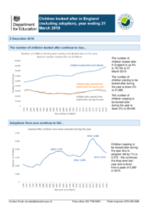
This report reviews information on looked-after children in the UK at both national and local authority levels for the financial year 2018 to 2019.
This training is designed to increase participants' knowledge of the Minimum Standards for Child Protection in Humanitarian Action (CPMS).
This study examined child protective service (CPS) involvement of children surviving the child maltreatment fatality (CMF) of a sibling as well as predictors of subsequent CPS reports.
The present study uses system dynamics modeling to inform decision-making by testing policies for scaling the Family Unification Program (FUP), a U.S. federal initiative connecting inadequately housed families involved in child welfare with long-term rental subsidies to avoid foster placement.
This study synthetic cohort life tables and data from the Adoption and Foster Care Analysis and Reporting System to generate the first cumulative prevalence estimates of termination of parental rights.
To investigate the impact of childhood deprivation on the adult brain and the extent to which structural changes underpin these effects, the authors of this study from PNAS utilized MRI data collected from young adults who were exposed to severe deprivation in early childhood in the Romanian orphanages of the Ceaușescu era and then, subsequently adopted by UK families.
The objective of this work is to determine the factors associated with deciding to address family reunification from residential care (RC).
The objective of this study was to provide data on the effects of bullying suffered at school on different cognitive and affective SWB measures (OLS, PWI and OHS) of early and late adolescents in residential care.
This article uses Official Information Act and publicly available data to examine recent trends of children in contact with the Aotearoa New Zealand child protection system. It discusses these trends with reference to child protection policy reforms, and an inequalities perspective.
The objective of this work is to determine the factors associated with deciding to address family reunification from residential care.
This paper reports on a longitudinal study of young people transitioning out of care and journeying towards young adulthood over a period of five years.
This population‐based register‐linkage study assessed the likelihood of OHC placement in different gestational age groups using multivariable Cox regression models.
The current randomized control study aimed to determine, if a life skills-based intervention could improve the emotional health and self-esteem among Malaysian adolescents in orphanages.
The aim of this paper is to examine the effects of Treatment Foster Care on youth with serious behavior problems.
In this article, the authors examine the experiences of transitions to work and the associated challenges for the agency of young people leaving residential care institutions in Luxembourg.
The paper aims to build a frame around the main principles of family reunification through the jurisdiction of the European Court of Human Rights.
This paper presents the achievements and implications of HIV Programme Development Project (HPDP) funded by World Bank on care and support services for OVC in Osun State, Nigeria.
This study used 8 years of administrative data (on 2,208 care entrants), collected by one large English local authority, to examine how many children were returned home and to explore factors associated with stable reunification (not re-entering care for at least 2 years).
This study aimed at investigating the incidence of placement breakdown in Flemish family foster care (Dutch speaking part of Belgium) for unaccompanied children (UC), and to explore the association of breakdown with foster child, foster family and case characteristics.
This study aimed to examine the risk factors that lead residential care youths in Japan to drop out of high school.
This chapter’s authors argue that social policy on leaving care is a critical resilience process for promoting care leavers’ successful transition toward emerging adulthood.
This article by Kathryn E. van Doore and Rebecca Nhep, published in the Griffith Journal of Law & Human Dignity, describes how orphanage trafficking occurs as a process of child trafficking.
This book examines how child protection law has been shaped by the transition to late modernity and how it copes with the ever-changing concept of risk.
The authors of this study propose a strategy that increases system collaboration, leverages existing infrastructure, and adopts multi-source funding models that invest in prevention services to inoculate society against child abuse and neglect (CAN).
Through a review of implemented programs to reunite street-involved children and youth (SICY) with their families as well as relevant formative research on family-level risk factors for street migration, the authors of this study explore family-level factors relevant to successful family reintegration of SICY.
To investigate the early language development of children raised in institutional settings in the Russian Federation, the authors of this study compared a group of children in institutional care to their age‐matched peers raised in biological families, who have never been institutionalized using the Russian version of the CDI.
The present study evaluates the Youth Initiated Mentoring (YIM) approach in which families and youth care professionals collaborate with an informal mentor, who is someone adolescents (12- 23) nominate from their own social network. The current study examined through case-file analysis of 200 adolescents (YIM group n = 96, residential comparison group n = 104) whether the YIM approach would be a promising alternative for out-of-home placement of youth with complex needs.
The authors of this study conducted qualitative interviews of 69 caregivers in four countries: Ethiopia, Kenya, Cambodia, and India (Hyderabad and Nagaland), and across four religious traditions: Christian (Orthodox, Roman Catholic, and Protestant), Muslim, Buddhist, and Hindu. They asked respondents to describe the importance of religion for their becoming a caregiver, the way in which religion has helped them make sense of why children are orphans, and how religion helps them face the challenges of their occupation.
This podcast episode, 'Supporting Kinship Caregivers Part 1', is the first of a two-part series showcasing successful examples of kinship navigator programs connecting kinship families with available services.
In this article, the authors theorize a new conceptual framework of family strengths and resilience emerging at the intersection of indigenous and Western approaches to family systems.
This article describes the results of a narrative literature review on empirical research examining the outcomes and/or experiences of unaccompanied refugee minors in family foster care.
This study aims to assess possible changes in family and parental dynamics among families taking part in a short (6‐session) universal program.
The present study reports on a mixed-methods evaluation of the Nurturing Attachments training, focusing particularly on its impact on carer self-efficacy and behavioural manifestations of Reactive Attachment Disorder (RAD) which are common among looked after children, even if they are not formally diagnosed.
The study was guided by three objectives to; examine the influence of financial resources in the implementation of Cash Transfer program for Orphans and Vulnerable Children, determine how management influences the implementation of Cash Transfer program for Orphans and Vulnerable Children, examine the influence of stakeholders in the implementation of Cash Transfer program for Orphans and Vulnerable Children in Isiolo county.
The present review addressed the research question What evidence is there that parenting interventions conducted with parents who maltreat their children, reduce the incidence of further child maltreatment?
This research was aimed at the features of children and characteristics of foster families who refuse to continue parenting foster children.
This article explores and presents the voices of children regarding how they experience their participation in multidisciplinary meetings at a child and youth care centre.
This analysis assessed the current state of child neglect through much of the world, including its prevalence and efforts to address it.
This article investigates the efficacy of the Families First Home Visiting (FFHV) program, which aims to enhance parenting skills and strengthen relationships between parents and their children.
Using Swedish longitudinal register data on 2.167 children with experience of long-term foster care, this study explores the hypothesized mediating role of foster parents’ educational attainment on foster children’s educational outcomes, here conceptualized as having poor school performance at age 15 and only primary education at age 26.
The aim of this article is to discuss the social justice implications for educational psychologists working with orphans and vulnerable children (OVC) who comprise 3.7 million of the population in South Africa.
The purpose of this study was to examine the occurrence of adverse childhood experiences (ACEs) among a convenience sample of foster parents and explore multiple relationships between foster parent-reported ACEs, resilience, and other indicators of foster parent function and well-being (parental stress, satisfaction as a foster parent, perceived challenges with fostering, intent to continue fostering).
This study incorporated a network approach to understanding how youth discussed strong ties and defined closeness in relationships.
The aim of the present study was to provide an exploratory account of foster carers’ lived experience of ending adolescent foster placements.
This article describes the development of two parenting groups – Nurturing Attachments and Foundations for Attachment, devised to provide much needed support for foster, residential and kinship carers and adopters parenting children and young people of all ages. Both programmes are informed by the Dyadic Developmental Psychotherapy (DDP) model.
This is a qualitative study aimed to explore the need for preparing children ageing out of foster care for independent living in South Africa.
This article presents a critical review of research into post-adoption support in educational settings using a rigorous systematic methodology.
This chapter from the book Modern Day Slavery and Orphanage Tourism draws on the author's film The Voluntourist that has aided in raising the groundswell of objection to orphanage tourism.
This chapter from the book Modern Day Slavery and Orphanage Tourism responds to the question of how sending countries (of people, money and resources) contribute to the institutionalization of children in receiving countries.
This chapter from the book Modern Day Slavery and Orphanage Tourism highlights promising practice which aims to prevent and reduce the institutionalization of children at two levels: (1) systems and social work strengthening, and (2) family strengthening and gatekeeping.
This chapter from the book Modern Day Slavery and Orphanage Tourism aims to identify the motivations behind voluntourism, categorizing them into types so as to provide a foundation upon which we might better assess why it is that so many voluntourists seek to work with children, often in institutional environments.
This document provides a guide to looked after children statistics published by the UK Department for Education.
The following article reports upon recent research that explored the perceptions of professionals of the issues that affect the sexual and criminal exploitation of children in care, along with a discussion of the effectiveness of current responses to these issues and the challenges that professionals face.
This article theorizes a new conceptual framework of family strengths and resilience emerging at the intersection of indigenous and Western approaches to family systems.
The authors of this study conducted a qualitative 2-year study to investigate informal caregivers’ motivations, assets, and needs.
This study investigates and assesses the experiences of orphaned and vulnerable children (OVC) who live with poverty, insecurity and social stigmatization in Owerri due largely to reasons of loss of parent(s) or being born by parents who are not there to take responsibilities for them. The purpose of the study is to inform and reform social policy by providing a better understanding of the suffering of orphans in our society.
The present article proposes a first-stage mental health screening procedure (calibrated for high sensitivity) for children and adolescents (ages 4–17) in alternative care, which children’s agencies can implement without clinical oversight using the Strengths and Difficulties Questionnaire (SDQ) and Brief Assessment Checklists (BAC).
This study aimed to develop a Korean out-of-home care satisfaction scale. The study sample consisted of 484 children from institutional care, group homes, and foster homes in Korea.
Drawing on the findings of a Churchill Fellowship study tour, this article discusses the need to expand understanding of family engagement and, in particular, to implement Family Inclusive practice in Australian child welfare, both to increase reunification and to improve outcomes for children who do not return home.
The purpose of the study was to uncover challenges during the transition to adulthood for youth with disabilities who experienced foster care and elucidate the supports most beneficial in addressing these challenges.
This Country Care Review includes the care-related concluding observations adopted by the Committee on the Rights of the Child, as well as other care-related concluding observations, ratification dates, and links to the Universal Periodic Review and Hague Intercountry Adoption Country Profile.
This brief from the Foster & Adoptive Care Coalition in the United States provides an overview of the 30 Days to Family® program in the U.S. state of Missouri, an intense, short-term intervention developed by the Foster & Adoptive Care Coalition to: 1) increase the number of children placed with relatives/kin at the time they enter the foster care system; and 2) ensure natural and community supports are in place to promote stability for the child.
The present comprehensive report from the UN Secretary-General covers all aspects of the implementation of the Resolution on the Protection of Migrants. The report recognizes that immigration detention "is not in the best interests of the child and is a child rights violation" and notes the need to protect and assist migrants in vulnerable situations, including children.
In the present report, the UN Special Rapporteur on the sale and sexual exploitation of children, including child prostitution, child pornography and other child sexual abuse material, describes the activities undertaken in relation to the discharge of her mandate since her previous report to the United Nations General Assembly. The report presents a thematic study on safeguards for the protection of the rights of children born from surrogacy arrangements, highlighting the rights of the child to identity, access to origins and to a family environment.
This book highlights exploratory research that examines the links between modern slavery practices and orphanage tourism. It was edited by Joseph M Cheer of Wakayama University, Leigh Mathews of ALTO Consulting, Kate van Doore of Griffith University, and Karen Flanagan of Save the Children Australia.
This paper from the Australian Institute of Criminology presents selected findings of a detailed case file audit of 300 crossover children (children from child protection backgrounds in the youth justice system) appearing before the Children’s Court of Victoria, Australia in 2016–17.
The 2019 United Nations General Assembly (UNGA) Resolution on Follow-up to the twentieth anniversary of the International Year of the Family and beyond can be found on pages 48-51 of the Report of the Third Committee on Social Development. The Resolution highlights a number of concerns and recommendations regarding children's care
The 2019 United National General Assembly (UNGA) Resolution on Policies and Programmes Involving Youth can be found on pages 19-27 of the Report of the Third Committee on Social Development. The Resolution highlights a number of concerns and recommendations regarding children's care.
The 2019 Resolution on the Girl Child can be found on pages 7-21 of the Third Committee Report on the Promotion and protection of the rights of children. The Resolution highlights several concerns and recommendations related to children's care.
A global coalition of organisations, networks, and agencies working at national, regional and international levels on children's care worked together to propose to Member States a set of Key Recommendations to be included in the 2019 UNGA Resolution on the Rights of the Child to address key challenges and opportunities in implementing the rights of children without parental care.
The 2019 Resolution on the Rights of the Child was adopted by the United Nations General Assembly on 18 December 2019. The Resolution focuses specifically on children without parental care.
Elevate Children’s Funders Group and Global Philanthropy Project have developed a collection of resources on supporting lesbian, gay, bisexual, transgender, gender expansive and non-conforming, and intersex (LGBTI) youth.
This report is an analysis of the feedback that the Elevate Children Funders Group (ECFG) received from a six-question survey with over 70 non-funder stakeholders.
This analysis assessed the current state of child neglect through much of the world, including its prevalence and efforts to address it.
The objective of this article is to provide evidence of the positive impact of the CRC on the right to a remedy for child victims of violence in selected African states, while highlighting existing gaps.
The Finding the Way Home documentary highlights the painful realities of the eight million children living in orphanages and other institutions around the world, telling the stories of six children in Brazil, Bulgaria, Haiti, Nepal, India and Moldova who have found their way into the care of loving families after spending periods of their lives in an institution.
The Case Management Task Force (CMTF) of the Alliance for Child Protection in Humanitarian Action commissioned this project to gather and draft key lessons learned on the Case Management Supervision and Coaching initiative. Key questions that the Task Force wanted to address included feedback on the interagency country collaboration, the effectiveness of the localization approach, the successes and challenges of roll-outs in the eight participating countries, and the impact on case management teams’ supervision practices.
This qualitative, phenomenological study explores experiences of resilience among OVC benefiting from programmes implemented by Future Families (a non-profit organisation) in the Gauteng Province of South Africa.
This article elaborates on provisions concerning the international protection system for minor migrants. It examines entry strategies put into place by young migrants facing the Spanish migration system.
This report, which is also the fifth in the series, reflects on how children and the realisation of their rights continue to challenge our conscience even today.
The aim of this study is to examine mental ill-health amongst children known to social services based on care exposure including those who remain at home, those placed in foster care, kinship care or institutional care and the general population not known to social services.
The article is based on interviews with 22 children’s spokespersons in the Norwegian arrangement for indirect participation in care proceedings, and presents analyses of the spokespersons’ experiences of contradictions and dilemmas in their practices.
Theoretically informed by intersectionality, queer, and feminist theories, the purpose of this community based qualitative research study was to gain a nuanced understanding of the experiences of 25 diverse LGBTQ former foster youth before, during, and after being in foster care.
This study analyzes longitudinal statistics from 18 years of Hope and Homes for Children programs in Romania to demonstrate the cost savings and ability to support a higher number of children at risk if the state were to invest money into programs that allow children to remain in a family environment, rather than be placed in institutional care.
This study used a scoping review method to map the scope of research regarding children’s outcomes in current foster care in China.
This paper presents the perspectives of a small sample of eight kinship caregivers, who are grandparents raising their grandchildren in a mid-Western state [in the USA].
This qualitative research study examined foster care alumni’s advice for youth in care, caregivers, and child welfare caseworkers on how to best handle placements moves.
The authors of this study investigated incidence of secondary traumatic stress (STS) and psychological predictors relevant to secondary and primary stress appraisal in UK foster carers.
The aim of this study is to utilise nationwide social services data from two countries (Northern Ireland (NI) and Finland), with similar populations but different intervention policies, linked to a range of demographic and health datasets to examine the mental health outcomes of young adults in the years following leaving care.
Cross-sectional analysis by the Scottish Government show that the educational outcomes for looked after children are much poorer than for other children in Scotland. This presentation will discuss methods to create a longitudinal data set from these data and thus infer how a child’s lifetime history of care relates to their educational outcomes.
This handbook, produced by the Directorate General of Human Rights and Rule of Law, is a practical tool for legal professionals from Council of Europe member states who wish to strengthen their skills in applying the European Convention on Human Rights and the case law of the European Court of Human Rights in their daily work.
Exposure to childhood victimization and adversity (CVA) is pervasive for child welfare (CW) involved youth. However, most research with CW samples has focused on types of maltreatment and fails to recognize the additive influence of exposure to CVA beyond maltreatment. For this study, a subsample aged 8 to 17 (n = 1,887) was drawn from the National Survey of Child and Adolescent Well-Being (NSCAW) II.
The purpose of this study was to estimate the costs of hospitalization for physical and mental health conditions by child protection status, including out-of-home-care (OOHC) placement, from birth until 13-years, and to assess the excess costs associated with child protection contact over this period.
This particular paper has been focused on the multiple discriminations suffered by women and girls (including unaccompanied minor girls) and on the problems that they face in the field of refuging and immigration, as recorded to a large extent through informal interviewing of public agencies staff that are involved in this issue.
The study included 60 foster children and 42 children living in biological families as a comparison group. Caregiver stress was measured using the Parenting Stress Index, while child problem behavior was measured using the Strengths and Difficulties Questionnaire.