Infants living with their mothers in the Rennes, France, prison for women between 1998 and 2013. Facts and perspectives
This was a retrospective and descriptive study on infants living in prisons with their mothers in France.
This was a retrospective and descriptive study on infants living in prisons with their mothers in France.
This paper argues that assessment of relational quality of applicant foster parents must be a routine component of care practice evaluations, supported by assessment methods capable of distinguishing individual differences on the relational indices of interest.
Dually-involved youth represent a population of youth who receive some level of supervision from both the child welfare and juvenile justice systems concurrently. The current study examined education-related risk factors, recidivism, referrals for services, and service access among dually-involved youth in Los Angeles County, USA.
The objective of this study is to examine suicide attempts and completions among mothers who had a child taken into care by child protection services (CPS).
This Note focuses on an Advisory Opinion issued by the InterAmerican Court of Human Rights (“the Court”) regarding the rights and guarantees of migrant children and their need for international protection.
The Education Committee of the UK's Parliament has published a report on Foster Care. The report includes conclusions and recommendations for valuing young people in care as well as foster carers and the care system.
This paper is based on a review of 20 multi-national European Commission funded projects about child trafficking.
The objectives of this study are to: use the methodology of a 2007 study to establish foster care minimum adequate rates for children (MARC) based on the child's age and geographical location in every state; update the MARC with cost of living adjustments to 2016; examine changes in gaps between the MARC and the current foster care rates; and identify states that have made increases to their reimbursement rates, relative to the MARC over time.
In this study, the researchers asked youth (formerly) in family foster care to indicate their psychosocial needs, and analyzed if youth with a history of sexual abuse have different needs.
This study sought to investigate similarities and differences in maltreatment in siblings and risk factors associated with the maltreatment of more than one child from the same family.
Violations of children’s rights remain tragically common across the world. This entry from Our World in Data presents data on this topic.
This formative, exploratory study utilizes focus groups and in-depth interviews to understand foster youth perceptions of healthy and unhealthy dating relationships through a social learning theory lens.
This systematic literature review examined the application of Continuous Quality Improvement in child protection services.
This qualitative study explored a relational practice approach with parents whose children have been removed into out-of-home care in Australia.
This issue of Childhood in Africa includes several articles related to children's care, including 'Embedding social justice in Ugandan adoption and legal guardianship cases' and 'The care and support of vulnerable children by foster care families in Uganda: Lessons in social justice and social protection.'
This article explores the implications of austerity for professional child and family social workers in the UK.
This Article argues that Alaska should adopt a threestep approach to achieve better outcomes based on the American Bar Association’s model licensing standards, which are narrowly tailored to evaluate whether a child should be placed with a relative.
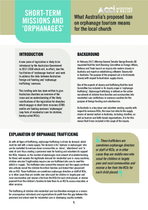
This briefing note has been written to give Australian charities currently engaging with overseas residential care institutions an overview of the issue and an understanding of some of the potential ramifications of the proposed Modern Slavery legislation.
This briefing note has been written to give Australian churches an overview of the issue of orphanage tourism and an understanding of the likely ramifications of the legislation for churches.
The Situation Analysis aims to increase the understanding of the scope of the problem of vulnerable children and the response to it, including the full spectrum of core services, in order to facilitate country-wide planning and to inform current and future programming efforts.
This paper provides a review of international and Ugandan literature on social care and support services particularly focussing on identifying key lessons that are relevant to the Ugandan context.
This report presents data on the total number of adoptions in the United States as well as the number of public, intercountry, and other adoptions.
This bulletin offers information to help US child welfare agency managers by providing strategies for achieving reunification and preventing reentry and includes examples of promising practices being implemented by States and localities.
This study examined the prevalence of child maltreatment as measured by the level of physical (moderate to severe) and emotional abuse and child labor, and the associated household level determinants of child maltreatment in Nepal.
This is a prospective study of 28 family mentors providing peer recovery support services to 783 families with child maltreatment and parental substance use disorders (SUD) over 8 years in a family-centered integrated program with SUD treatment providers.
In this video from Time for Global Action: Advancing the Sustainable Development Goals, Stephen Ucembe shares his experience of living in an orphanage and how institutionalization was detrimental to his development and wellbeing.
This joint comment lays out recommendations for protecting the rights of unaccompanied minors as well as those who have been separated from their families due to migration.
This session of the World Travel Market in London focused on orphanage tourism and featured speakers from the Better Volunteering Better Care Initiative and other partners, including Save the Children, Friends International, Lumos, and People and Places.
On 17 August 2017, the Australian Foreign Affairs and Aid Sub-Committee was briefed by representatives from the Cambodian Children’s Trust and Forget Me Not Foundation on the issue of orphanage tourism. This link includes a video of the opening statements from this briefing.
This document includes the full transcript of the public hearings of the Australian Parliamentary Inquiry in preparation for a Modern Slavery Act.

This study contributes to the literature by examining risk and protective factors of chronic neglect.
This study examined the psychological wellbeing of children in institutions and their various coping mechanisms.

The current qualitative study examines the lived experiences of the women and children in the Mothers Unit from the subjective perspective of the women currently or previously involved in the programme and of the professionals working with them.
This expert paper by Forget Me Not Australia was published as a part of the Global Study on Sexual Exploitation of Children in Travel and Tourism and it presents as a case study the story of the organization from its founding to its current work.
This analysis drew from a study in which child welfare professionals were interviewed about their definitions of “well-being” and the barriers and facilitators to promoting well-being in their daily practices.
The present study is based on life mode interviews with social workers who started their careers in child protection services, focusing on their daily lives as newly graduated professionals.
This brief from the Human Rights Campaign explains why US state laws allowing taxpayer-funded child welfare programs (adoption and foster care services) to discriminate against LGBTQ parents, carers and children is not in the best interests of children.
This paper summarizes the different interventions used with URMs to get an overview of techniques used for reducing psychopathologies and difficulties of URMs and to give recommendations to help professionals.
Health Share of Oregon collaborated with the Center for Outcomes Research and Education (CORE) to explore how the foster care experience influences people’s lives and their interactions and attitudes about health and health care.

The purpose of the study was to establish the influence of cash transfer for orphans and vulnerable children programme on civil registration in Karaba Location of Mbeere South Subcounty. The study sought to determine how demographic characteristics of the caregivers, challenges faced by caregivers, household priorities of caregivers and household size affect civil registration.
This newsletter issue from Senator Linda Reynolds of Western Australia, written in conjunction with Kate van Doore of Griffith Law School, was written in preparation for the Australian Parliamentary inquiry on modern slavery and describes the ways in which orphanage trafficking constitutes modern-day slavery.
This paper describes results from focus groups conducted with child welfare providers, educational personnel, and youth with histories of running away from foster care placements.
This study uses data from the recent Modern Adoptive Families survey to understand parent perspectives on their preparation for adoption.
This brief from ECPAT's Global Study on Sexual Exploitation of Children in Travel and Tourism defines the term "voluntourism" and its risks to children, with a focus on orphanage voluntourism.
This report from Community Living for Europe: Structural Funds Watch reviews findings of an examination of the EU financial framework as it relates to the promotion of community-based care of children and adults and offers key recommendations for the EU and Member States to facilitate the transition from institutional to community-based care.
This position paper from Opening Doors for Europe's Children explains the position of the organization in regards to the EU's Multiannual Financial Framework and the measures within it to support or inhibit the transition from institutional care to family-based care of children.
This latest edition highlights the major achievements of 2017 – yet another big year in the journey to end all corporal punishment; it provides an update on the work of the Global Initiative, and looks forward to what is coming up in 2018.
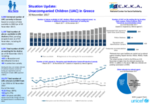
This infographic outlines the key facts and figures of unaccompanied youth in Greece including the number and places of UAC Shelters and Safe Zones, the number of children on the waiting list for UAC shelters, and more.
In this video, Catholic Relief Services, Lumos, and Maestral International presented their project: Changing the Way We Care, a project aimed at ending the institutionalization of children.
To accompany the release of the learning guide “Deinstitutionalisation of Europe’s Children: Questions and Answers”, the Opening Doors for Europe’s Children has prepared an online quiz to test the knowledge and tackle some of the tricky questions on deinstitutionalisation (DI).
This resource provides quick answers to some of the frequently asked questions about the transition from institutional to family- and community-based care for children, also known as deinstitutionalisation (DI).
This position paper from ReThink Orphanages explains ReThink's position on the alternative care of children and what are the most favorable forms of alternative care, in the best interests of children.
This report presents the results of a scientific research on the topic of Social Exclusion of Vulnerable Youth, commissioned by SOS Children’s Villages Netherlands.
The present study tested whether family finding, as implemented in North Carolina from 2008 through 2011, improved child welfare outcomes for youth at risk of emancipating foster care without permanency.
The purpose of this systematic literature review is to determine the number of articles and provide a summary of the academic needs of youth in foster care, to explore the barriers those children and caregivers face within the educational system and to highlight to successful interventions.
This study examines the causal effect of CPS involvement on the likelihood of future maltreatment using administrative case management records from July 1, 2010 and June 30, 2011.
This factsheet from ReThink Orphanages provides an overview of the institutional care of children around the world and how Australia contributes to that institutionalization.
This fact sheet from ReThink Orphanages presents quick facts about residential care for children around the world.
The Australian Parliament has released a Report of its inquiry into establishing a Modern Slavery Act in Australia. This Inquiry Report recognizes orphanage trafficking as a form of modern slavery to be included in the Act.
This report sets forth the 2017 official data on immigration arrests and deportations and details the often-wrenching human impact of Trump’s policies on undocumented immigrants, their families, and their US communities.
This article examines the legal inadequacies of reinstatement statutes in the US which "often punish parents who opposed the termination of their parental rights and reward those who voluntarily signed relinquishments."
This article explores this practice, examines its origins, and discusses its constitutional inadequacies.
With a sample of 246 youth from a non-profit organization's summer camp program, Camp To Belong, this study examined the association between a warm sibling relationship and resilience for youth in foster care.
The current study explores (a) a moderation model of adoption status on the association between attachment representations (secure, dismissing, preoccupied, and disorganized) and behavioural problems and (b) a moderation model of adoption status on the association between emotion regulation processes (cognitive reappraisal and expressive suppression) and behavioural problems.
The article contains analysis of parental potential in foster families and the resources of its strengthening with the support of the professional community.
This report provides preliminary estimates of Adoption and Foster Care Analysis and Reporting System (AFCARS) data for FY 2016 in the United States.
This review aims to systematically review methodological challenges and limitations of interventions designed to help foster carers meet the needs of children, to provide an analysis of the current state of the evidence base for these interventions.
This comprehensive reference offers a robust framework for introducing and sustaining trauma-responsive services and culture in child welfare systems.
Foster Parent and National Child Traumatic Stress Network (NCTSN) Member, Diane Lanni, interviews her adult birth daughter about being a child of foster parents.
This webinar series provides clinicians, counselors, and other helpers with insights on recognizing and dealing with the most difficult crises and turning points that occur in therapy with traumatized children and families.
The 16 case studies presented in thie report offer lessons from the ground on how services can ensure refugee and migrant children get the necessary protection and individualised support.
Measuring trends to turn the tide on the over-representation of Aboriginal and Torres Strait Islander children in out-of-home care in Australia
This outline of alternative care, both conceptually and in the Sri Lankan context, provides insight into both the current system and what efforts are yielding results.
The One Step Forward book is a visual guide to resilience, written and illustrated by young people in foster care.
The study gathered data from 16 purposively sampled orphans, 4 guidance teachers and analysed documents within a primary school in Masvingo Urban in Zimbabwe.
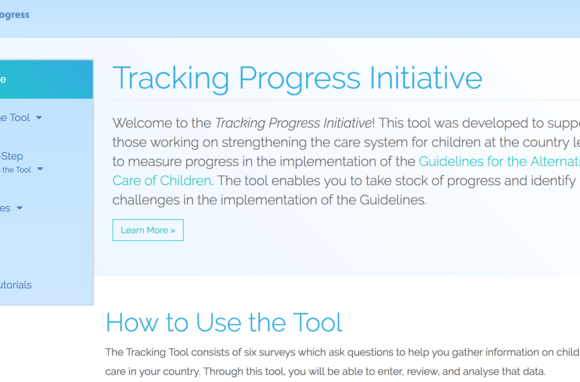
The Tracking Progress Tool is a free, web-based, interactive diagnostic and learning tool designed to enable national actors to determine the extent to which their country has effectively implemented the Guidelines for the Alternative Care of Children and to identify the priorities for change still ahead.
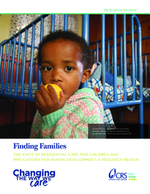
This review is a summary of the literature, from multiple disciplines, on residential child care and its deleterious effects on children.
The Committee on the Rights of the Child (CRC Committee) and the Committee on the Protection of the Rights of All Migrant Workers and Members of Their Families (CMW Committee) jointly adopted two general comments on the human rights of children in situations of international migration.

This report outlines the MEASURE Evaluation workshop sessions and provides highlights, key discussion points, and action items.
The aim of the paper is to explore selected pertinent challenges that impede child and youth care centres (CYCCs) from providing holistic support and care to children found in need of care as stated in the Children’s Act No. 38/2005.
This study determined the socio-economic status of Orphans and Vulnerable Children (OVC) in relation to service areas in Lagos Nigeria.
This article will discuss the impact of reforms on time limits in decision-making for children, questioning whether they achieve both good decisions for children and justice for families.
This country care review includes the care-related Concluding Observations adopted by the Committee on the Rights of the Child as part of its examination of Cyprus’s periodic report to the Convention on the Rights of the Child.
This country care review includes the care-related Concluding Observations adopted by the Committee on the Rights of the Child and the Committee on the Rights of Persons with Disabilities.
This country care review includes the care-related Concluding Observations adopted by the Committee on the Rights of the Child as part of its examination of Tajikistan’s periodic report to the Convention on the Rights of the Child.
This article describes the history and philosophy of foster care in Egypt.
The aim of this guide is to enable advocates to access the legal and practical tools needed to secure an end to, and compensation for, violations of rights suffered while in institutional care.
This policy brief highlights the work of the Grandfamilies Advocacy Network Demonstration to advocate for policy reforms for grandfamilies in the US.
This systematic review examines the comparative effectiveness of foster and kinship care interventions.
The purpose of this article was to describe the phenomenon of toxic stress and its impact on the physical and mental health of child refugees.
This report includes a number of observations about the adoption situation in Armenia as well as makes diverse recommendations targeting key actors.
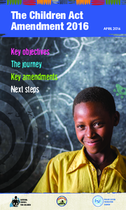
This bulletin highlights the key objectives and key amendments of Uganda's Children Act Amendment of 2016. It also outlines the process by which the Bill was developed and approved and lays out next steps for implementing the Act and ensuring the rights of children in Uganda.
The aim of this study is to assess the nutritional and cognitive status in institutionalized orphans which might help to formulate effective interventions for improving the nutritional status of vulnerable children in future.
The goal of this three-wave longitudinal study was to analyze foster parent stress and foster children’s internalizing and externalizing behaviors in a transactional framework.
This chapter describes the contemporary situation of children in sub-Saharan Africa with successive foci on child growth, the home environment, parenting, and discipline using data from the Multiple Indicator Cluster Survey (MICS).
This paper examines the extent to which socioeconomic vulnerability, psychosocial service consultations, and preventative social services spending impacts the reunification for children placed in out-of-home care.
This study investigates the specific training needs of the biological family during the transition phase of the reunification process in which the child prepares to return home.
The purpose of this study is (1) to examine trends in placement use and placement stability since the reform and (2) to document the current frequency of each type of placement setting, the cumulative time in care before the exit to permanency, and the sustainability of the permanency outcome.
This brief is a compilation of lessons learned from American Youth Policy Forum's (AYPF) last two years of work focused specifically on systems-involved youth.